

Jan Bartek – AncientPages.com – The Piasts were a royal dynasty that influenced the political landscape of 10th-century medieval Europe. Although they founded and ruled early Poland, little is known about their origins, Poland’s transition to monarchy, or the broader processes of political formation in 10th-century East-Central Europe.
Background: Lake Lednica. PAP/Archiwum Kalbar – Image compilation AncientPages.com
For over a decade, Polish scientists have analyzed remains from churches, crypts, and royal tombs across Central Europe to trace the biological origins of the Piast dynasty, which founded the Polish state more than 1,000 years ago.
The Piast Dynasty And Its Ties To European Royal Houses
Researchers have now identified rare genetic markers connecting the Piasts to other royal dynasties, paving the way for the first large-scale genetic family tree of Europe’s medieval rulers.
“The genetics of the Piast dynasty is one large and complex mosaic, which we will continue to reconstruct in the coming years”, says Marek Figlerowicz, who leads the project at the Institute of Bioorganic Chemistry of the Polish Academy of Sciences.
The team’s latest findings, published in Nature Communications, integrate genetics, archaeology, anthropology, bioinformatics, and medieval history in a major effort to reconstruct the genealogy of a European ruling dynasty.
The project began in 2014 with a comprehensive search. Researchers identified approximately 340 potential Piast burial sites from historical records, but most no longer contained usable remains.
After extensive verification, scientists collected skeletal material from 33 individuals buried in eight Piast necropolises. Ten were definitively identified as members of the dynasty.
These included Konrad I of Masovia and his descendants, whose DNA now serves as the oldest reliable genetic reference for the Piast paternal line, as well as Dukes Stanislaw of Masovia and Janusz III of Masovia, the last Masovian Piasts.
The Piasts’ Y chromosome, inherited through the male line, belongs to the rare haplogroup R1b-BY3549, which is uncommon today. Archaeogenomic databases have found it in only a few earlier individuals from present-day France, the Netherlands, and England, and in a Viking buried in Britain during the Piast era.
Scientists also identified maternal genetic lineages linking the Piasts to more than 200 members of European royal dynasties, including the Rurik, Gediminid, Árpád, Premyslid, Habsburg, and Hohenzollern dynasties.
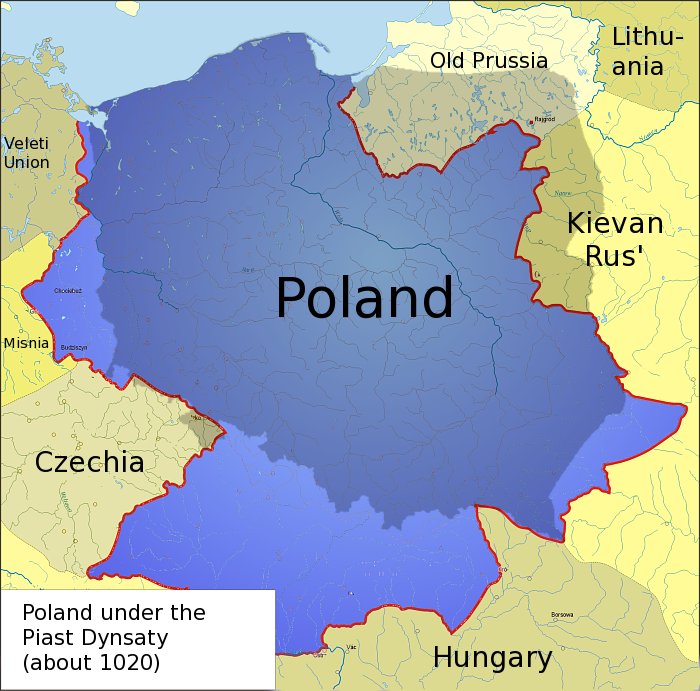
Lands held by the Piast dynasty (992–1025), with a shaded area corresponding to the territory of present-day Poland. Credit: Poznaniak – CC BY-SA 3.0
“Contrary to popular belief, we know relatively little about the genetic genealogy of any medieval European dynasty. Similar data to ours have previously been collected for only a few cases: Richard III, two members of the Árpád dynasty, and data for one Rurik dynasty members have also been published.
It is worth noting that all previous studies focus on single individuals. The difficulties that arise in this type of research are twofold. First, we must be certain that the remains in question belong to a specific historical figure and have not been mixed with the remains of another individual over the centuries. Secondly, in the case of individuals, we can never be certain whether the identified genetic traits are representative of the dynasty from which they originate”, Figlerowicz says.
Mapping The Genomes Of Europe’s Medieval Elites
With only 10 confirmed Piasts, the researchers say they have already laid the foundations for a continent-wide genetic map of Europe’s medieval elites.
“This shows that the Piasts were genetically and probably culturally extremely connected to the European aristocracy; one could say they were immersed in Europe. The wife of one Piast was from Ruthenia, another from Denmark, a third from Germany, a fourth from Bohemia, and a fifth from Hungary. This demonstrates a pan-European genome that characterizes the ruling families of Europe at the time. The genetics of the Piast dynasty is one large and complex mosaic, which we will continue to reconstruct in the coming years”, the scientist says.
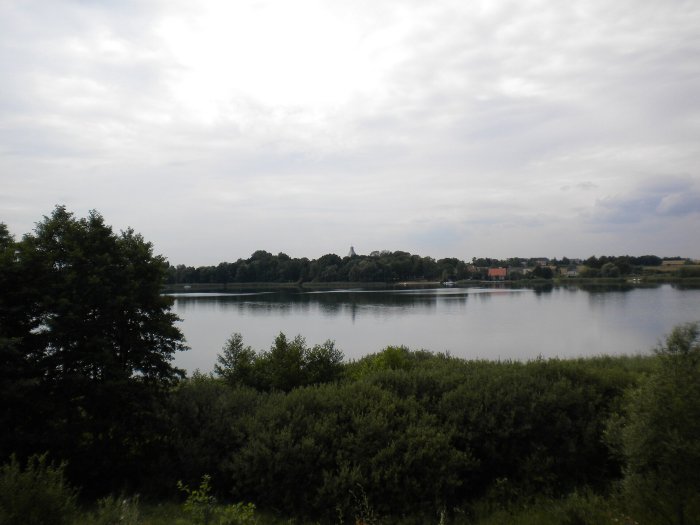
Lake Lednica, Poland. Credit: Rafaelbedna – CC BY-SA 4.0
The next chapter of the search is likely to unfold on an island in Lake Lednica, believed by many historians to be the probable site of Poland’s baptism in 966.
“Two cemeteries functioned on the shores of this lake during the Piast era. Therefore, we can assume that there were two settlements located relatively close to each other. We assume that if the Piasts lived there, then – knowing the customs and way of life at the time – they must have participated in the genes of the surrounding population”, Figlerowicz adds.
Researchers now want to know whether the rare R1b-BY3549 marker appears among ordinary people buried around Lednica.
“If it does appear, we will be certain that the early Piast dynasty already had it. If it does not, we will begin to doubt whether the R1b-BY3549 haplogroup occurred among all Piast dynasty members”, the researcher admits.
The team also plans to reanalyze remains believed to belong to Wladyslaw I Herman and Boleslaw III Wrymouth using newer DNA techniques unavailable during earlier studies.
“We have samples probably belonging to Wladyslaw I Herman and Boleslaw III Wrymouth, which we will soon reanalyze. If it turns out that they also belonged to the R1b-BY3549 haplogroup, it would mean that this haplogroup was present in the main Piast line. However, based on these data, we still will not be certain about the first Piasts, because to do so, we would need genetic data from Boleslaw the Brave or Mieszko I, which has not been possible so far”, Figlerowicz says.
The publication suggests that the Piasts may have had “non-local origins” and that state-building in Central and Eastern Europe may have included both outside elites and local populations.
However, Figlerowicz cautions against drawing simplistic conclusions about ethnicity or identity.
Discovery Of A Rare Male Lineage Traced To The Piasts
“We can imagine many scenarios explaining how this rare male lineage emerged among the Piasts we studied. It could have been that many years before the Piasts, someone with this group, for example a Viking, arrived in the area and stayed permanently, or it could have been that they only stayed long enough to have children with a representative of the local population.
The ancestors of the Piasts could have arrived in the territories of modern-day Poland during the Great Migrations or shortly before they began establishing state structures. Depending on when this occurred, they could have considered themselves representatives of the local population or foreigners.
See also: More Archaeology News
Interestingly, most current discussions focus on the Y chromosome, which constitutes less than 1% of the genome. Why do we not consider the origins of women, from whom half the genome comes, or the origins of men, who also contributed a significant portion of the Piast dynasty’s genome? For example, 25% of a child’s genome comes from the mother’s father”, he says.
For now, the scientists say their task is not to settle modern debates about identity, but to establish measurable historical facts hidden in medieval DNA.
“We do not want to answer questions that cannot be answered today; we are only establishing facts about the Piast dynasty’s genetics. Unless we find some notes in which Chrobry or Mieszko wrote: ‘I consider myself a Slav’. This, however, is unlikely”, Figlerowicz concludes.
Source: Science in Poland, Nature
Written by Jan Bartek – AncientPages.com Staff Writer