

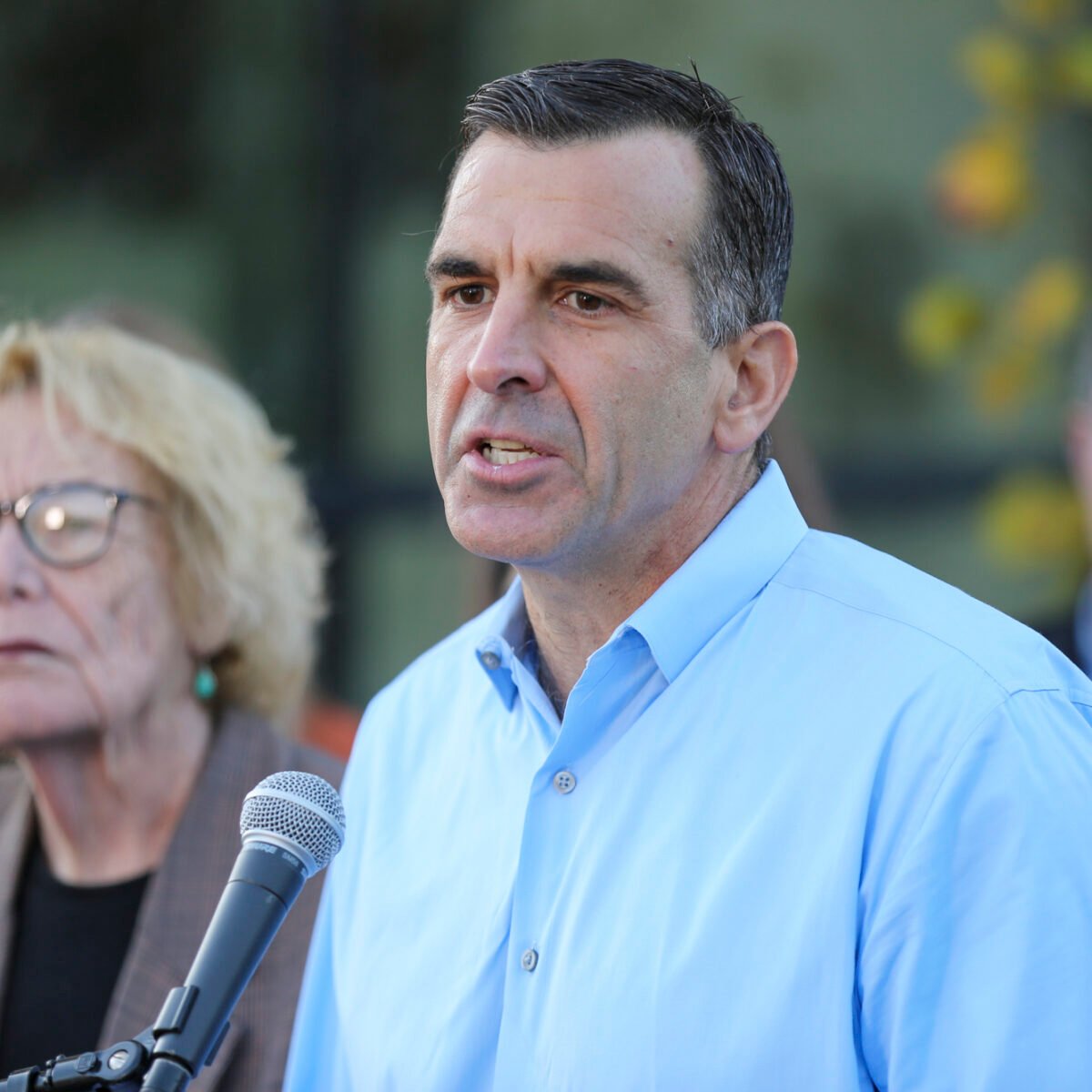
Rep. Sam Liccardo joined Bay Area education and business leaders at Foothill College to criticize Trump administration immigration policies, warning that student visa restrictions and DACA renewal delays are hurting Silicon Valley’s workforce, economy and global competitiveness.
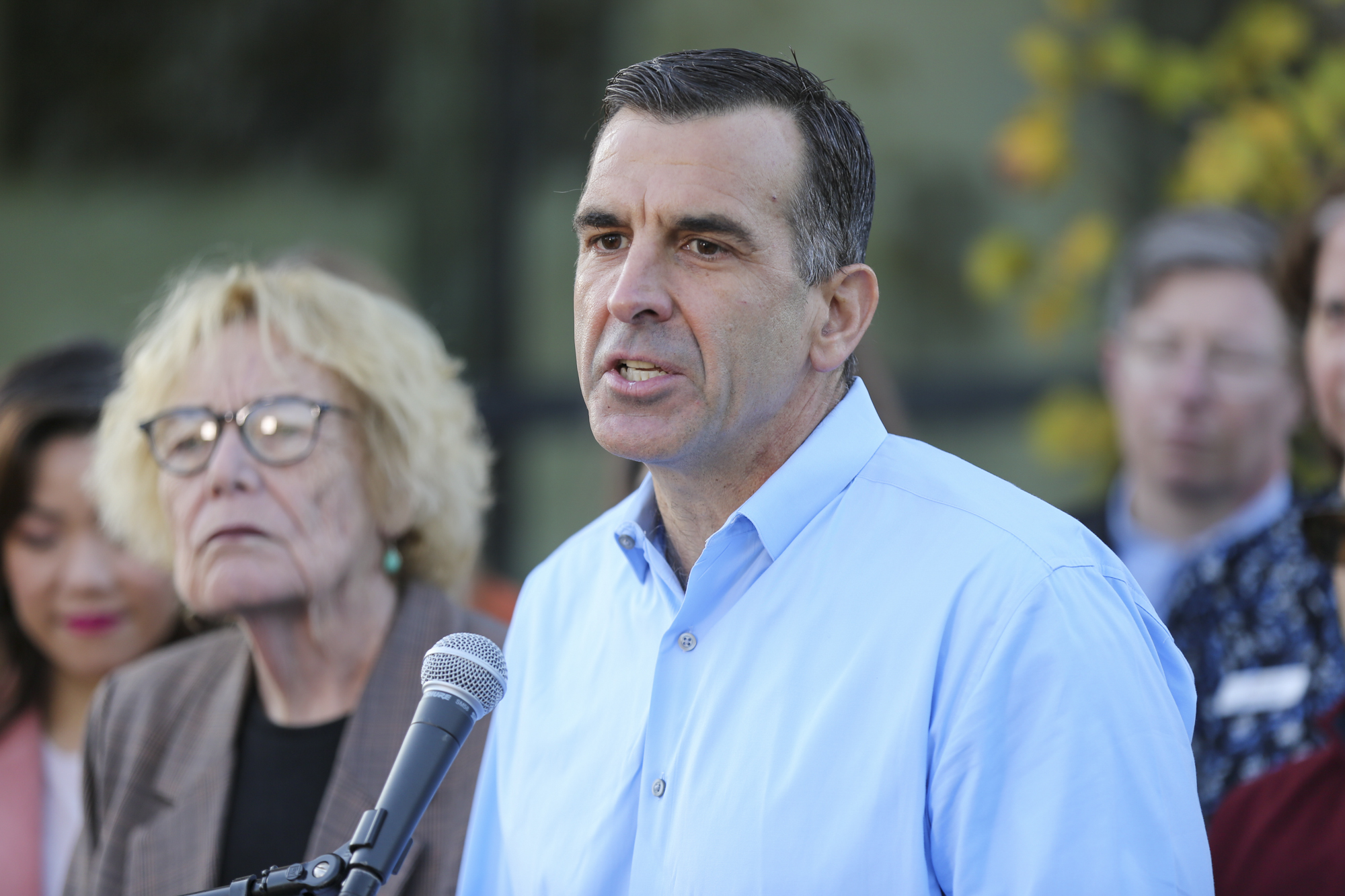
Rep. Sam Liccardo speaks during a press conference in San José about changes to a federal housing program’s funding by the Trump administration on Nov. 24, 2025. The congressman said his office is seeing delays of more than five months in DACA renewals. (Joseph Geha/KQED)
The congressman said his office is seeing delays of more than five months in DACA renewals. He noted that in a nine-month period last year, more than 270 DACA recipients were arrested and 174 deported. In response, he has introduced the Keep Innovators in America Act, a bipartisan bill to protect Optional Practical Training, a program that allows foreign graduates to work in the United States after completing their degrees.
The effort has drawn support from Republican members of Congress, including Rep. María Salazar and Rep. Jay Obernolte.
The proposed four-year cap on student visa duration is particularly damaging for STEM fields, Liccardo said, where engineering and graduate programs routinely require more than four years to complete. Rightful Fong, a first-year international student from Kuala Lumpur, Malaysia, studying business economics at the junior college, said the stakes are personal.
“I literally flew across the world just to be in the U.S.,” he said. “Giving international students more flexibility to learn and study here would allow us to make a better impact to the world and to the U.S. itself, and also result in economic growth.”
Foothill College President Kristina Whalen said the proposed rule would immediately disrupt 200 students in her district and affect 2,000 more over time. International students contribute about 9 percent of the college’s annual budget and generate an estimated $600 million for the local economy, she said.
“If we shorten students’ duration of status, you limit Americans’ duration of innovation,” Whalen said.
“If we make it harder for students like Rightful to come here, to stay here, to complete their education, we weaken the very institutions that drive American competitiveness.”
Libby Schaaf, former Oakland mayor and current CEO of the Bay Area Council, said the numbers make the business case plain. About 35% of Bay Area residents are immigrants, she said, and immigrants founded more than 40% of all tech startups in the region.
“Sensible immigration policies are not just a political or moral issue,” Schaaf said. “They are a business and economic issue. It makes good business sense, good economic sense.”
Research presented by entrepreneur Vivek Wadhwa showed that immigrant-founded startups in Silicon Valley peaked at 52 percent a decade ago before declining to 43 percent as visa access tightened.
Wadhwa said he has lived the consequences firsthand. Three years ago, he tried to build a medical diagnostics startup in Silicon Valley and could not find the biomedical engineers, plasma physicists or electrical engineers he needed because of visa barriers. He eventually moved the company to India, where he now employs 45 people — a number he expects to grow to several hundred by next year.
“Those jobs could have been here in Silicon Valley,” Wadhwa said. “This is the result of U.S. immigration policies, and this is the future unless we do something about it.”

Yadira Aldana, a licensed nursing home administrator at Channing House, a nonprofit retirement community in Palo Alto, is a DACA recipient. Aldana, who was brought to the United States from Mexico at age three, oversees care for nearly 300 older adults and 190 employees. Her employer has already lost seven staff members because their DACA permits expired before renewals came through, and 12 more are now at risk.
“We have exhausted every effort to support and retain our staff,” Aldana said. “But due to unavoidable USCIS delays, seven valued employees have had to leave us. This represents 10 percent of our workforce. This is not just a personal issue; it is a community issue.”
Aldana said she renewed her own permit seven months early and still does not know if it will arrive on time.
“My whole life that I’ve been on DACA, I’ve been living in two-year increments,” she said. “But it seems like now it’s becoming shorter, more like a 10- or 12-month increment. It is a very uncertain time for my family.”
The delays Aldana describes are consistent with what immigrant rights advocates have been tracking across the Bay Area. As KQED previously reported, the East Bay Sanctuary Covenant, which serves more than 1,000 active DACA clients, said over half of renewal requests filed since November 2025 remain pending. Vanessa Rivas-Bernardy, a staff attorney at Justice Action Center, told KQED that the delays reflect a program under sustained administrative pressure.

“DACA recipients have been living in two-year increments — all their decisions, their whole lives are in these two-year chunks,” Rivas-Bernardy said. “This is just an exacerbation of that uncertainty and risk, but it’s been completely ramping up in recent months in a way we really haven’t seen before.”
Liccardo said international students contribute $43 billion to the U.S. economy annually, and that cutting even a third of foreign STEM graduates would result in a loss of a quarter of a trillion dollars in GDP each year. He called on the Bay Area to take immigration back from what he called “the pundits and the haters.”
“These students, researchers, achievers and perhaps most importantly, neighbors and friends have become essential threads in our distinctively American tapestry,” he said. “We denigrate our flag by pulling this tapestry apart.”