

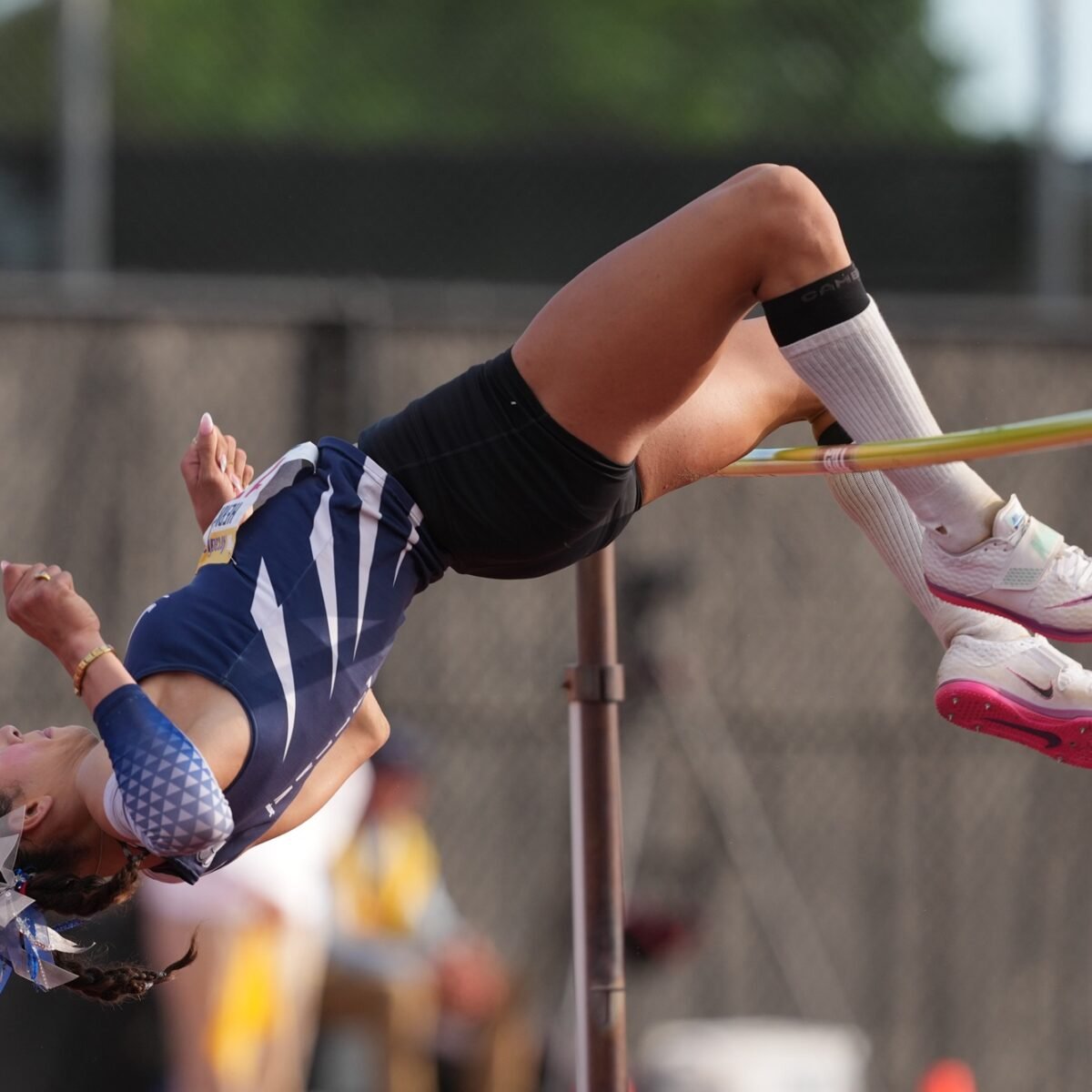
A state high school athletics federation reintroduced a rule allowing an additional competitor to earn a medal in events in which a transgender athlete places. Neither the parents nor the Trump administration is happy.
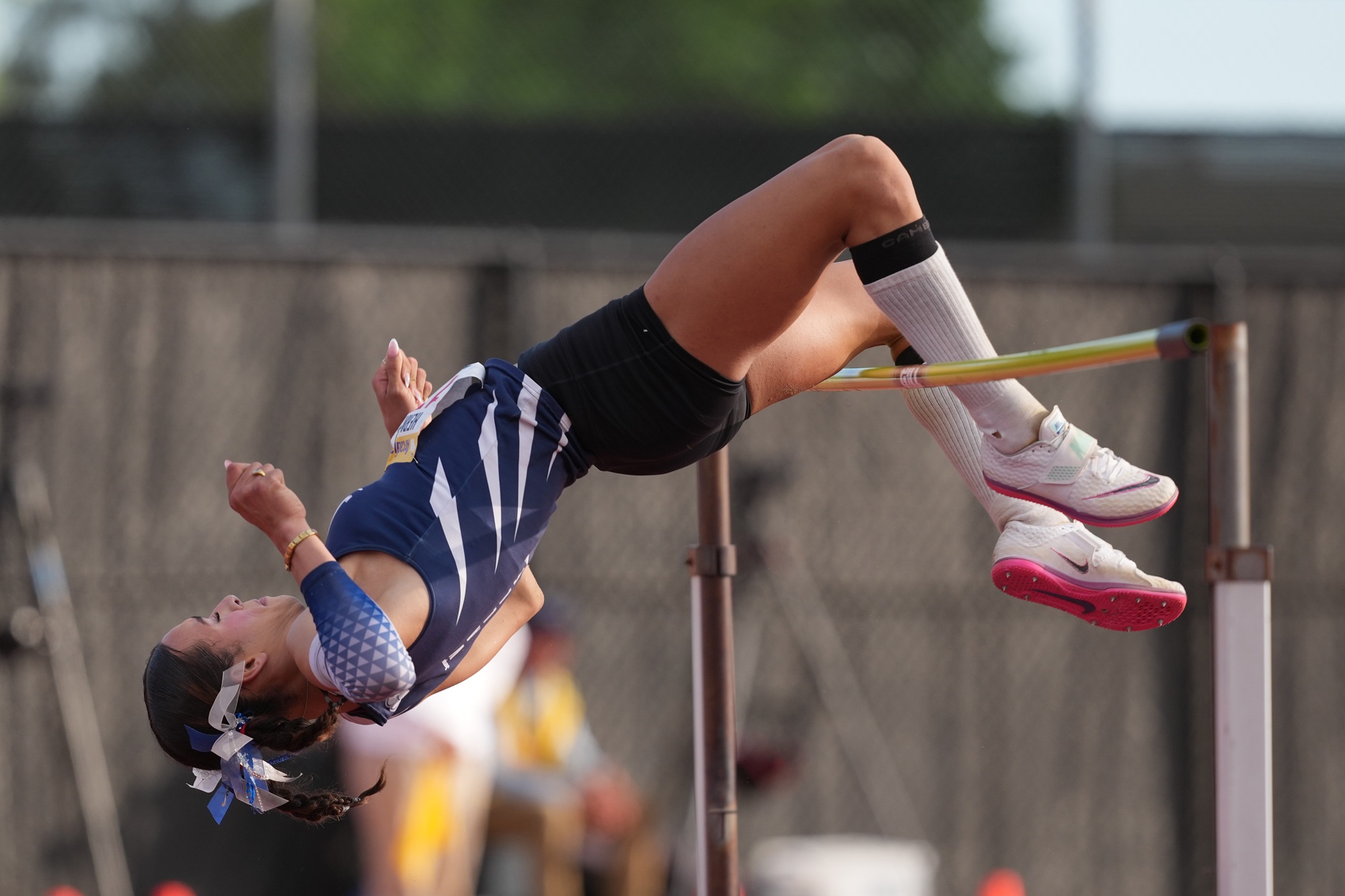
Transgender athlete AB Hernandez of Jurupa Valley places third in the invitational girls high jump at 5-8 (1.72 meter) during the 58th Arcadia Invitational at Arcadia High School on April 11, 2026, in Arcadia, California. A state high school athletics federation reintroduced a rule allowing an additional competitor to earn a medal in events in which a transgender athlete places. Neither parents nor the Trump administration are happy. (Kirby Lee/Getty Images)
But results from a regional preliminary competition on May 9 noted that 10 girls, instead of nine, would advance in only the three events AB, 17, competed in: high jump, long jump and triple jump. Hernandez’s mother said it signaled to the Riverside County track and field star that the rule would be reinstated.
“Because they had only mentioned it was going to be for the championships, we didn’t think we’d have to deal with it again,” Hernandez said last week. Finding out that the policy would be reinstated, she said, “crushed [AB’s] heart.”
“She missed school on Monday. I don’t think she’s going to school [Friday],” Hernandez continued. “It’s just been hard.”
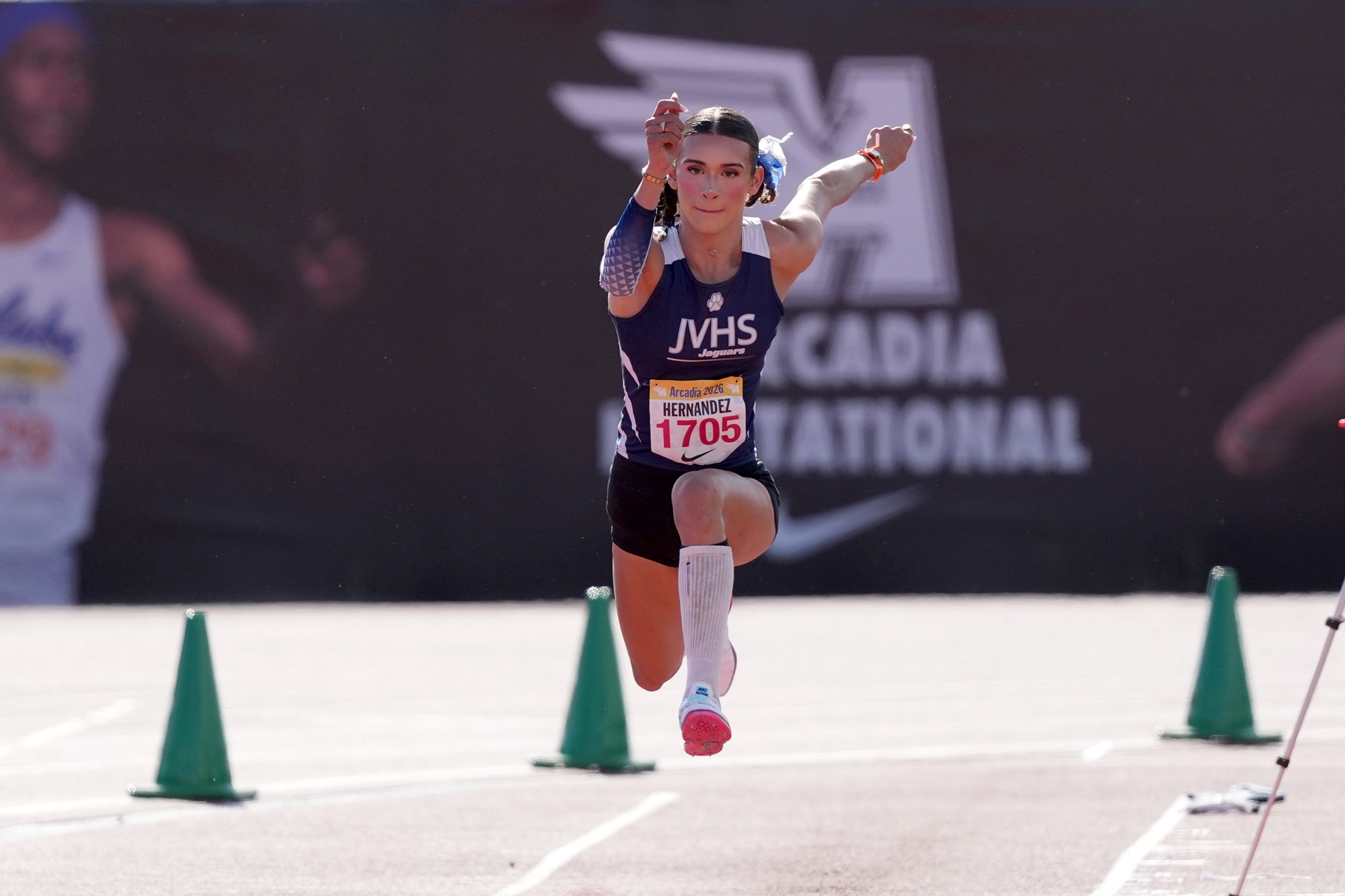
At Saturday’s Southern Section regional finals in Ventura County, coaches were given written notice that CIF would implement its pilot entry policy again. Before that, the federation had not confirmed that it would reinstate the entry protocol. Last spring, it said the pilot would only apply to that year’s championship meet, which took place May 30 and 31, 2025.
Over the weekend, Hernandez, a Jurupa Valley High School senior, won the regional finals in each of her three events. During the medal ceremony for the high jump, she and the second-place finisher shared the top spot on the podium and were both given gold medals.
Throughout last year’s track season, anti-trans advocates protested during meets and attended CIF meetings, where they called on state leaders to “Save girls sports.”
The issue caught national attention ahead of the 2025 championships, when President Donald Trump threatened to withhold federal funding from California in a post on his social media site Truth Social, saying that the state “continues to ILLEGALLY allow ‘MEN TO PLAY IN WOMEN’S SPORTS.” He seemed to invoke AB in his post, referring to an athlete who had transitioned and was set to compete.
CIF’s last-minute 2025 rule change, announced days before the championship meet, came amid that mounting pressure. At the meet, AB finished first in the high jump and long jump, and multiple gold medals were awarded in both events. She also placed second in the long jump.
“CIF believes this pilot entry process achieves the participation opportunities we seek to afford our student athletes,” the federation said in a statement at the time.
After this past weekend’s meet, images of AB sharing the podium with another athlete at the regional finals were circulated by conservative activists on social media, who claimed the policy stole medals from cisgender girls. Riley Gaines, a former college swimmer, called it unfair and a “humiliation ritual” for girls. She and others who reposted her statement repeatedly misgendered AB.
In July, the U.S. Department of Justice also alleged in a lawsuit against California’s Department of Education and CIF that the pilot entry policy failed to remedy Title IX discrimination against cisgender girls. The DOJ is suing the state over its law that allows students to compete on athletic teams that match their gender identity. More than half of the states have adopted policies restricting transgender student athletes’ participation in sports, and the Supreme Court seems poised to uphold those bans this summer.
At the same time, Hernandez said the policy minimizes athletes like her daughter.
“It’s kind of like she’s nonexistent,” she told KQED. “She puts in the work, she participates, but she wants to be honored. She wants to be acknowledged as the person, the athlete she is.”
Before the finals on Saturday, Hernandez said her daughter told her, speaking of the policy: “It’s like they see me, but they see past me or through me.”
Hernandez enters next week’s Masters Meet at Moorpark High School with the highest qualifying scores for the high jump, long jump and triple jump. The statewide finals are planned for May 28 and 29 in Clovis.