
“ Are we using and managing this asset to its highest and best use? And if not, what could we do differently to meet today’s and tomorrow’s goals?” Snyder said, noting that if the freeway system were designed today, it would have been done “very differently.”
While the project is still in the research phase, and many questions remain about the significant engineering hurdles necessary to make the idea a reality, Caltrans staff said high-speed buses could transform long-distance travel with a faster, safer and more efficient mobility option for California.
The project envisions dedicated high-speed bus lanes, separated from other traffic, running down the middle of freeways and broken up by stations where passengers can get on and off. Snyder said initial designs could offer regional service along State Route 99, connecting communities like Bakersfield, Visalia and Fresno. Ideas for interregional service include using interstates 80, 5 and U.S. Route 101 to connect far-flung destinations like San Diego, Los Angeles and San Francisco.
At 100 mph, a high-speed bus trip from Los Angeles to San Francisco would take 3 hours and 50 minutes, Snyder said, shaving hours off current travel times by a personal vehicle.
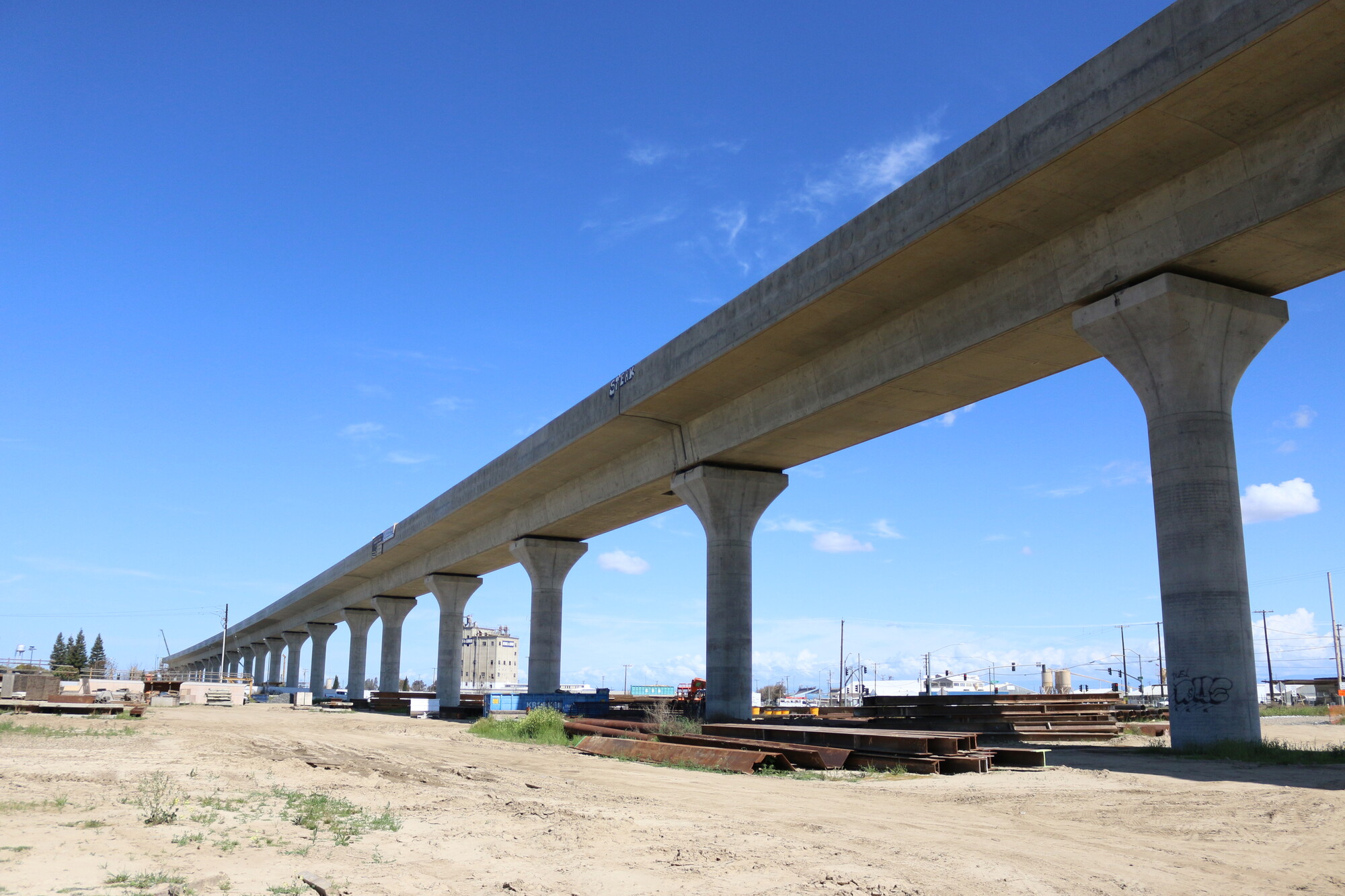
Far from replacing California’s high-speed rail, Snyder said high-speed buses could complement and improve the value of the section of high-speed rail currently under construction from Merced to Bakersfield while the state works on securing funding to construct the rest of the proposed system from San Francisco to Los Angeles.
“ This could connect on the south end and could connect on the north end so that high-speed rail has more value than it would if it were just a disconnected segment of rail,” Snyder said.