

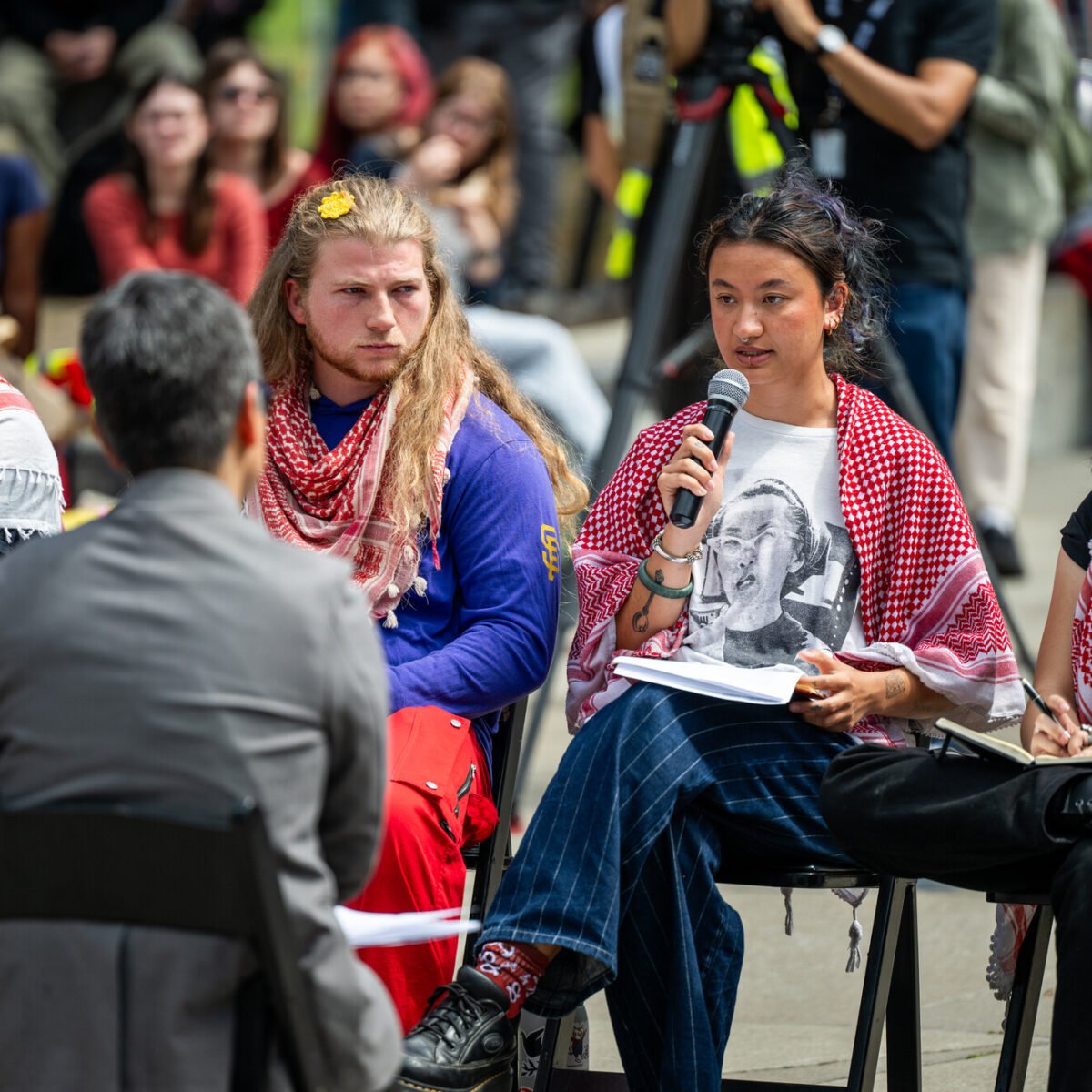
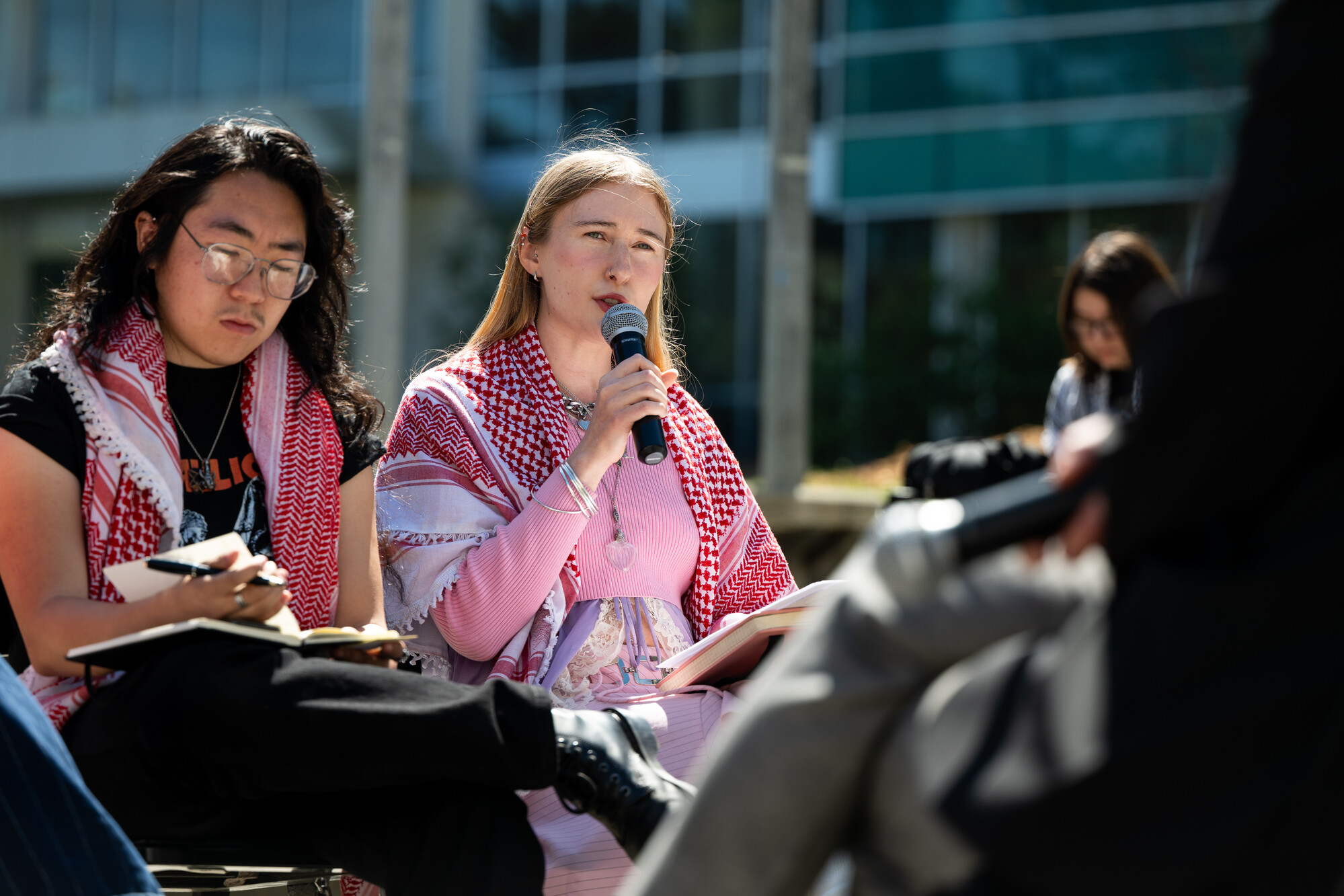
“We have our student government, and I think that functions kind of like the government. Our job is to really try to talk to the students on campus and figure out what issues they’re actually facing and how we can address them in a way that a union might, with a mass movement,” said Kenna Klop-Packel, a member of the Student Union’s leadership team.
Klop-Packel said she was already part of a student group called Mathematistas, which focused on community-building and gender equity in the math department. In the fall, the organization added the broader interests of the Student Union to its focus.
“I saw, and I think the people around me also saw that this is one way that we could support equity in mathematics,” Klop-Packel said, adding that many of the organizations’ goals aligned.
In the math department, Klop-Packel said calculus class sizes have tripled in recent years. Other courses have more limited availability.
“The people that are going to first fall through the cracks are the people who already didn’t feel at home in the math department,” she said.
The math union meets weekly, and in addition to the Mathematistas’ former community building and department-specific events, it now also “practices classroom conversations, how to explain to our classmates about these issues, and what the Student Union is doing, how we’re fighting back,” Klop-Packel told KQED.
At the first public negotiation session in 2024, representatives of the SFSU Students for Palestine Encampment urged changes to the university’s endowment investment policy and asked administrators to declare a genocide in Gaza.
That August, the campus announced it would divest from four companies: weapons manufacturers Lockheed Martin and Leonardo, data analysis company and military contractor Palantir, and construction equipment maker Caterpillar. In December, it adopted a new investment policy with limitations around companies that profit from weapons manufacturing.
Last fall, the Student Union launched its second major negotiating campaign with a series of general assemblies. That led to the list of five demands, including increased budget transparency, that students sent to administrators in March and discussed with Mahoney and Provost Amy Sueyoshi on Wednesday.
Vi Lee, another member of the Student Union’s leadership team, said the focus on campus finances was a “logical next step” for the group, which formed the year before the pro-Palestinian protest movement in response to tuition hikes across the California State University system.
“Those issues had not gone away, they’d only gotten worse,” Lee said.
Between 2019 and 2024, the campus cut more than 1,000 course sections and let go of 155 lecturers whose positions rely on those classes. In December, it offered buyouts to tenured and tenure-track faculty who have worked at the school for at least five years in the face of a $20 million budget deficit, according to the Golden Gate Xpress, a student news outlet.
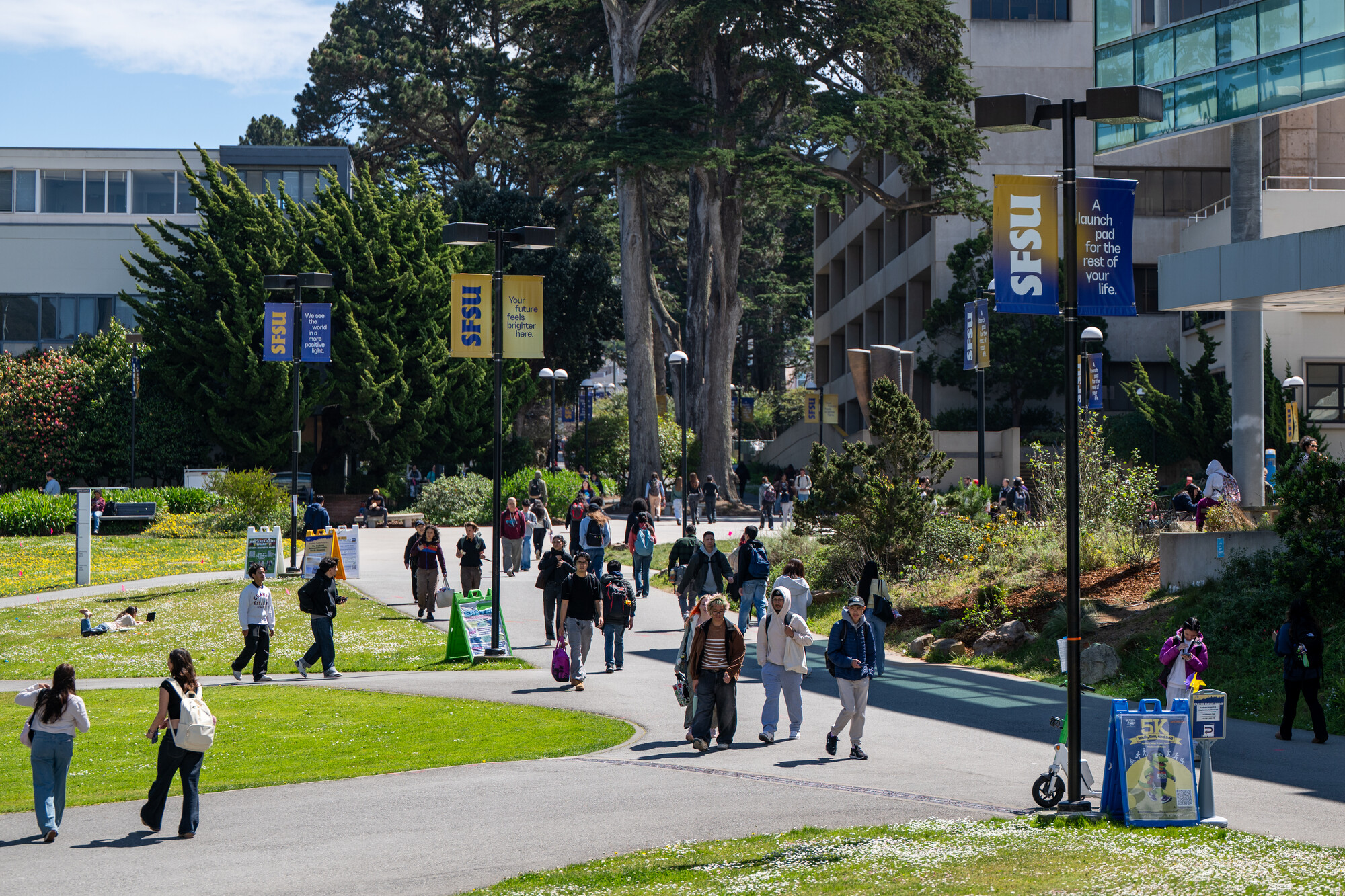
In spring 2027, SF State plans to discontinue or suspend a dozen undergraduate degree programs as well as a handful of masters programs and minors. University spokesperson Bobby King said those cuts are meant to realign resources with enrollment demand and aren’t related to the budget. A decade ago, enrollment hovered just under 30,000 students, down to just over 20,700 this year, according to campus data.
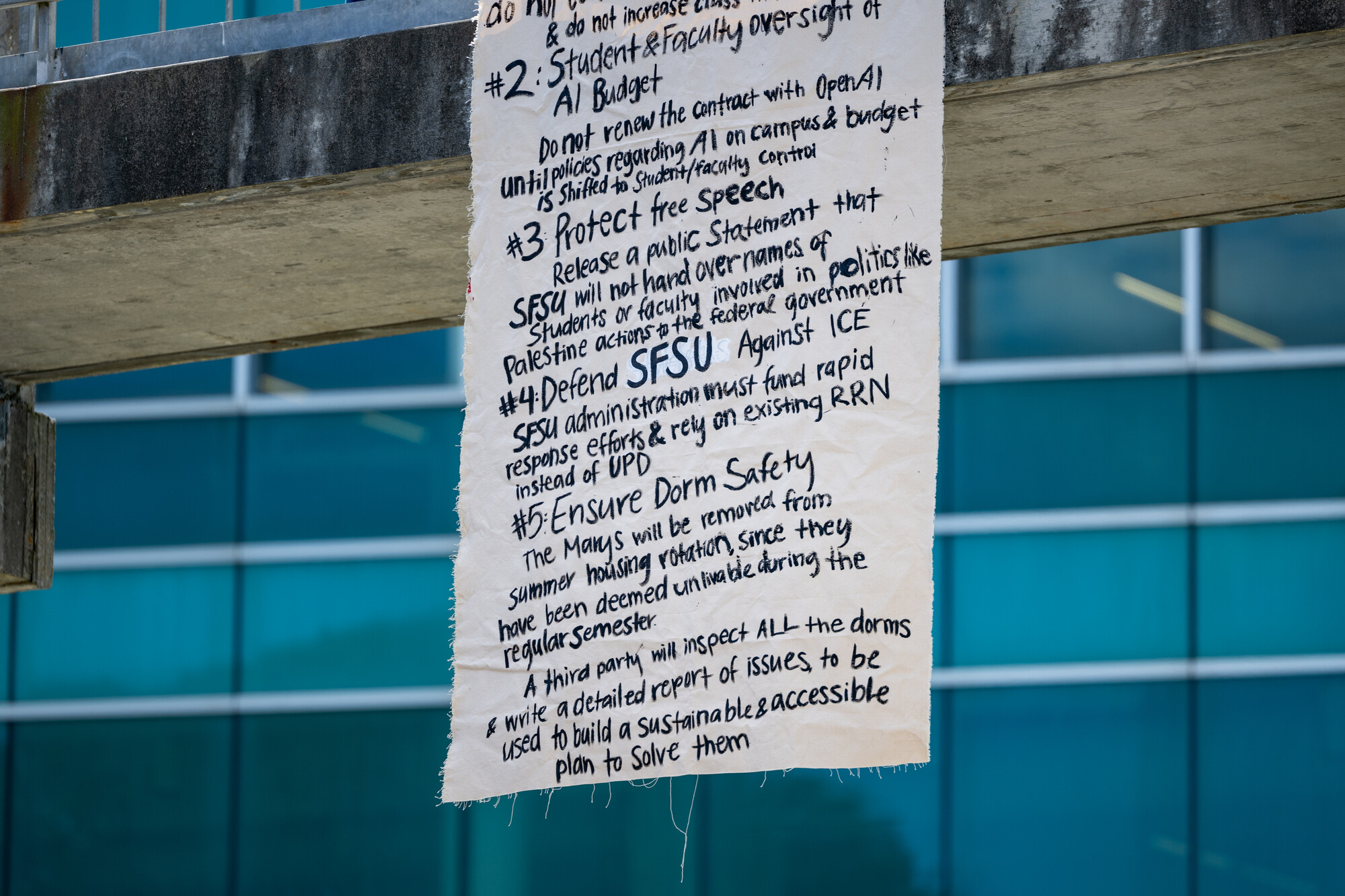
The students have asked for the university to halt future class and program cuts and provide transparency around the budget shortfall.
They also brought forward four other wide-ranging demands: changes to the school’s policies surrounding AI, a public statement affirming that the school won’t hand over to the federal government the names of students and faculty who participate in political actions, new protections for students against Immigration and Customs Enforcement and improved conditions in dorms.
The group said the list represents students’ “collective working and educational issues on campus.”
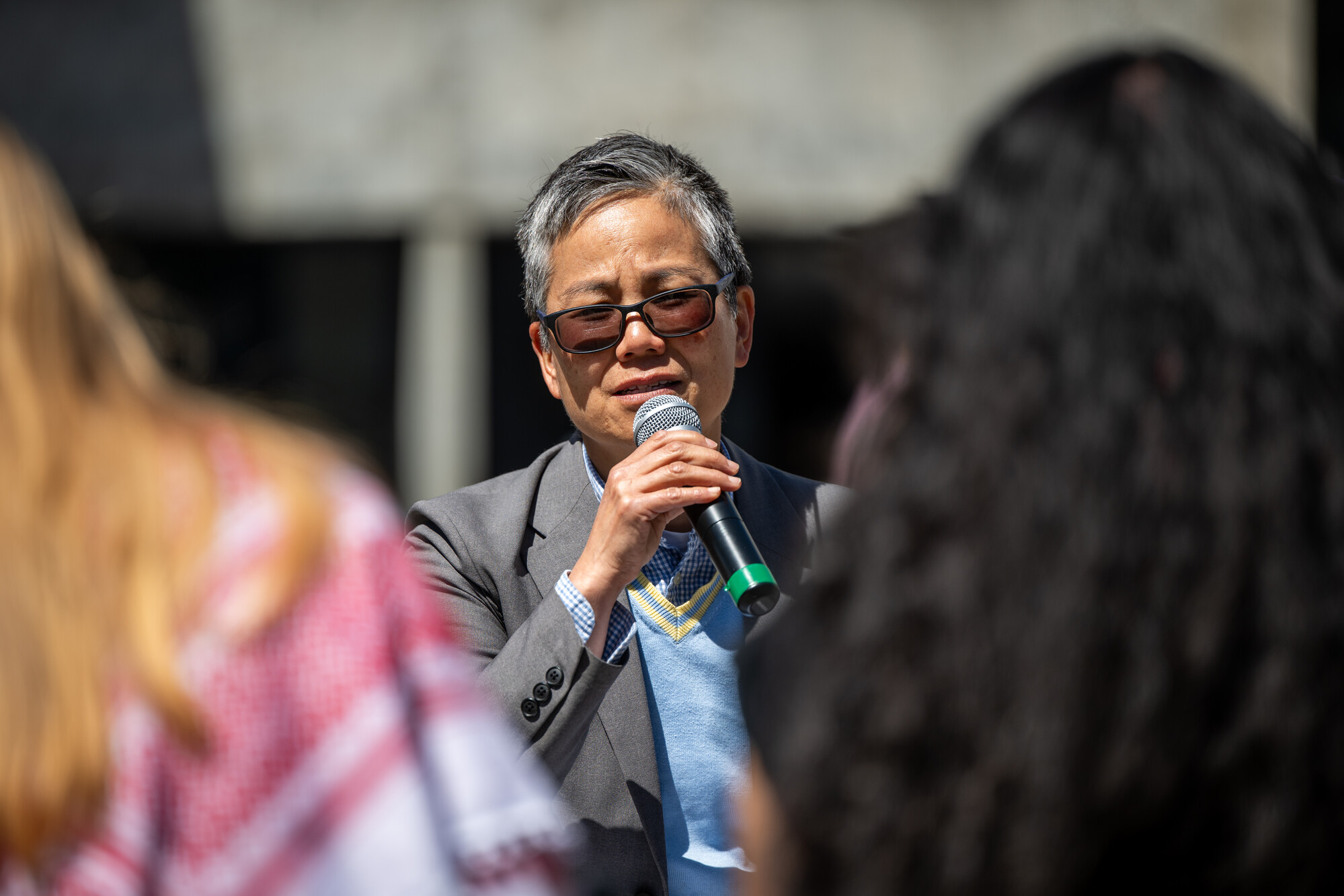
During Wednesday’s hourlong session, no campus policy changes were made. Afterward, however, Mahoney said she believed some of the students’ demands would bring about changes.
“I think we do need to set rules for AI, and I think students and faculty and staff have to participate in those rules. I also think we need to continue to work really closely with our undocumented students and their allies to do the best we can for them at a hard moment,” she told KQED. “I think that there’s a lot of agreement. There will not be full agreement, but hopefully enough that the students continue what they’ve always done here, which is work really hard to leave San Francisco State better than they found it.”
The Student Union plans to hold another general assembly to debrief the negotiations and determine next steps next week. But, Yan said, the Wednesday session had already accomplished at least one of the group’s goals.
“Every single student can see what administrators say, and hold them to account when they do make proposals … when they lie, when they make up excuses, and see when they’re not providing enough for their students,” he told KQED.