

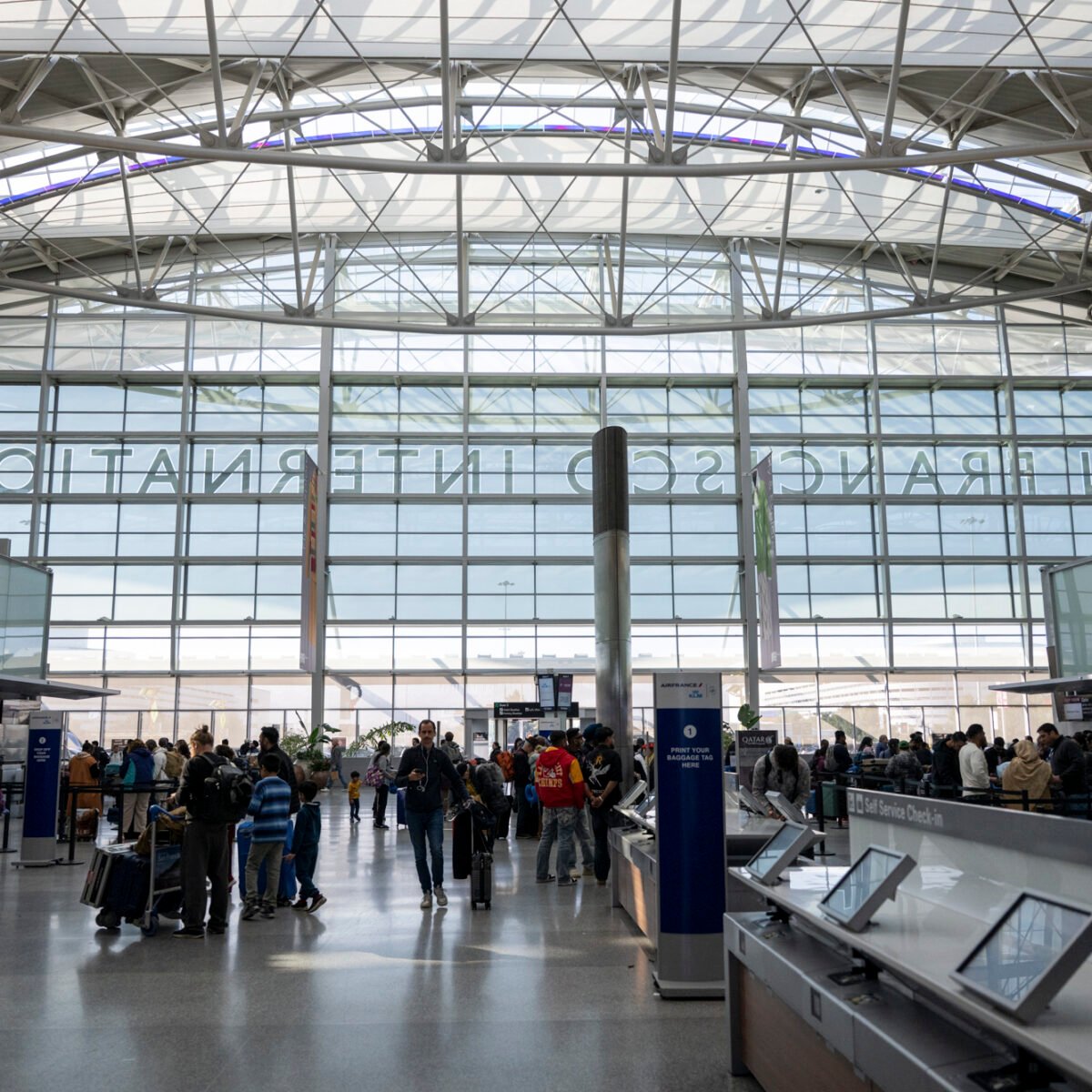
SFO uniquely has two main landing runways, about 750 feet apart. On a clear day, planes can land side-by-side, allowing around 60 arrivals per hour. On foggy days, SFO avoids these dual arrivals for safety reasons and reduces arrivals to 30 per hour.
Now, the FAA told KQED that the agency’s “safety measure prohibits flights from making side-by-side approaches to SFO’s parallel east-west runways in clear weather when the pilots acknowledge having the other aircraft in sight.”
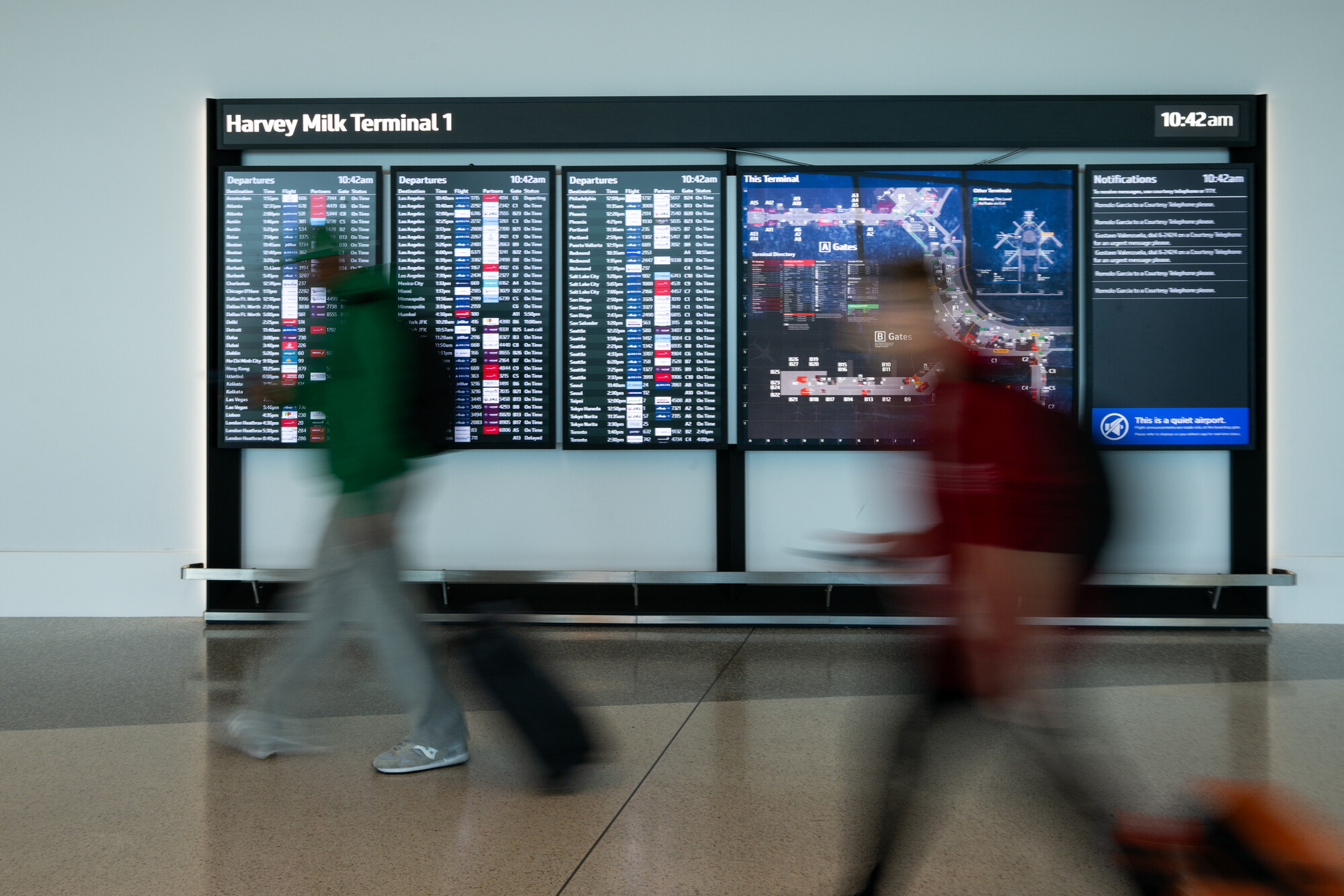
And as of Monday, the FAA’s new rule for SFO landings “requires staggered approaches, with one aircraft offset from the aircraft on the parallel runway,” the statement reads.
This change has already led to flight delays “averaging around 30 minutes,” SFO spokesperson Doug Yakel said.
So if you have an upcoming flight in or out of SFO, or are planning to travel soon, what should you know? Read more on these restrictions and how they could impact your flights in and out of the Bay’s biggest airport.
Jump straight to:
What are the changes to SFO’s runways, and why will this cause flight delays?
Firstly, you should know: Delays caused by this new FAA runway restriction are coming on the heels of unrelated construction work at SFO that’s also causing delays.
On March 30, unrelated to the recent FAA restriction, SFO closed Runway 1 Right for construction that is predicted to last six months. Yakel said the airport is currently forecasting that 15% of flights will be delayed over the next half a year due to this project.
But now, on top of that, the FAA restriction will also “increase the delay potential to approximately 25% of arriving flights experiencing a delay of at least 30 minutes,” Yakel said.
“We are working with the FAA on ways to improve the arrival rate at SFO,” Yakel said to KQED. “We remain in contact with both the FAA and airlines on this issue.”
The FAA confirmed to KQED that it is “exploring ways to safely increase the airport arrival rate.”
All of which is to say: Between construction and the new FAA restriction, there’s a higher chance passengers will face flight delays at SFO.
Does this just affect incoming flights at SFO?
The restriction — and the 25%-of-flights-affected figure — apply to arriving flights, Yakel said.
“But if that arriving aircraft is turning around to represent a departing flight, that could also experience a delay,” he said.
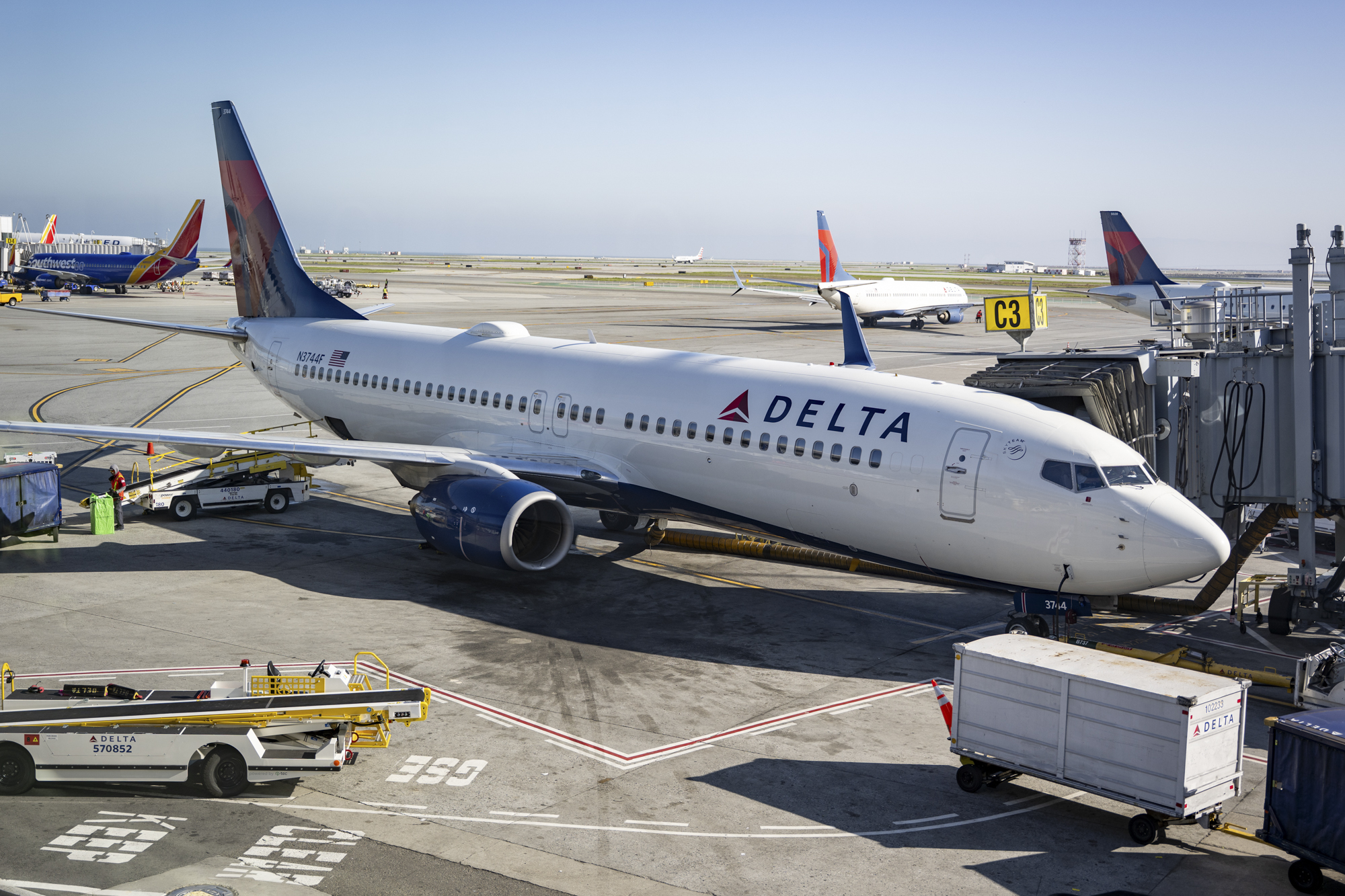
That means that even if your flight leaves from SFO, you could still be left waiting — because the plane your flight is using has been delayed arriving.
Will this impact existing bookings for flights arriving at SFO?
This depends on the airlines, Yakel said.
“We know they are looking into this,” he said. “Airlines would communicate such changes directly to affected customers.”
A spokesperson with United Airlines — which has its hub at SFO — said that they are “reviewing the FAA’s updated guidance to determine if we will need to make any changes to our flight schedule in the future.”
“We encourage customers to check their flight status in the United app,” the spokesperson said.
KQED photographer Beth LaBerge, who previously worked for years as a customer service agent for Delta Airlines, said in a previous guide exploring hacks for navigating SFO smoothly that the airport is already known for what’s called “flow control delay,” especially during morning flights when the marine layer comes in.