

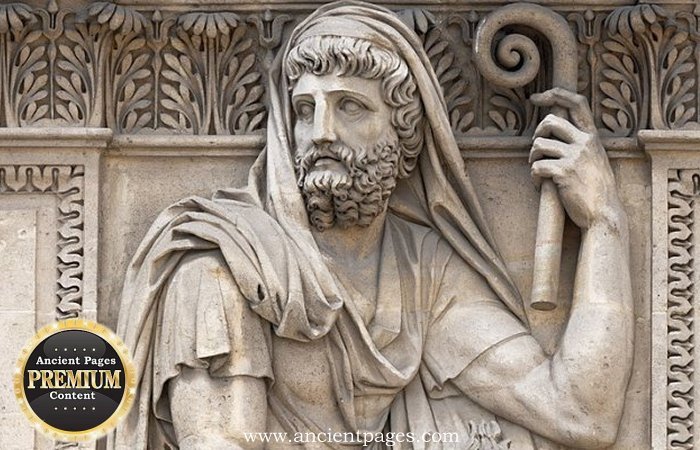
A. Sutherland – AncientPages.com – Legends say Numa Pompilius was the second king of Rome, but he was not a warrior king, but a statesman and politician.
King Numa Pompilius of the 7th century BC would institute eight craftsman guilds – dyers, tanners, leatherworkers, flute players, goldsmiths, and carpenters, according to classical writers. Pliny the Elder in his “Historia Naturalis” 34.1; 35.159) knew of a ranked list of collegia whose origins can be traced back to the reign of Numa.

In his “Life of Numa,” Plutarch contrasts Numa’s reign—characterized by peace, piety, and a dedication to law—with the more aggressive legacy of Romulus. He introduced new laws, customs, cults, and holidays. In contrast to the times of King Romulus and Rome’s involvement in wars, the ruler Numa Pompilius sought to bring Rome to quieter times.
As the legend says, after the death of the legendary Romulus, there was a long, tiring dispute over the next succession to the throne. Romulus was succeeded by Numa Pompilius, a man of Sabine origin, who was known for purity and wisdom.
He was chosen and agreed upon; however, he had to ask the gods first. The fortune-tellers were successful, and Numa put on royal robes. The new ruler began by introducing religious changes and claimed they were necessary because Egeria (a mythological water nymph who was his wife and counselor) had ordered him to do so.
Such alleged connections with the supernatural forces had raised Numa’s authority and prestige.
It is uncertain whether this fascinating figure really existed. There are only legends about Numa’s life, but no actual historical facts.

This is a preview of our premium article available only to members of Ancient Pages.
Become a member to read more – Click here
If you are already a member and have logged in to your account, you can access the article here

See also:
Tyrannical Tarquin The Proud: The Seventh And Last King Of Rome Was Banished
Cruithne: Legendary King, His Seven Sons And The First Celtic Tribe That Inhabited British Isles