


That’s no surprise. Recent polling suggests the technology weighs heavily on the minds of those already in the job market and those who seek to join it.
Several college graduates from around the state spoke with The California Report Magazine about how they’re navigating the unpredictable economy, and how AI factors into their job search. The testimonies below have been edited for brevity and clarity.
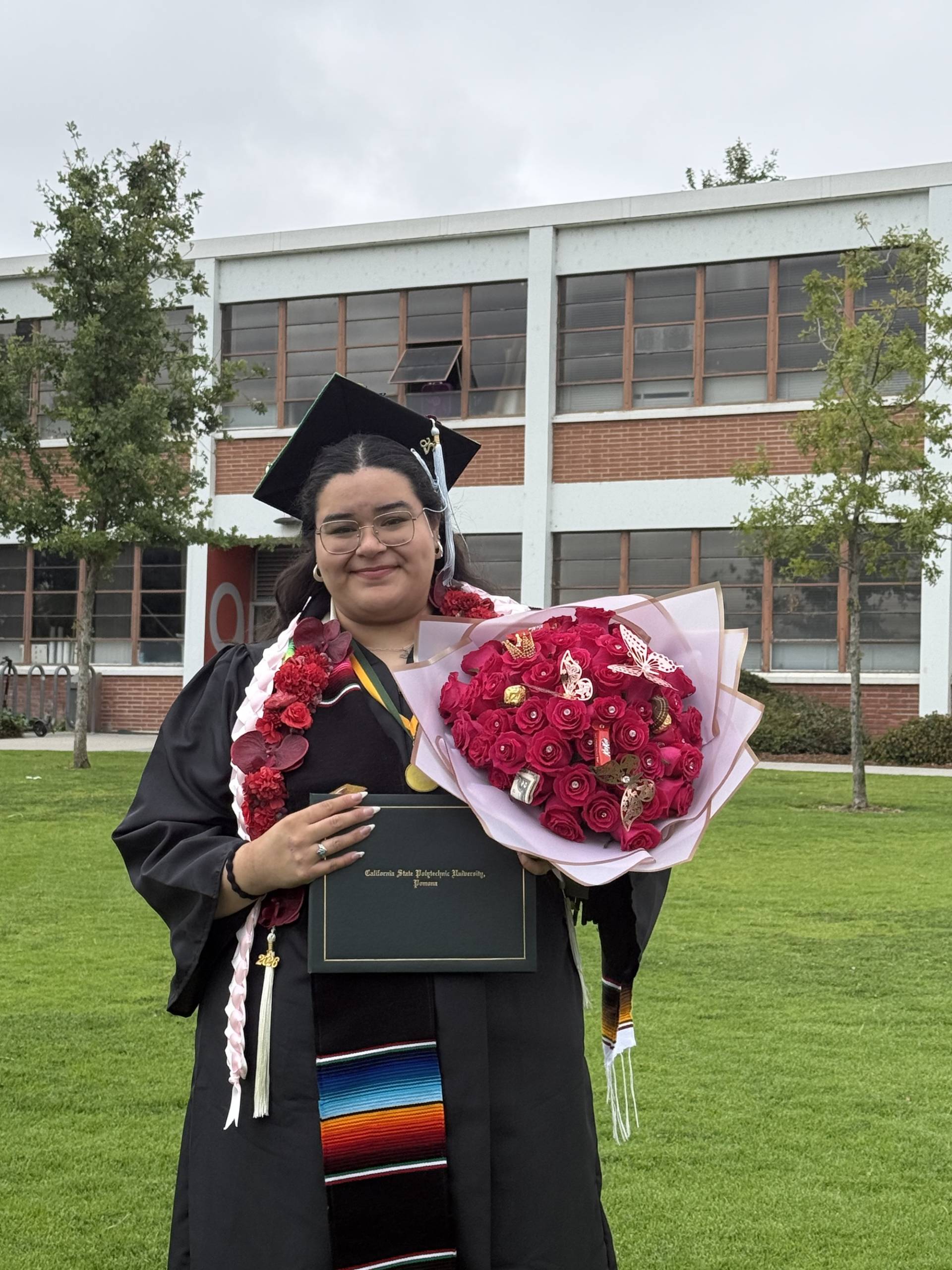
Gisselle Ulloa
School: California State Polytechnic University, Pomona
Major: Liberal Studies
What are your plans after graduation?
I plan to be a teacher in the near future.
How does AI affect you?
As a recent graduate, it is intimidating to apply to jobs and fail to meet the criteria of artificial intelligence. There’ve been occasions where I feel … the employer is not even going to gaze at my resume. Of course, jobs don’t come easily, and you have to earn your position. But it’s really difficult to learn to satisfy an algorithm instead of a person.
With my experience tutoring, I saw the effects of AI, social media and electronics in the classroom.
I worked with middle schoolers last year. Seeing my students struggle to write paragraphs with a pencil or solve math problems [with] ChatGPT was discouraging. It put into perspective the amount of work needed from teachers and staff to get students to where they need to be.
Teachers can only do so much. As an aspiring educator, [AI] is a really pivotal tool, and I’m sure it works for bigger things, [like] social media and technology. But I fear it’s going to impact classrooms negatively in the years to come.
Camalah Saleh
School: California State University, Fresno
Major: Political Science and Communication
What are your plans after graduation?
I go to China at the end of August to earn a master’s in Global Affairs as a Schwarzman Scholar at Tsinghua University. My goal is to connect international affairs and global affairs to immigration because I want to be an immigration attorney and work on refugee and asylum cases.

How does AI affect you?
When ChatGPT first came out, everyone was talking about it, and I didn’t know what it was. I ignored it. I’m in a field where you need to critically write and be a critical thinker, and it can’t just do your work for you. Then, I realized [AI] is not going away.
I’ve looked at the way it’s going to impact my career. To see lawyers using it is really worrisome because … there’s a lot of ethical concerns.
But I need to pay attention to how it’s going to advance. And people need to be literate in AI so that they can analyze what is and is not made by AI.
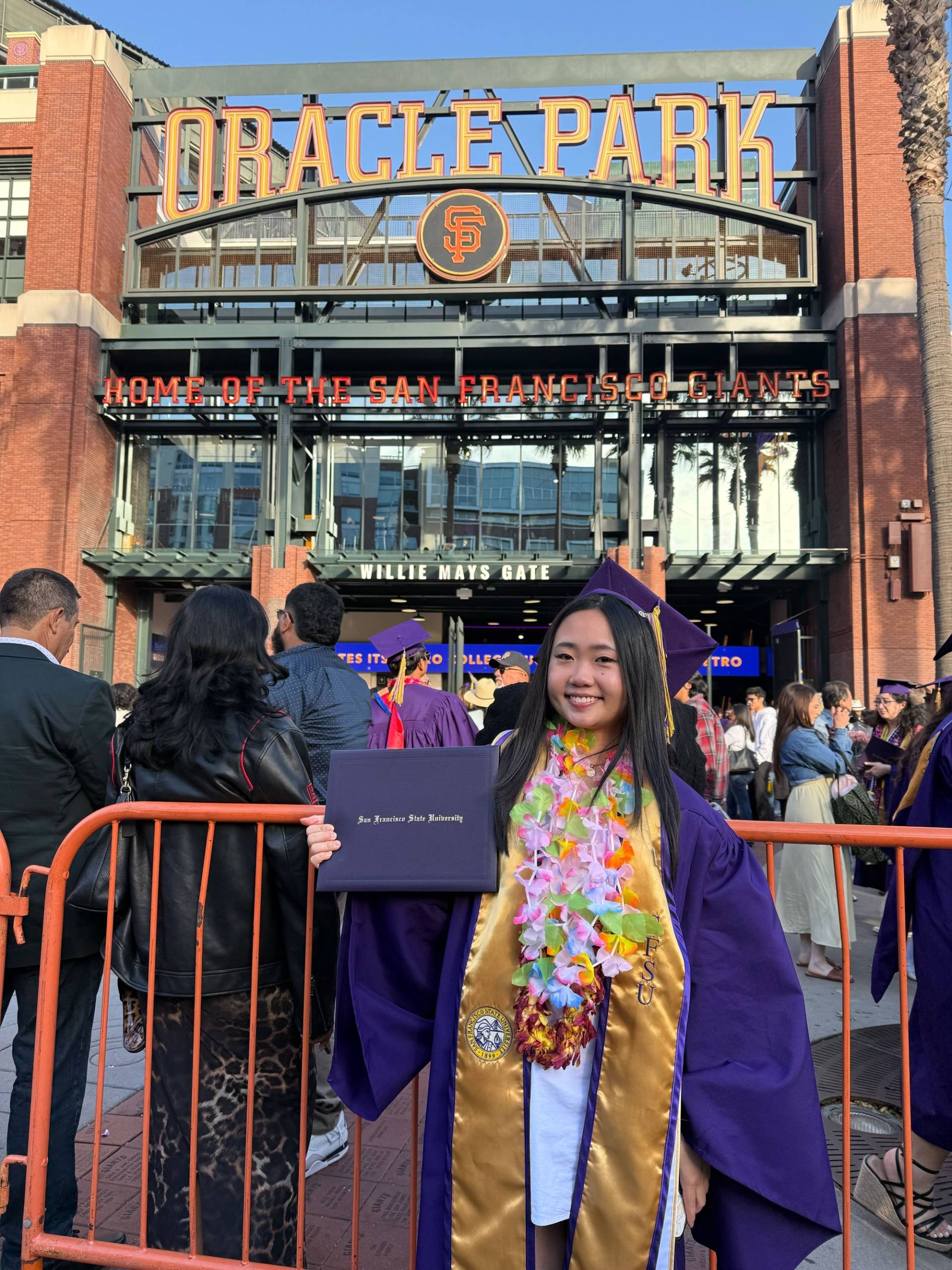
Michelle Yang
School: San Francisco State University
Major: Marketing
What are your plans after graduation?
I want to go into event [planning]. Hopefully, within the music industry.
How does AI affect you?
With most jobs that include administration and planning, AI definitely has or could have the potential to take over certain skills.
But with events, it’s a very in-person, human interaction type of industry. So, that’s not something I’m worried about.
Graduating college right now, it’s pretty scary with this threat of AI taking over. We spent so much time in school figuring out what we want to do after college.
I can decide not to use AI within my life. But as society progresses, especially in San Francisco, AI [will] become more incorporated into society, [and] there might not be a choice.
Michelle Yang is a Live Events intern at KQED.
Amelia Zai
School: UCLA (incoming senior)
Major: Mechanical Engineering
What are your plans after graduation?
I’ll probably start applying [for entry-level jobs] in the fall. I already know that even without AI, the job market is really difficult.
How do you feel about AI?
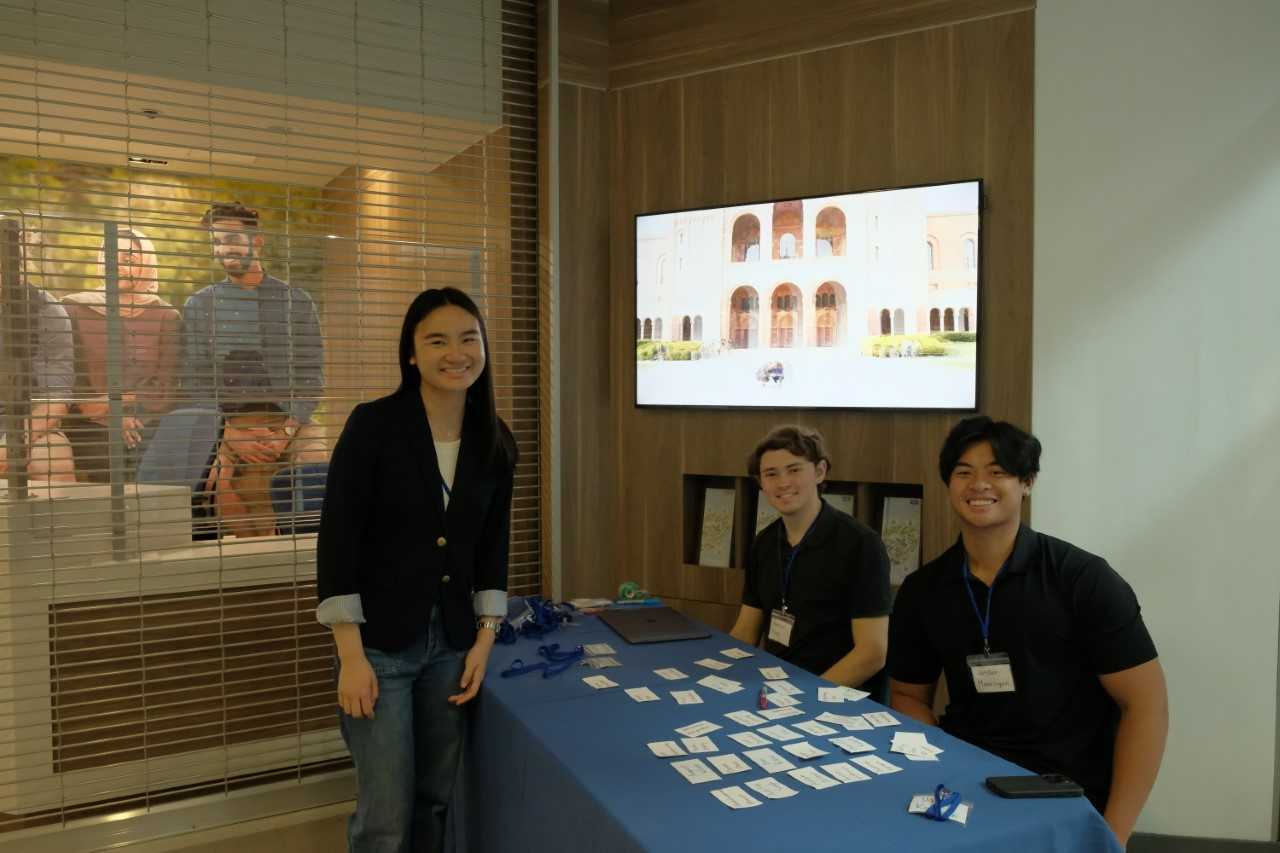
I’m the president of the AI Robotics and Ethics Society at the University of California, Los Angeles. A lot of students here are aware of how AI is reshaping the world. They see it in the news; they’re seeing it in their classes; they use AI to help them understand assignments. I do that too.
During every discussion, it’s inevitable that the question of whether AI will replace roles in some field comes up. I think it’s less of a competition between AI and people, and more of a competition between people who use AI and people who don’t know how to use AI.
Because I know that AI is such a powerful tool, I’m trying to use that to my advantage and integrate it into my workflow to make myself a more efficient thinker. It’s the responsibility of universities to ensure that their graduates are competitive. And one way to achieve that goal is to integrate AI.
Aaron Kim
School: UC Berkeley
Major: Political Science
Career path:
Labor/Union Organizing
How does AI affect you?
Luckily, in terms of my personal career trajectory, it still feels pretty peripheral. I ended up doing a lot of stuff in the union/labor world, so AI affects me less. None of the jobs that I was looking for are AI-exposed as much.
A lot of the organizations I’m interested in are concerned with progressive issues and working people. How would you feel if your union rep is ChatGPT and tries to get you to sign union cards? That’s something AI can never take away. Because so much of organizing is based on building trust, human to human.