
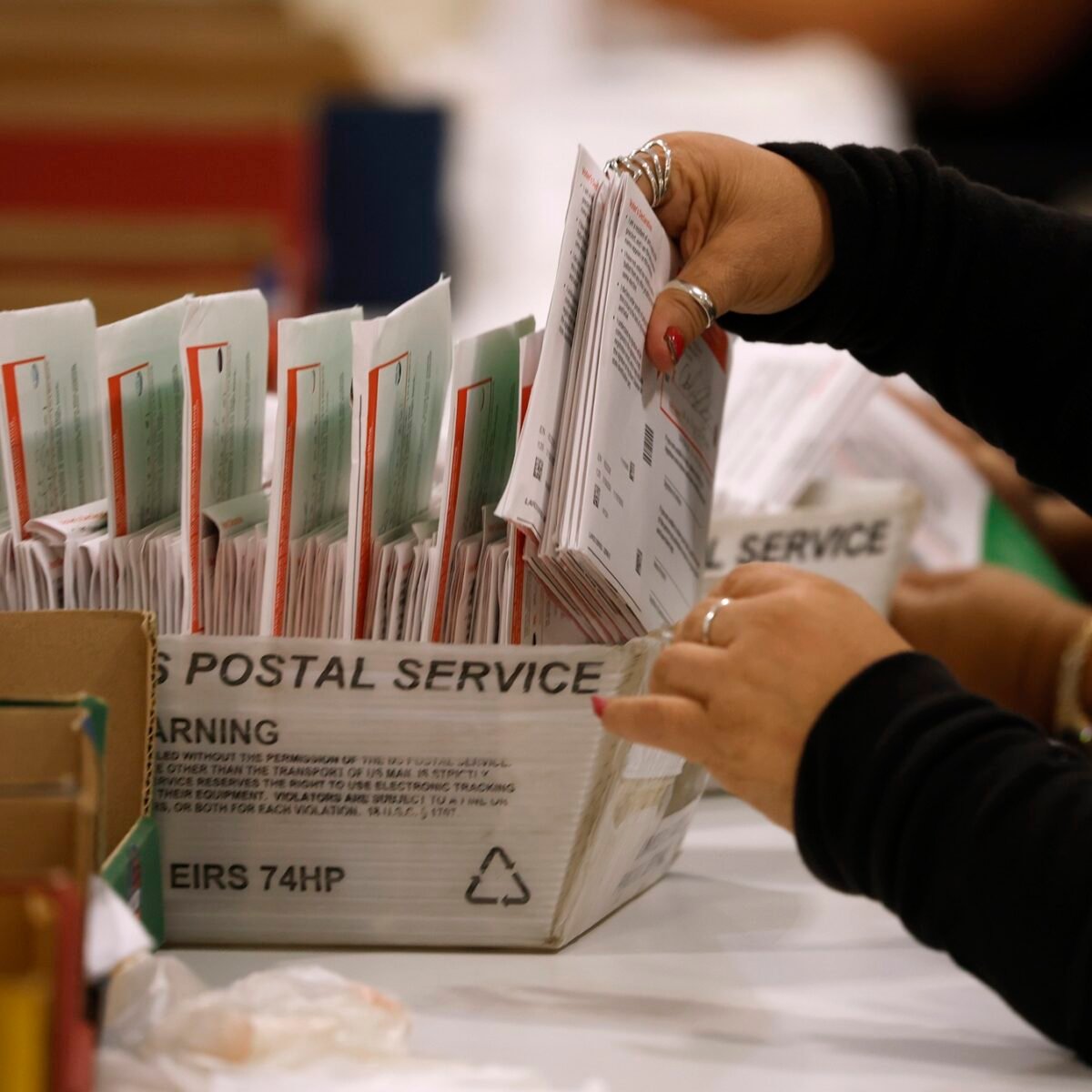
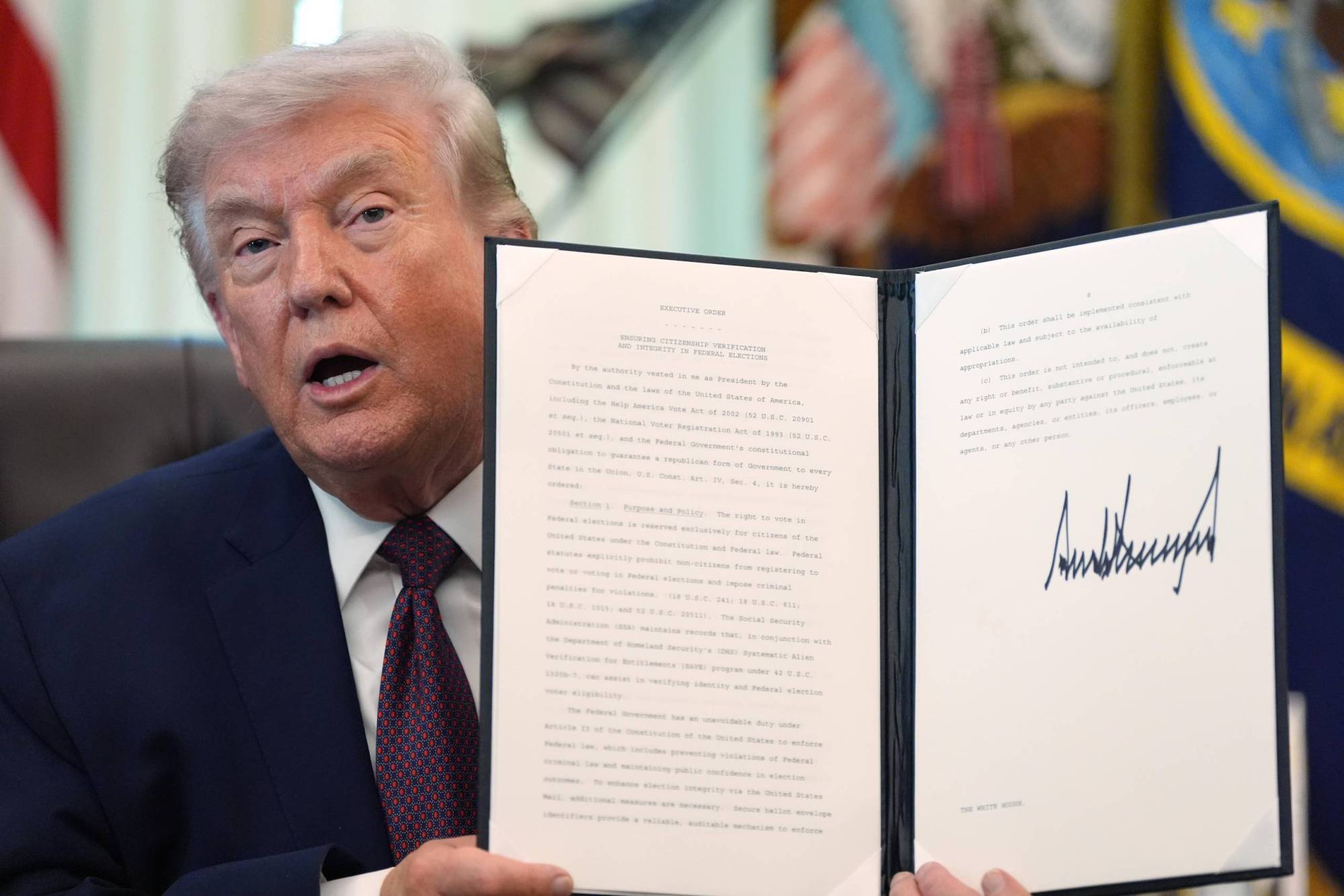
The lies — combined with Trump’s sustained attacks on election security and a number of moves or threats his administration has made to interfere with local election processes — have raised alarms about what could happen in November.
To set the record straight, KQED’s Political Breakdown podcast sat down with election security expert David Becker to discuss California’s voting process, the federal government’s role in elections and the likelihood that the Trump administration could interfere in the midterms.
Becker is executive director and founder of the nonpartisan, nonprofit Center for Election Innovation & Research, which works with election officials of both parties to ensure voting is secure, including providing pro bono legal assistance to election officials who are threatened with frivolous criminal prosecution, harassment, or physical violence.
He was previously a senior trial attorney at the Department of Justice’s Civil Rights Division, overseeing voting rights enforcement in several states, including California and Georgia.
Why does it take so long to count ballots in California?
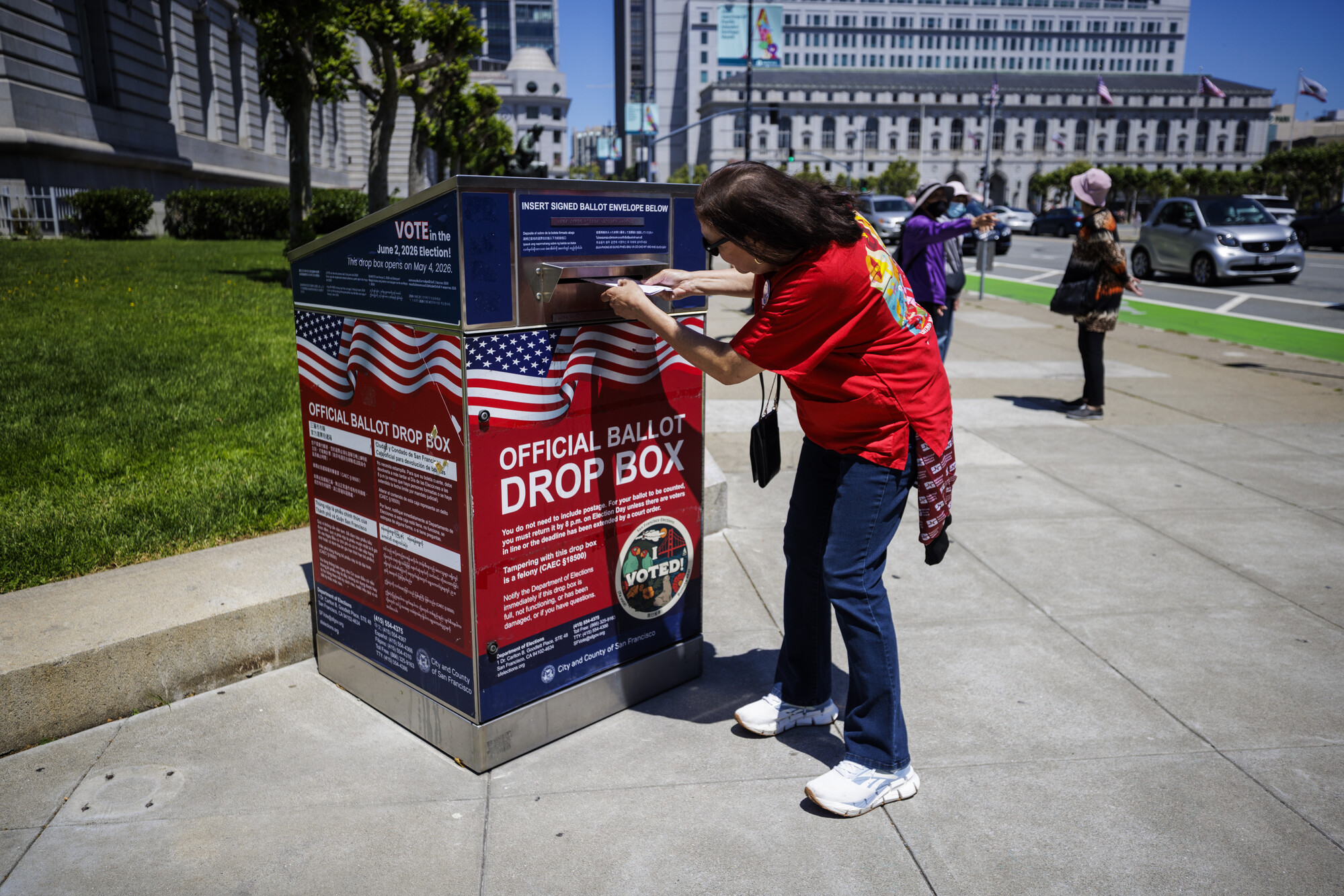
In short: Because California’s a giant state with 23 million registered voters that has enacted a slew of policies aimed at making voting as easy and accessible as possible. Most notably, the state automatically sends every registered voter a mail-in ballot — and allows those ballots to arrive up to seven days after Election Day, as long as they are postmarked by Election Day.
As Becker said, when people mail in their ballots, it takes longer for county election officials to verify that legitimate voters cast those ballots and ensure that they aren’t fraudulent.
“And we want that to happen. We want every single one of those ballots to be assessed to make sure the person hasn’t voted in another way,” he said, “and to confirm that the right person is returning it. When you vote in person, that’s done at the polling place, before you ever get a ballot. When you do it by mail, it’s done afterwards, when the election officials get it.”
Becker said that by the end of election night, some 5.1 million ballots were counted around the state.
“That’s more than most states see in a presidential general election,” he said, noting that many counties have been counting at a fast clip since. “Los Angeles County, for instance, is counting about 200,000 mail ballots every single day. That’s huge.”
(Los Angeles County has 9.6 million residents — more than the population of 40 U.S. states.)
In addition to verifying mail-in ballots, election officials in California are working to review provisional ballots — those cast when a voter’s eligibility can’t be immediately confirmed — and ballots from members of the military deployed overseas.
Becker said that this year, amid a competitive governor’s race, many Democrats held onto their ballots until the last minute, delaying the count even further.
Are California’s election laws out of step with American tradition?
No, Becker said.
“We’ve had mail voting since at least the Civil War, probably before that. We have extensive federal laws that actually accommodate late-arriving ballots for people like military and overseas voters, which is really important,” he said.
When we talk about a slow count, are we actually talking about counting ballots or calling races?
Calling races. Becker said that the public doesn’t really care when every single ballot is tallied — they care about knowing the outcome of important races.
The slow count only matters, he said, when there are close races that are difficult to call.
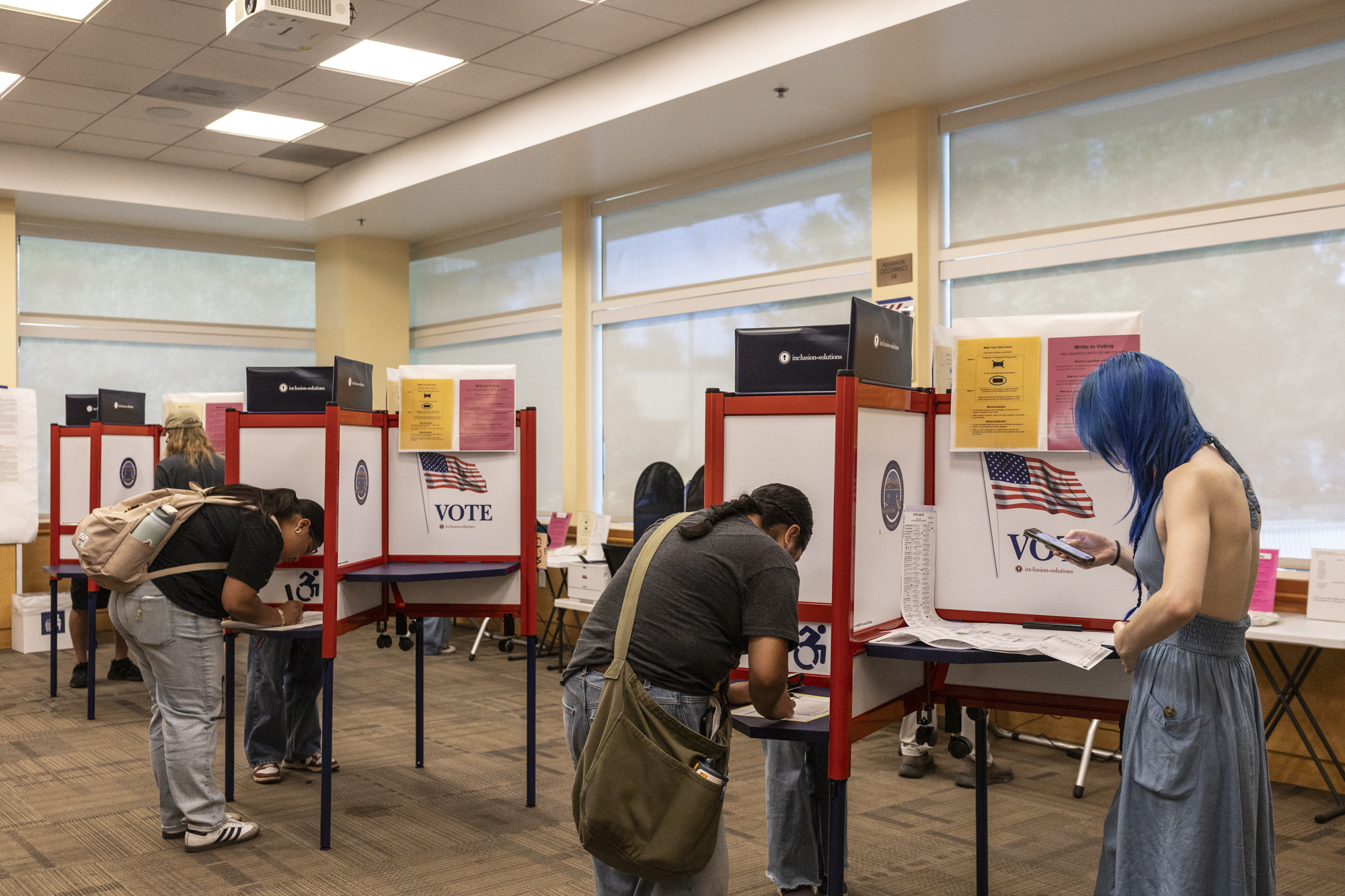
“On election night in 2024, at 8:01 p.m. Pacific time, they called the presidential race. Is that because they finished counting the presidential ballots? Not even close. But the margins were so big, there was no question who won the presidential race. But in those congressional races that were really close, that were decided by a few-thousand-vote margin, they needed a lot more detail,” he said, adding that “every single state that ran a June 2 primary, not just California, is still counting some ballots.”
Speaking with KQED on June 9, Becker said that a week after the election, “most of the major races are pretty clear and have been called by the media” in California.
What could California do to speed up its vote counts?
Becker said individual voters could speed things along by turning in mail-in ballots earlier, or voting prior to Election Day at early vote centers. In other words: don’t wait until the last minute.
Counties and the state could also give election offices more resources to speed up the count, according to election officials.
It’s not clear whether barring ballots from arriving after Election Day — the subject of a case now before the U.S. Supreme Court — would actually speed things up, since many of the mail-in ballots counted later are the ones turned in on or just before Election Day.
Trump has talked about nationalizing elections — why doesn’t the federal government control elections?
“If you go back to the founders, they had just fought a war against a monarch,” Becker said. “And if you read the original Constitution, even before the Bill of Rights, there is one thread that is woven throughout the Constitution. And that is the limitations on executive power. They were really careful about this. They wanted power to be retained by the states.”
He said that the elections clause — giving states the power to decide the time, place and manner of elections — “is literally the fourth paragraph in the Constitution.”
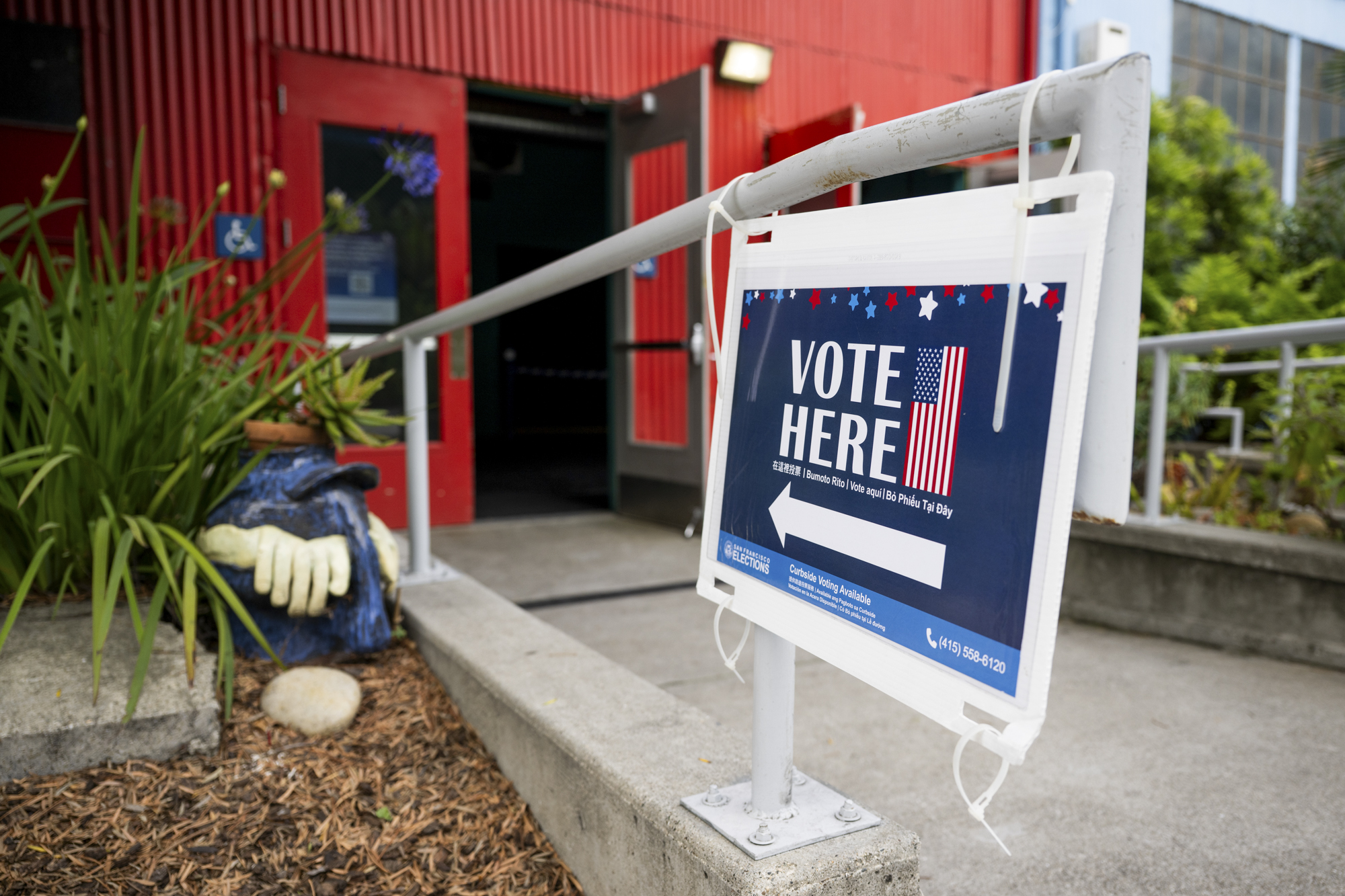
That dispersal of power is a “security feature,” Becker said, that makes it more difficult for anyone to carry out election fraud on a large scale.
“We don’t run a national election. We run 10,000 little elections all over the country. We run 58 little elections here in California,” he said, one for each of the state’s 58 counties. “If there were a bad actor, that bad actor could not overturn the will of the people nationally or in a state.”
Could President Trump put military troops or immigration agents at polling places?
No. That’s prohibited by law, Becker said. But even the threat of it is troubling, he said.
“I think that there are individuals in the government and in the United States that would like American voters to be scared,” he said. “They would like them to think that voting might be dangerous. Because that actually could depress turnout, but it’s a lot easier to get them to worry about that than it is to actually do it.”
How common a problem is election fraud, and do people get away with it?
“It’s extraordinarily rare,” Becker said. But he said that it does occur — among both Republicans and Democrats.
And Becker said offenders are almost always caught.
“It is one of the dumbest crimes someone can commit,” Becker said. He knows from experience: he investigated voter fraud cases as a DOJ attorney.
“It is one of the easiest crimes to detect. … If you want to spend some time in lodging courtesy of your state or federal government, you should try to commit voter fraud, because you will be caught and you will go to prison. And if you’re a noncitizen, before you get sent to prison, you will be deported. And this is why we know it’s so rare. The incentive structure just isn’t there to cast one ballot in an election, which 150 million are gonna be cast.”
Becker also said that despite Trump’s obsession with voter fraud, “this administration has had nearly 18 months [and] the full power of the federal government and the Justice Department. And they’ve been spending a ton of resources looking for fraud. And what have they shown us so far? Nothing.”
Are the president’s attacks on elections working?
Becker doesn’t think so. He said that despite the drumbeat of fraud allegations, turnout in the last two presidential elections was the highest in modern American history.
He said it’s easier and more secure than it has ever been to vote — and that Americans largely report being happy with their voting experience and with how local officials are running elections. That’s how it should be, Becker said.
“We have to remember how much elections are a celebration of our democracy, a celebration of our nation, of our citizenry and the joy of voting. We should recapture that,” he said, predicting that this fall will set a record for midterm election turnout nationally.