

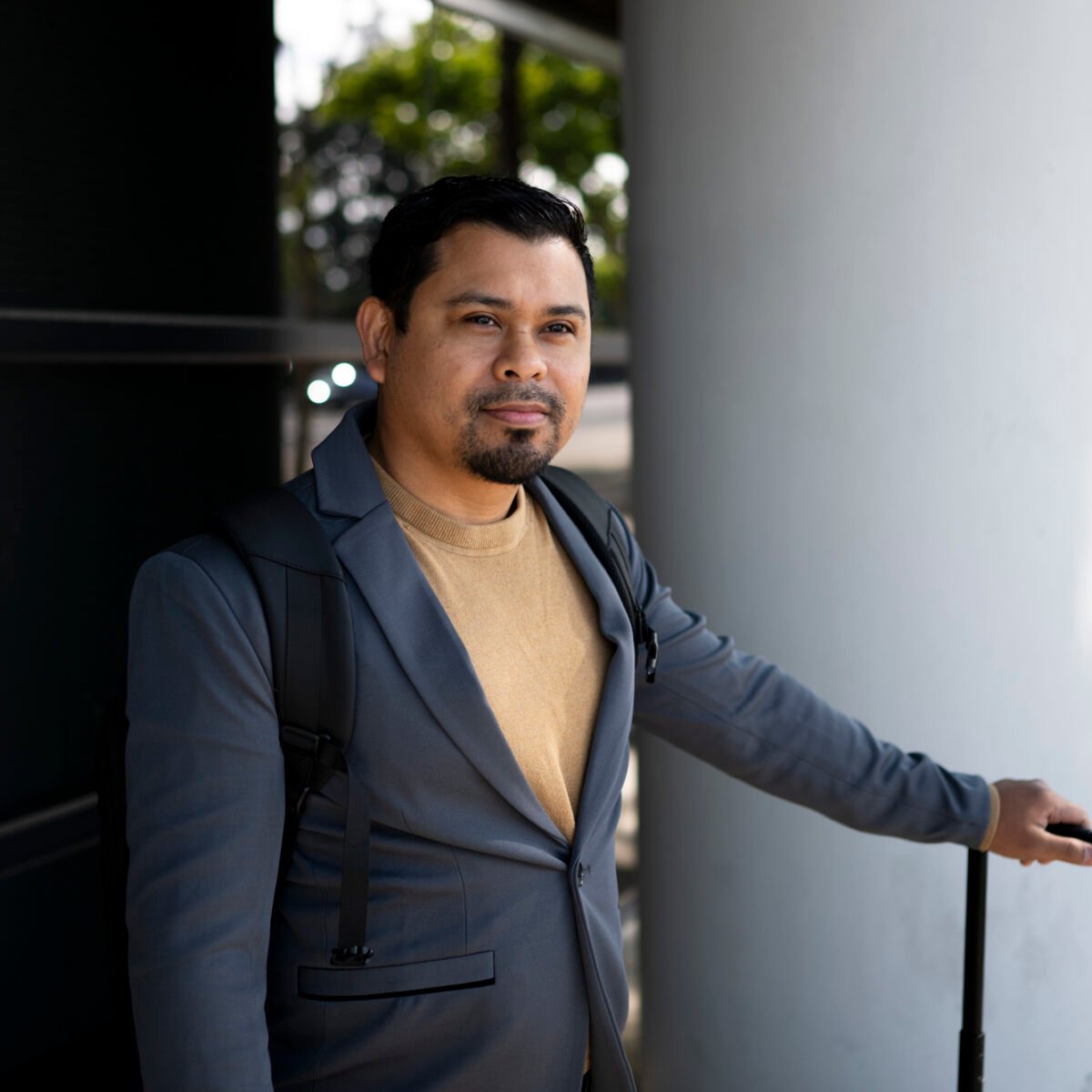
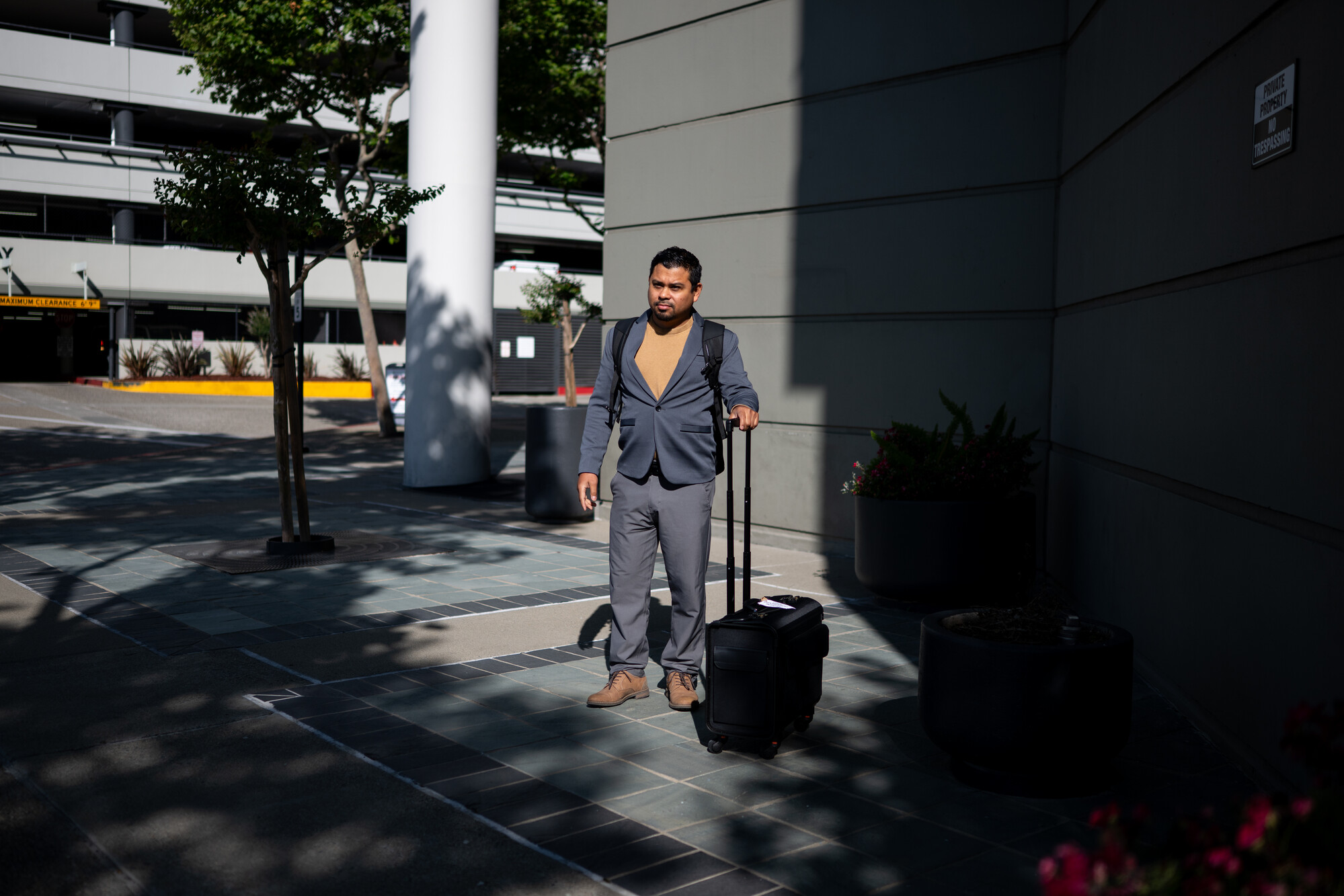
“What I want is to help you,” Jaime said, handing her an asylum application.
Rosaura, who, like other asylum seekers KQED spoke to, asked to use only her first name for fear of retribution, told him she lived far away, in a small town near the southern end of the Central Valley. He handed her a packet listing free and low-cost legal resources by region, then offered to connect her with a volunteer who could help her fill out the paperwork — aware that, with most immigration legal aid groups overwhelmed by calls, she’d be unlikely to get a lawyer in time.
“You have to show up with the application in hand,” he told her, referring to her next court date. “Otherwise, the judge told you, ‘I will deport you if you don’t bring me anything.’ OK?”

He took down her phone number and told her to expect a call.
Jaime’s days are filled with Rosauras — people navigating the complex bureaucracy of immigration court, often without attorneys, interpreters or a clear sense of what judges are asking of them.
“In my experience, people are too afraid in that courtroom to understand what is happening,” said Jaime, the community defense program manager for the SAFE Center in Contra Costa County.
His work to help people understand has taken on new urgency as the Trump administration aggressively reshapes the nation’s immigration system, including by shutting down San Francisco’s longtime immigration court.
For decades, it was Northern California’s principal immigration court. Over time, advocates built around it one of the most extensive immigrant-defense networks in the U.S. — a web of nonprofit legal organizations, volunteer court companions, rapid-response groups and pro bono attorneys who help immigrants find their way through a system where they’re not guaranteed legal representation.
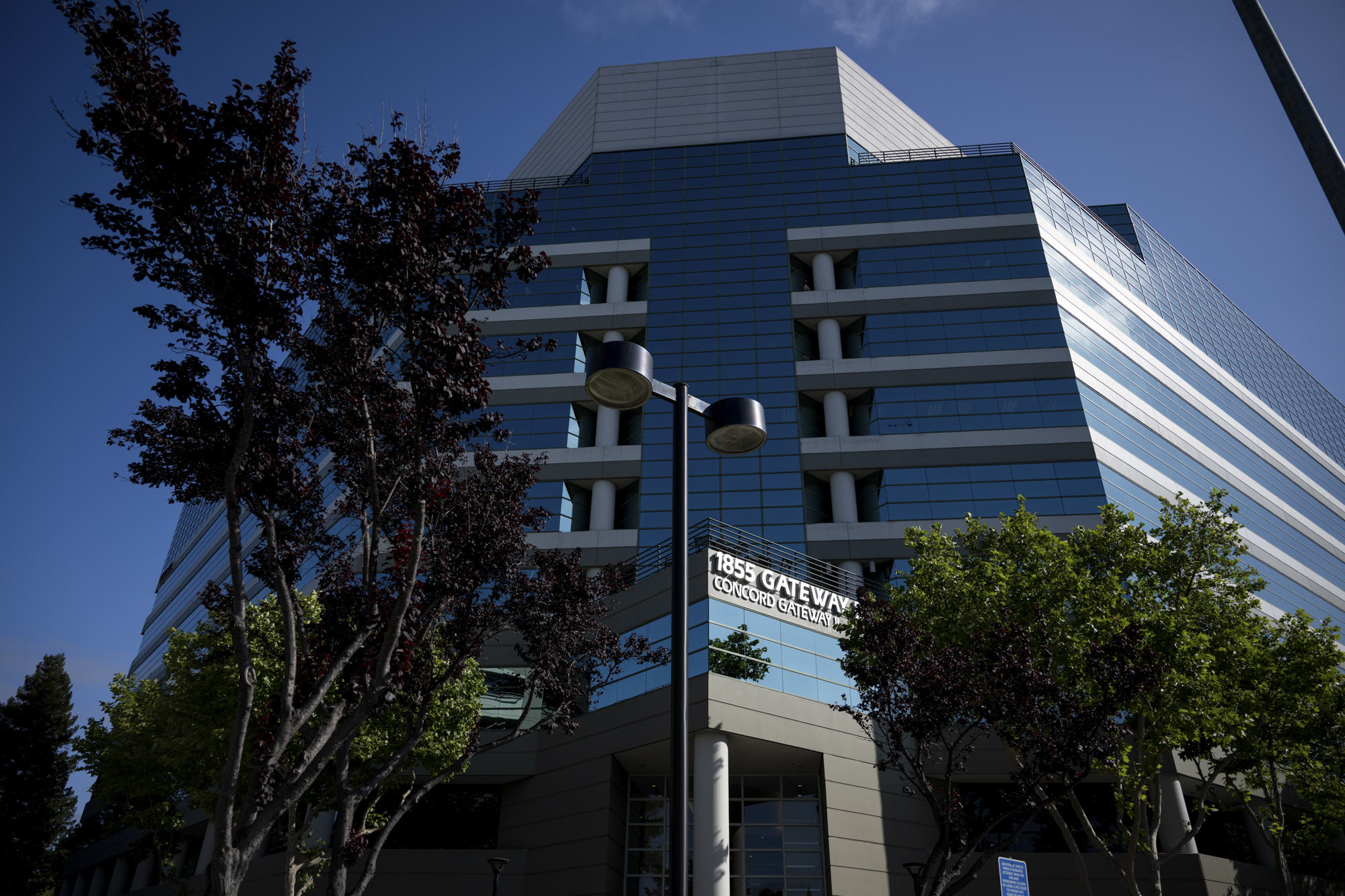
But by the end of this year, thousands of cases handled at the downtown courtroom on Montgomery Street are expected to be transferred to Concord, about 30 miles to the northeast, where the immigration court is only a couple of years old and the support infrastructure around it is still developing.
Jaime knows the importance of building up that network. He once stood in front of an immigration judge himself.
A firsthand look at a complex system
Growing up in Granada, a picturesque colonial city on the shores of Nicaragua’s largest lake, Jaime studied business administration, worked in sales, married and started a family. Then, he said, the political situation changed. “It was not safe.”
Out of concern for relatives still in Nicaragua, he spoke only cautiously about why he fled. “People in power … want to remain in power no matter what,” he said. “And that’s when it’s really dangerous for other people to speak against them.”
In 2019, he left behind his pregnant wife and began a six-month journey north through Honduras, Guatemala and Mexico. Along the way, he spent two weeks in a derelict jail in Chiapas and was slashed by a stranger with a knife.

At the U.S. border, he applied for asylum from Tijuana under the Trump administration’s “Remain in Mexico” program.
After one of his hearings, he was unexpectedly detained while returning to Tijuana and spent six months in a San Diego detention facility. There, he began teaching himself the intricacies of the U.S. immigration system, studying books and case law in the library.
“At that point I realized, oh my God, this is so complex,” he said. “Because even with my education level, I couldn’t understand much.”
He wrote letters to immigration legal aid organizations until one agreed to take his case. After his release, he moved to the Bay Area, where a woman with extra space in her Piedmont home offered him a place to stay through an immigrant support network.
He lived there until 2023, when he was granted asylum. “It felt so good … because I had the hope that I’m going to see my family soon,” he said. The following year, his wife and two children joined him in California. So when Jaime learned about a new job helping immigrants like him navigate the Concord court, he immediately felt drawn to it.
Today, he’s at the court nearly every day it’s open, helping people find their courtrooms, understand judges’ instructions and connect with services, while training a growing cohort of volunteers to do the same. He runs the volunteer welcome navigator program at the court, a collaboration between various community and legal services organizations.
Most of the people appearing in Concord immigration court were released into the United States after crossing the border and issued notices to appear before an immigration judge. Many are seeking asylum. Their first hearings are often brief procedural appearances where judges explain charges, deadlines and legal rights. Individual asylum hearings, where a judge decides whether someone can remain in the country, are typically scheduled years into the future.
According to the Transactional Records Access Clearinghouse, or TRAC, at Syracuse University, more than 3 million cases are pending in immigration courts across the country. Concord alone already has nearly 60,000 such cases.
With thousands more cases coming from San Francisco, the backlog means “people are going to have longer and longer waits to actually have their day in court,” said Milli Atkinson, who runs the San Francisco Bar Association’s Immigrant Legal Defense Program.
Many immigration advocates and legal observers see the restructuring of the Bay Area courts as part of a broader shift in the culture of the immigration court system under the Trump administration.
“By closing courts and reassigning cases — and in this case, to Concord — the Executive Office for Immigration Review is thinking, ‘How do we change that pro-immigrant culture that we saw in the immigration courts for many years?’” UC Davis law professor Kevin Johnson said.
‘The kids feel their fear’
On a morning in late April, Jaime stood near the door of a packed courtroom. Next to him, a volunteer court observer took careful notes on the proceedings, sweat stippling his forehead.
The judge sat behind two computer screens, the top of her head barely visible above them. Lawyers from around the state appeared remotely on large monitors while their neatly dressed clients sat in person before the judge, one after another.
An hour in, it was hot, and the kids in the audience were starting to squirm. Jaime spotted a girl, maybe 5 years old, with dark bushy bangs, in the back row of the gallery, and he quietly squeezed through the aisle to hand her a picture book.
The girl looked through the book a few times, then turned her attention to grooming her father’s hair.
For Jaime, seeing these children is one of the hardest parts of the work. “Sometimes they smile, they’re really happy, they don’t care about what is going on. But sometimes also, I can see the fathers are terrified,” he said. “The kids feel their fear.”
Soon, the young girl was lying on the floor between benches while a man in an orange jumpsuit appeared by video from a detention facility in Louisiana. Amid confusion about his arrest record, which appeared to include a conviction for leaving the scene of an accident, the government attorney asked for additional time to prepare.
The judge addressed the man: “Do you want more time to find an attorney?”
“Locked up in here, I can’t get one,” he said, explaining that he’d tried calling around, but nobody answered.
She repeated her question.
“No, I don’t want anything,” he said.
In the back of the room, Jaime’s colleague crouched down to offer the girl more books. When her family was finally called before the judge, alongside several other people without attorneys, she carried one with her to the front of the courtroom.
As the judge explained that the proceedings would determine whether the family had a right to remain in the United States, the girl sat cross-legged on the floor, paging through the comic book. Her parents took the judge up on her offer of more time to find an attorney.
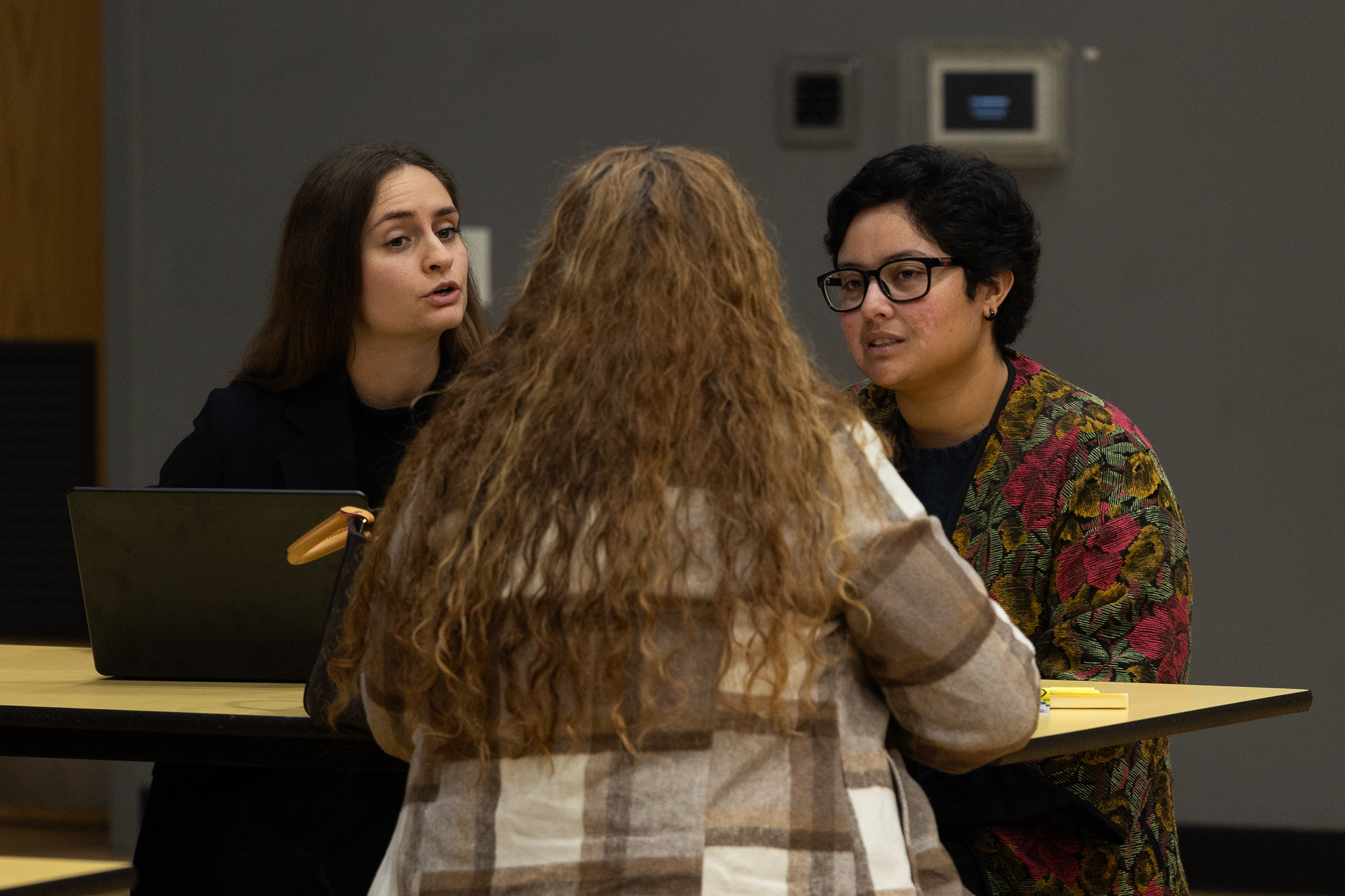
Afterward, Jaime walked them out of the courtroom and offered a free consultation with the attorney of the day — a position staffed by lawyers who volunteer their time and attorneys with Stand Together Contra Costa, a collaboration between the county and other organizations.
The Concord courthouse now has attorneys of the day on hand about 70% of the time, and advocates say they’re working to get to full-time coverage.
Volunteers who aren’t attorneys have also been trained to help people complete asylum applications when they have nowhere else to turn — as in Rosaura’s case.
Reciprocating life-changing support
The Concord immigration court is housed in a modern, mirrored office building near downtown. Often, a line forms outside before it opens at 8, serenaded by a makeshift chorus made up of congregants from around the region.
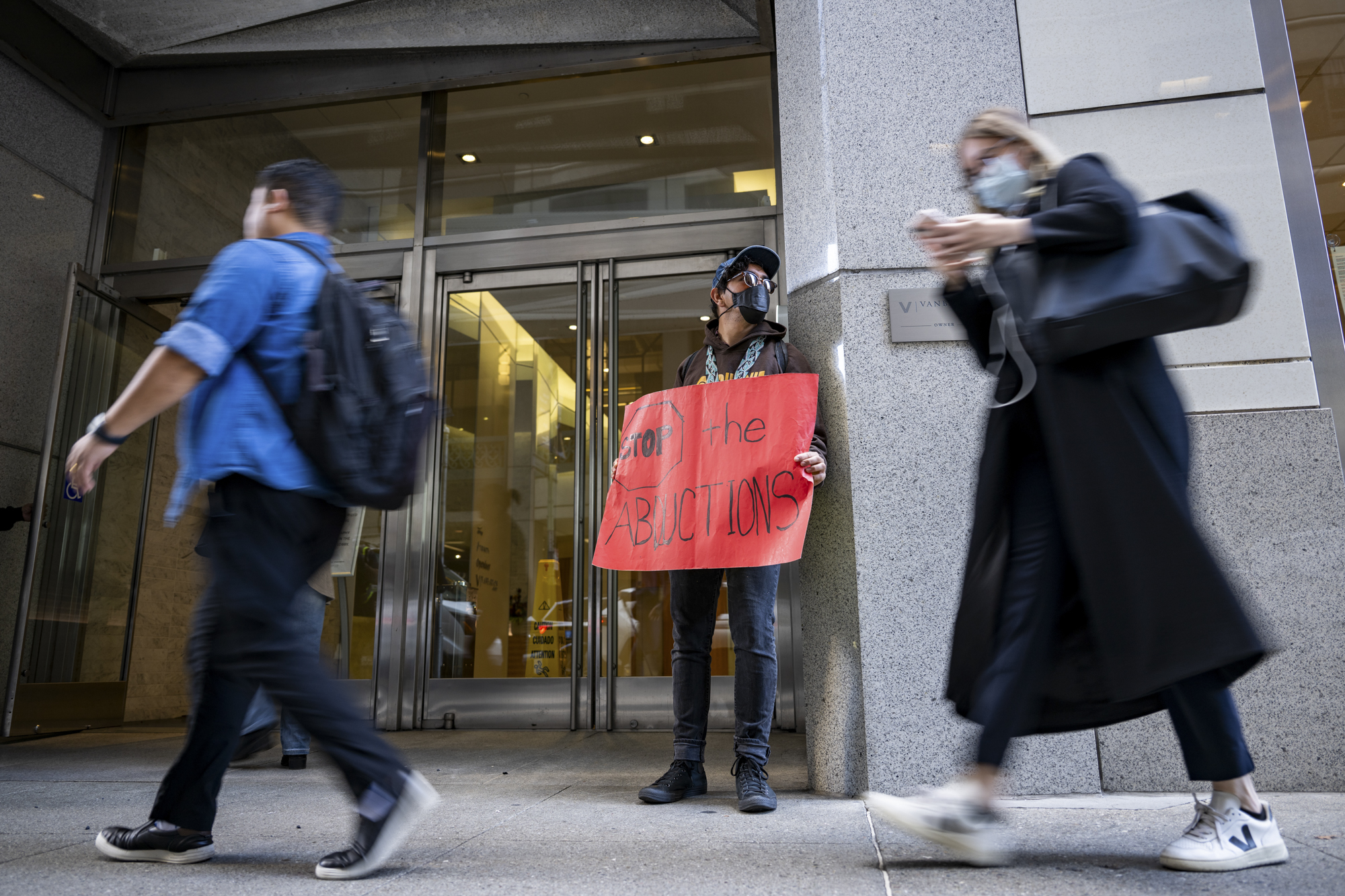
On a Tuesday morning, a small group from Kehilla Community Synagogue in Oakland and Mt. Diablo Unitarian Universalist Church in Walnut Creek stood on the sidewalk singing “This Little Light of Mine” in alternating Spanish and English verses.
They held signs that read “Keep families together,” “Don’t lose hope,” and “We are here with you.” Cars honked as they passed.
“People have come up to us, hugged us, thanked us, sometimes in tears,” said Penny Rosenwasser, of Kehilla. “The lawyers come up, too, and just thank us, because it gives them support as well. We’re all part of it together, a team.”
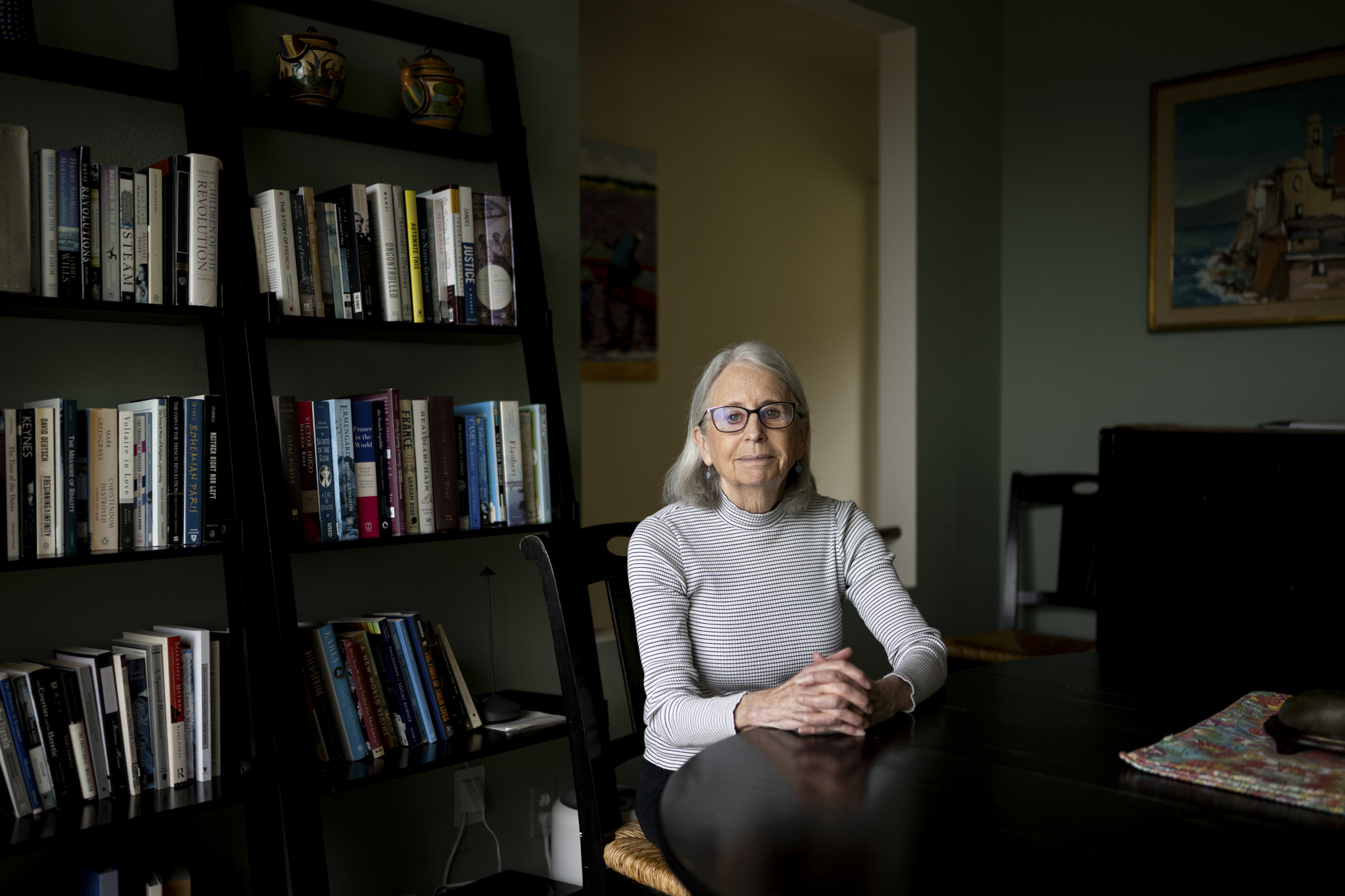
Mary Rae, a volunteer in training, started her work at the court out on the sidewalk. Today, she stood in the lobby preparing to begin a day of learning alongside Jaime. She’d already watched the required videos and tagged along with other volunteers; now she was here to learn from the man in charge.
Rae, 73 with silver shoulder-length hair and metal-framed glasses, is a former emergency medicine doctor from Texas who moved to California after retiring in 2020. “I just feel the need to help these people. They’re coming here to start a better life,” she said.
The court occupies the top three floors of the 10-story building, also home to an urgent care center and various businesses. When Rae emerged on the top floor, she encountered a security line curled around the narrow elevator bank.
One by one, people fed their bags into the X-ray scanner and stepped through the metal detector. Rae, with her replacement hip and knee, got a thorough wanding.
“Much more rigorous than TSA,” she said.
Inside, the walls, ceiling and linoleum floors were white. Fluorescent lights blazed down on notices tacked to the walls with warnings about asylum fraud and the “benefits and consequences” of self-deportation.
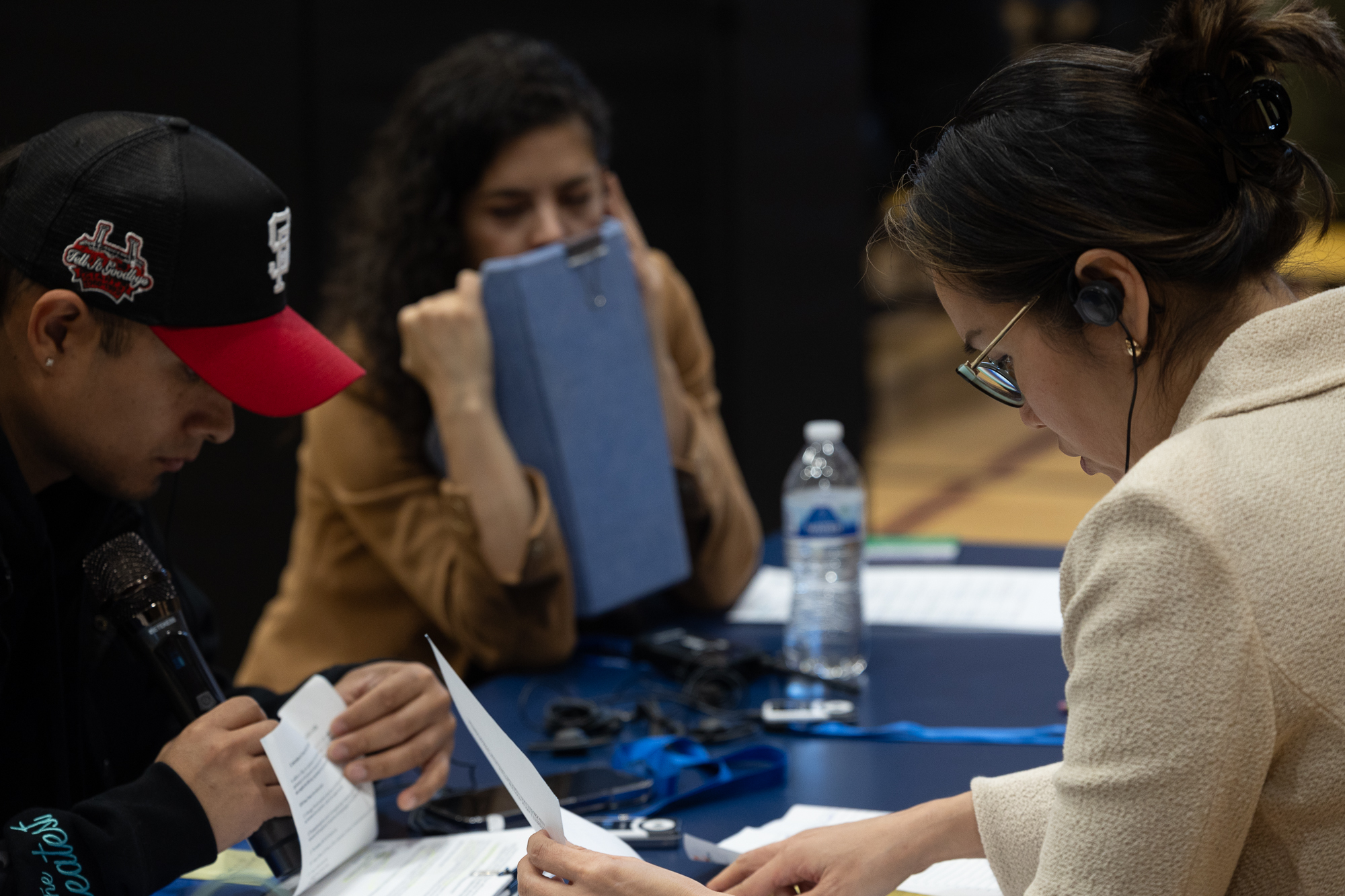
Jaime, in an azure blazer and black-rimmed glasses, greeted Rae and launched into a tutorial. He described the role of volunteers: Be present, supportive and smile; give people resource packets and connect them with the attorney of the day. He showed her where he stores the box of donated children’s books in various languages and explained that there’s limited grant funding available to cover the $100 annual asylum application fee. He reminded her not to give legal advice.
Every couple of minutes, he stopped to attend to a need, speaking in Spanish to people looking for help.
“Do you have court?” he asked a lost-looking woman, then showed her to courtroom 17.
Volunteers wearing baby blue lanyards or blue vests that read “Contra Costa Civil Rights Alliance” stepped in and out of courtrooms, ushering people to the pro bono attorney room and explaining judges’ instructions.
“What’s this?” a man asked Jaime upon emerging from the courtroom with a document in hand.
“The judge gave you more time to get an attorney,” Jaime said. “It’s not a requirement, but it helps.”
He offered the man a consultation with the attorney volunteering that day.
“Is it free?” the man said.
Jaime assured him it was and showed him to a waiting area.
“I have court in September. What should I do?” another man said.
Then a woman with a black ponytail reaching down her back asked: “Do I have to come back with an attorney?” He explained that she — like everyone else seeking asylum — would have to prove to the judge that she had a well-founded fear of persecution.
“You know it because you lived it, but the judge doesn’t know any of that. It’s up to you to explain it and provide evidence,” Jaime said. “An attorney can help with that.”
Rae stood beside him, doing her best to take notes.
“I don’t expect you to do all that,” Jaime said with a smile. He could tell Rae was a bit overwhelmed. “It’s a lot of information. You don’t need to know everything right now.”