
Since the COVID-19 pandemic in particular, Easley said he’s seen an explosion in popularity of dispersed camping, with more and more people attracted by the lack of reservations amid an often hyper-competitive booking environment online and the fact that these sites are very often free. (That popularity doesn’t mean dispersed sites are all filled up all the time, though — more on that below.)
And like other dispersed campers, he too is drawn to it for the quieter, more rugged experience it can offer.
“There’s still some amazing campgrounds out there, don’t get me wrong,” he said. “But I think once you get turned on to dispersed camping, you can make better educated decisions on where to camp that are gonna meet your criteria.”
Here’s another catch about dispersed camping: If you live in San Francisco or the greater Bay Area, “you’re probably gonna have to do a little bit of driving,” Easley said.
That’s because the Forest Service or BLM land where dispersed camping is typically allowed tends to be in more remote areas.
So if you like the idea of being more remote, don’t mind a more rustic site (and bringing your own water) and are prepared to do a little research to find a potentially free campsite, dispersed camping could be for you.
As for how to actually try it …
How to find a place to dispersed camp
First, decide (roughly) on the region you want to visit:
If you’re not sure where you want to go, start exploring online to zone in on an area of federal land you could visit.
A big thing you’re looking for: Which agency manages the land you’d like to dispersed camp on, whether that’s the Forest Service or BLM.
From online forums to YouTube channels to guidebooks, there are tons of resources out there on the wealth of federal land here in Northern California, and all it has to offer.
You could try:
You’ll find there are lots of people online willing to share their wisdom about dispersed camping: both on how to find sites and what to do from there. Just remember to make sure the dispersed sites you’re looking at aren’t backpacking camping spots way out in the wilderness that you can’t drive up to.
Once you’ve decided where you want to go generally, there are tools and apps — some free, some paid — you can use to find out what’s public, private and who owns what and where specifically you might find legal places to camp.
Paid apps to find dispersed camping sites:
Remember, you can always try out more than one of the apps with their free trials before committing. Premium apps like this can be especially helpful for discovering new places to camp or getting into the nitty-gritty for backcountry travel.
- OnX: This one is paid (typically $100 a year for full membership, but often goes on sale) and allows navigation with overlays that show public and private land — plus offline maps, road conditions information and other layers for fire and avalanche information.
- Gaia GPS: This app is most useful if you’re looking for detailed and comprehensive maps with information like topography, fire history and avalanche terrain. A premium subscription is $90 per year.
- Trails Offroad: Mostly useful for road reports, this app is $40 per year.
- The Dyrt: Also a good resource for finding ideas for dispersed camping, The Dyrt is $60 per year.
- Overland Trail Guides: This is Easley’s site, which offers curated routes and downloadable map files to go with them for $65 per year.
Free apps to find dispersed campsites:
- CalTopo: Its 3D mapping and recent satellite imagery are a draw to this app, as is its offline feature to help you find dispersed sites. You can also build limited routes in its free version, but the more you pay, the more offline features and layers you get.
- Avenza Maps: A repository of downloadable maps, most of them free — although Reddit users warn many of their free features may be going away soon.
- iOverlander: Free and crowdsourced information on free campsites, including reviews and information about cell service and other tips from people who have been to the site.
- Freecampsites.net: Similar to iOverlander, this is a free repository of user-submitted campsites with a 5-star rating system.
- U.S. Public Lands App: OK, this one’s not actually free — but it is only $4, with tons of information about public lands and who is in charge of what, in one place.
Remember: you don’t need these apps, paid or otherwise, to actually do your dispersed camping. In fact, many people get into dispersed camping in the first place out of pure curiosity, simply by driving down a dirt road near their neighborhood or on vacation and finding an empty space to camp.
The main key is to figure out the land manager for where you want to go — at which point you can go to their website to find all the information you need.
For dispersed camping on Forest Service land:
You’ll find general information on dispersed camping on U.S. Forest Service land in Northern California online here.
From there, you can look up the local district office and a Motor Vehicle Use Map that shows the road systems available to get you where you’re going. Check the website for the forest you’re visiting for information on closures, fire restrictions and information on camping.
For dispersed camping on BLM land:
The BLM California homepage has a wealth of information, where you can find regional pages that have detailed maps, safety information and local regulations and closures.
And if you get confused or simply want advice, your best bet is to give the district office of either the Forest Service or BLM a call, Easley said.
“You’d be amazed how much information you can simply get by just picking up a phone,” he said. “And sometimes the people that you talk to will tell you their secret spots to go check out as well.”
Can I just use ChatGPT or other AI to find dispersed camping?
Easley cautioned against taking information only directly from AI tools without double-checking it, as there are many different regulations across different forests, and they can have unique rules.
“It’s so easy to just punch something in there, but they hallucinate,” he said. “Always go to the source.”
Do I need to pay or get a permit to dispersed camp?
Dispersed camping is almost always free. There are some exceptions, though: With the post-COVID spike in national park visitation, some parks that used to allow dispersed camping anywhere no longer do — and now have designated dispersed spots to concentrate campers in one area and leave the rest of the wilderness alone.
Others require permits to enter the wilderness at all. Even so, these permits and fees are typically low, around $10.
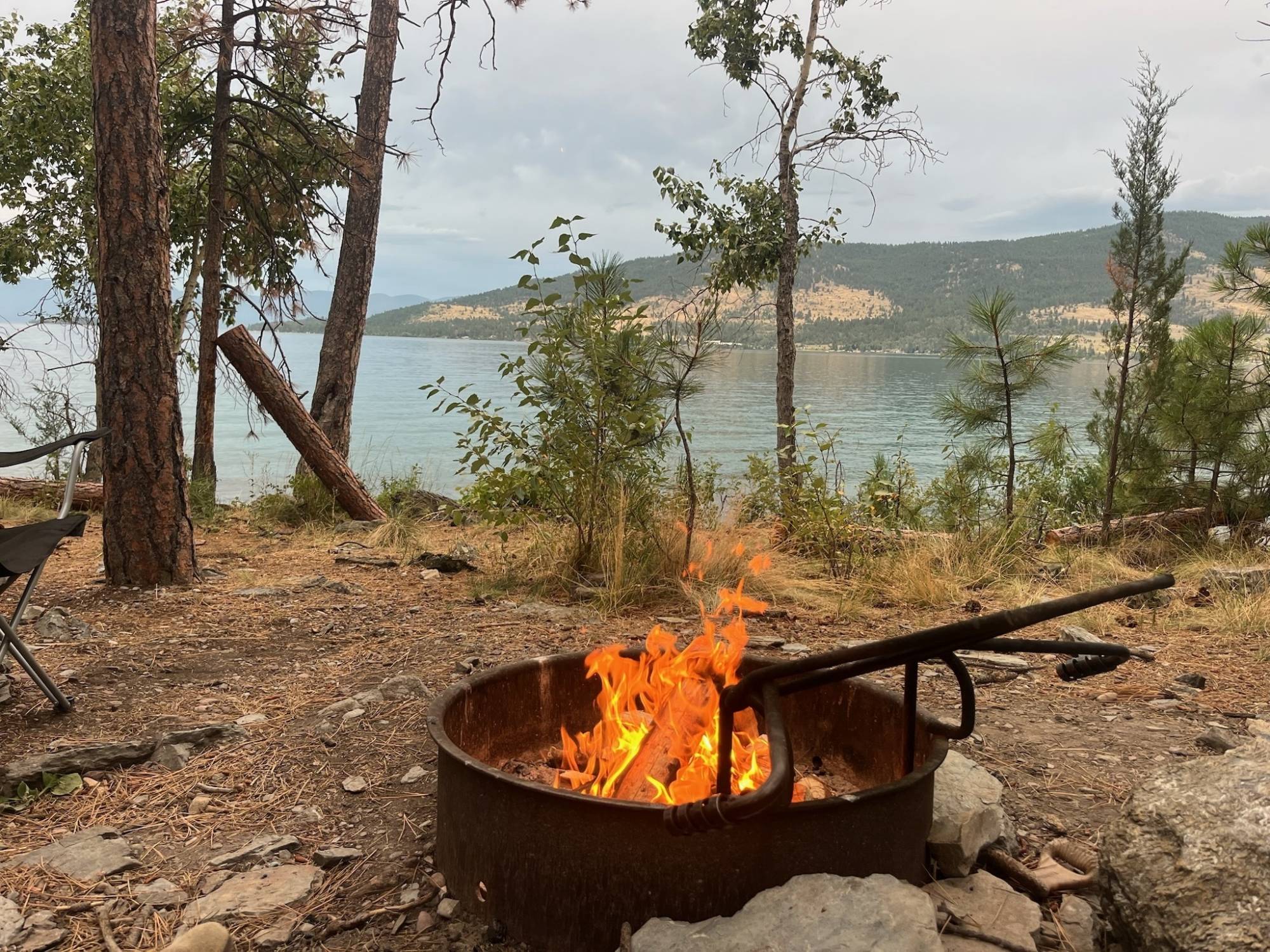
And everyone who is planning to camp and use a stove, make a campfire or use other cooking equipment needs to have an up-to-date California campfire permit, which is free and available online.
That’s why it’s so important to do your research ahead of time — checking the regional websites or calling the local ranger station — so you know all the regulations in effect and what to expect, Easley said.
Just don’t overstay your welcome on a longer trip: Two weeks is the usual limit for staying in a dispersed campsite.
How can I be sure my dispersed campsite is legal — and safe?
Before you head out, make a phone call to the local land manager, pop onto their website and double-check your app, guidebook or map with public lands layers to make sure the spot you’ve chosen is actually on public land. But in Easley’s experience, “if somebody has private property, they’re absolutely going to let you know.”
“If you encounter a gate that’s locked and says ‘private property,’ don’t go through it,” he said.
It can sometimes get confusing, Easley said: For example, the road itself will be public while the land around it is private. That’s why it’s good practice to have a backup option or two (also, in case someone is already in your spot — more on that later).
But in general, look for signs and don’t assume you’re on federal land just because it’s remote. “Just because you’re on a dirt road does not mean you can just pull over anywhere and set up camp,” he said. “If you’re unsure, I would just say don’t go through.”
When you arrive at what you believe to be a dispersed camping spot, look for signs someone has used that site before, such as a fire ring or pit, flattened ground and tire tracks.
Be extra cautious if dispersed camping alone. You may be a confident, experienced camper when staying in developed campgrounds, but remote dispersed camping carries a few more risks, Easley said.
“I think if you’re going solo, the risk-taking decision needs to be a lot more risk-averse,” he said. “You don’t want to put yourself in a situation where you’re getting stuck.”
People go out into the wilderness to do all sorts of weird stuff, he said, but Easley’s rule of thumb is this: “If you feel uncomfortable and absolutely if you’re feeling safe, you should get up and move.” Listen to your gut.
What to bring dispersed camping
If you’re used to camping at a developed campsite, dispersed camping is not so different.
Bring all the usual things — a shelter, sleeping bag, sleeping pad, and enough food for however long you’re spending in the wilderness.
But because of the lack of services, there are some extras you’ll need to remember:
Water
Dispersed campsites won’t have a spigot, so you need to be prepared. Either bring all the water you’ll need (plus some extra just in case) or plan to camp next to a water source that you can filter. Double-check that any water source you’re relying on isn’t seasonal or contaminated in any way.
Firewood
Be sure to check if you’re allowed to build a campfire in the first place. Then, check if you’re allowed to collect firewood at your site, or if there are any regulations around bringing wood into the area. Because of disease-spreading beetles, many wilderness areas prohibit you from bringing your own firewood. If you’re allowed to collect wood onsite, only collect dead wood that’s on the ground.
Tools to put your fire out
This includes enough water to smother the fire and a shovel to stir it until it’s fully out. Unlike at a developed campsite, there won’t be a camp host or ranger around to make sure all fires are fully out, so it’s on you.
Extra food
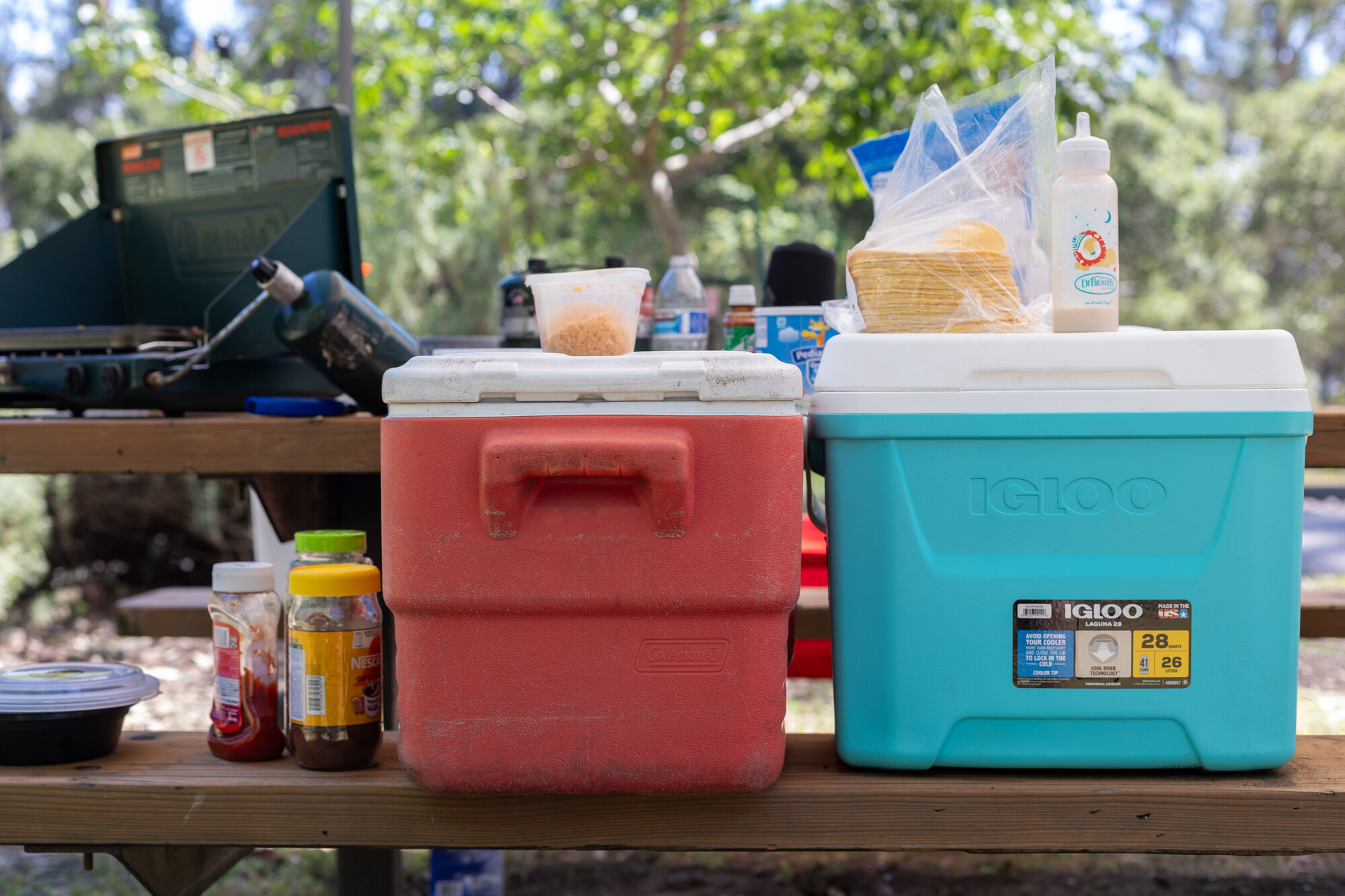
Because you might be truly out on your own, Easley said he always brings extra nonperishable food, “whether that’s chili in a can, beans in a can, stuff that isn’t gonna go bad in five days,” he said. “And I kind of have a surplus of that stuff that I just carry with me, and it always stays in my food bins.”
Emergency devices
You might be dispersed camping in a place with zero cellphone signal. Many iPhones have satellite messaging now, but if yours doesn’t (because it’s older than the iPhone 14) or if you’re worried about being completely out of cell service and alone, consider bringing a satellite messaging device.
A trash receptacle
There won’t be anywhere to dump your waste while you’re dispersed camping, so don’t forget to bring something to put your trash in. In some wilderness areas, that might also include your human waste. Make sure you know local regulations ahead of time and, if required by the land manager, come prepared with W.A.G. bags: Waste Alleviation and Gelling bags, which are smell-proof ziplocks that you poop in in highly impacted wilderness areas (and which rangers will often provide if you ask).
The right vehicle
Most dispersed campsites are located off paved roads, so be sure to look up road conditions ahead of time and bring a car that can handle a few bumps and potholes. Be aware that if it’s rained recently, roads might be muddy or impassable. Have a plan B or C if your spot isn’t reachable, and always be prepared to turn around if it gets too dicey.
Food storage
In some forests, your vehicle might be enough to keep food away from animals. In other places, you might have to bring specific bear-safe food storage. Be sure to check beforehand.
In general, remember to Leave No Trace. That means:
- Planning ahead
- Camping where others have before to minimize disturbance
- Packing out your trash and burying your waste, if allowed, at least 200 feet away from water
- Not collecting anything from nature that you shouldn’t
- Putting out your fire fully and safely
- Respecting wildlife
- And respecting other people
And because you might be really out there when dispersed camping, don’t forget to tell someone where you’re going and when you plan to be back, Easley said.
What to do if you arrive at a dispersed campsite but other people are already there
First-timers should know: There is an important etiquette to dispersed camping, Easley said, and “it’s easy to break if you’re not familiar with it.”
If you’re arriving at your chosen campsite and someone is already there, slow down and pull over on the side of the road. Don’t pull into the campsite itself.