

“We are serious about child care, and we know it’s expensive, but that also means that more and more families need relief, and it’s a part of making California affordable again,” Jackson said. “We have to provide these services in order to be able to make sure families are able to make it here and thrive here in California.”
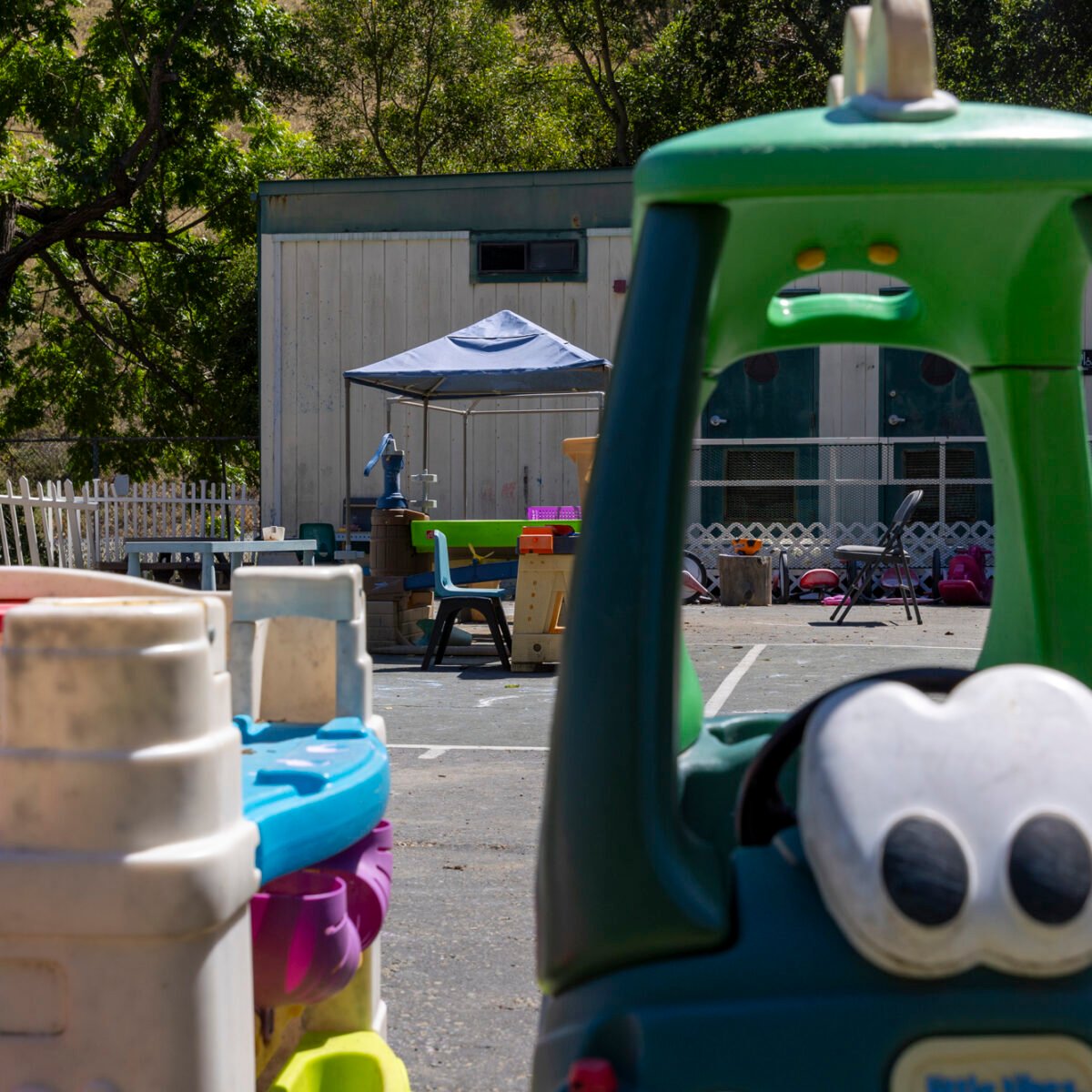
A combination of these forces are playing out in preschools like Carquinez Garden School, the only licensed child care center in Crockett, a Bay Area community of 3,600. The school will close in July after enrollment dwindled from more than 30 children two years ago to just 10 this year.
“We’ve lost essentially a class of kids every year to TK,” said Heather Posner, the school’s director.
She said she expected to serve fewer 4-year-olds as TK rolled out, and that more 2-year-olds would take their spots. The preschool was in a so-called child care desert with an insufficient supply of licensed care. The monthly cost for full-time care — $1,870 — didn’t seem to deter demand; the school had a waitlist and enrolled families who qualified for subsidies.
“But it seems like the low birth rate is causing a lot of schools to be underenrolled on both ends,” she said. “You’re not getting a lot of 2-year-olds and then you’re not getting any 4-year-olds … so with 10 kids, there’s just no way to really cover the overhead.”
Trying to keep the school open felt like performing CPR on a patient, she said, and she barely broke even.
“I basically have not paid myself in two years. Literally, I cannot pay my own salary,” she said.
Fuller said researchers took California’s declining child population into account when they calculated the effect of TK expansion on thousands of communities. They concluded that for every 200 students who enrolled in public TK, there would be a reduction of 38 seats at community-based programs.

In Berkeley, a surge in public TK enrollment during the last four years caused The Berkeley School’s early childhood program to lose more than two-thirds of its students, dropping from 90 to about 25. It will close in July after serving local children for more than six decades.
“It’s a loss for our community, it’s a loss for our school as a whole,” said Mitch Bostian, head of the private school, which serves kids aged 4 to 14 and practices the Montessori philosophy of mixing children of different ages in the classroom so that younger children learn from observing older peers, and older students develop leadership skills by mentoring younger peers.
That model unraveled when the local school district added more TK classrooms.
“Really what we saw was the bottom dropped out of our 4- and 5-year-olds,” Bostian said.
He said the school began enrolling younger children, including 2-year-olds, added year-round options and extended its hours to attract working families, but couldn’t bring enrollment up to a sustainable level.

For Posner, the shuttering of Carquinez Garden School represents the loss of a tight-knit community she formed with families. Every Friday, parents hang out in the yard when they come to pick up their children. Once a month, they gather for a potluck.
The school takes advantage of being right next to a regional park and lets children learn through playing outdoors.
“They’re running, they’re digging, they’re riding bikes, they’re hanging from the climbing structure, they’re being active, they’re using their brains and bodies and they’re with their friends,” she said.
Posner fears that when the kids enter TK, they’ll have less time to play outside and develop friendships.
“Everything’s truncated,” she said. “And I feel the gift that I can give them is just that languishing outside in the sunshine.”