

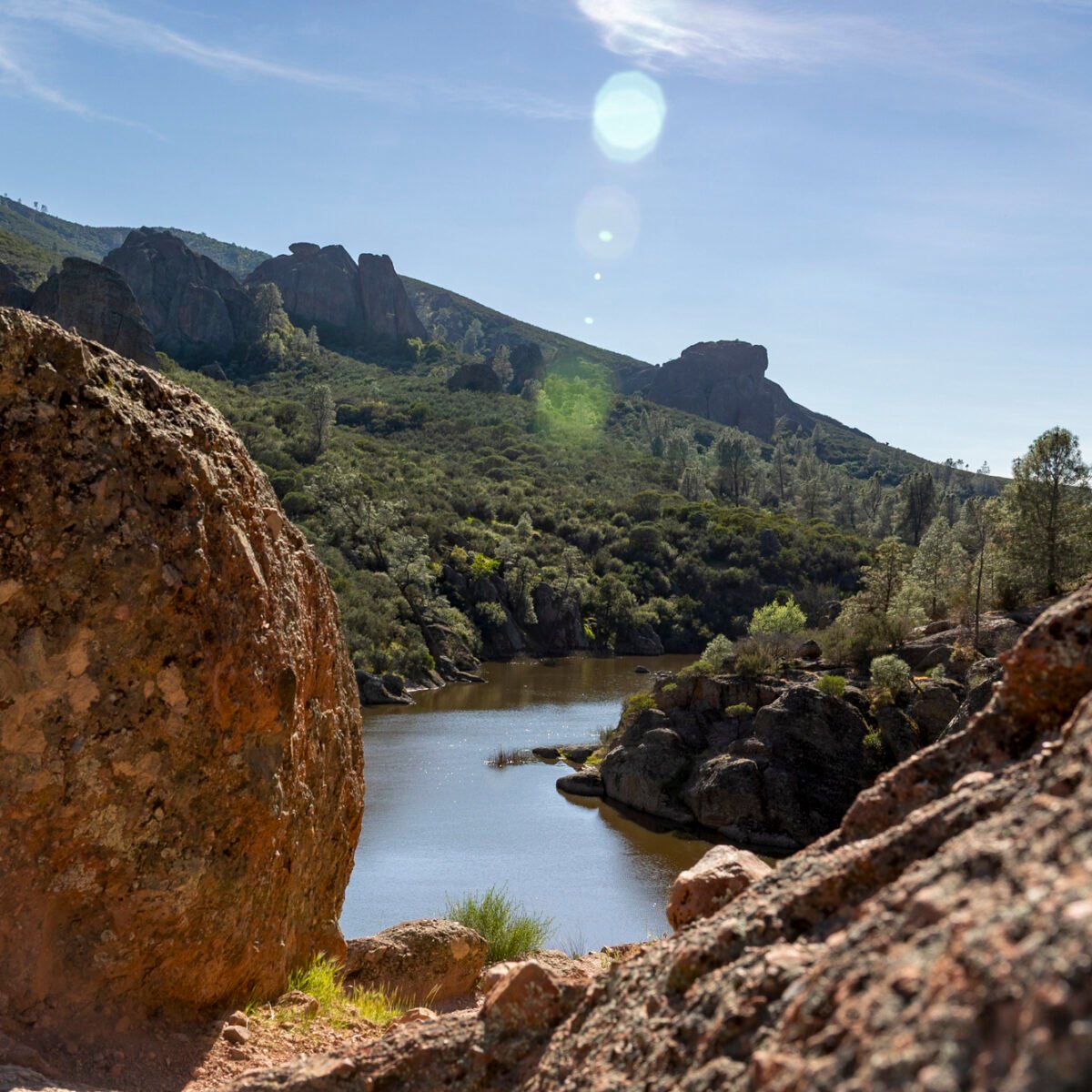
“It’s remarkable how many people who live within two hours of here haven’t heard of it, don’t know what it is, and have never been here,” said Neidhardt, who is now the Condor Chair of the Pinnacles National Park Foundation, the nonprofit that helps fill funding gaps for the park.
This under-the-radar element is partly because Pinnacles only became a national park in 2013, when it was upgraded from a national monument. It’s also a relatively small park — at just around 27,000 acres, it’s one of the smallest in the whole country.
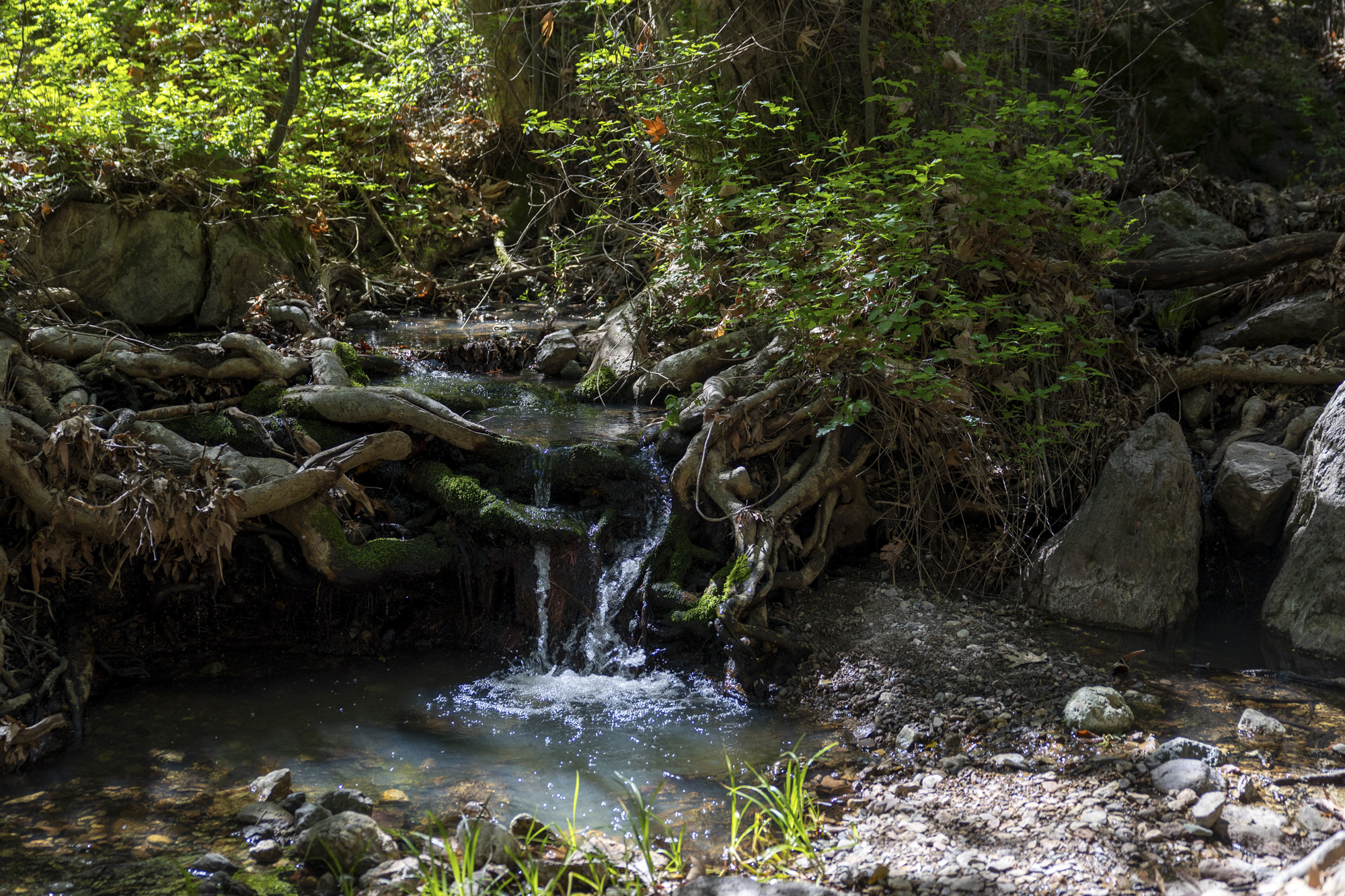
But this little park still packs a punch, and makes for a fantastically fulfilling — and surprisingly easy — trip from the Bay Area, even just for the day.
So to help you plan your own Pinnacles visit, I traveled there one hot spring day to check out the best trails, find the most beautiful views, and learn about some truly hidden wonders from Neidhardt and his colleagues.
Read on for 10 tips to make the day trip worth your while.
Jump straight to:
Getting to Pinnacles (and which entrance to use)
Depending on where you’re coming from in the Bay Area, and traffic conditions, the drive to Pinnacles’ eastern entrance — considered its main entrance — is only around 2-3 hours.
Once you pass through the South Bay, you’ll continue on Hwy 101 until Gilroy, where you’ll take Highway 25 to Hollister and through Tres Pinos before turning off the highway and into the park.
On your way to the park, you can stop in Hollister for any major needs, like extra gear or groceries. The small town of Tres Pinos has its own quaint feel and is an ideal post-hike dinner stop at one of the handful of restaurants on its main street.
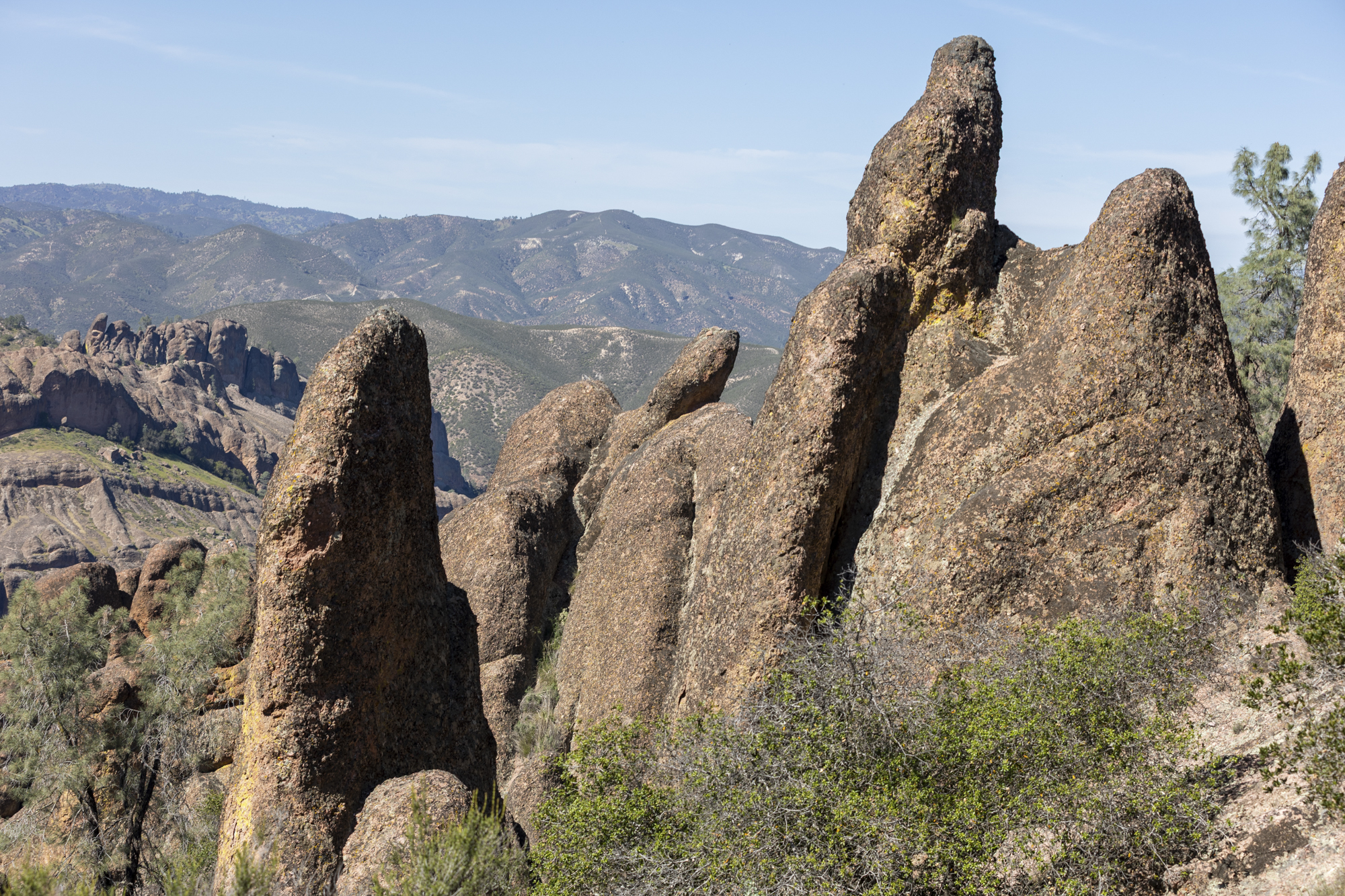
What about using the western entrance instead? This location will take you a little longer to reach from the Bay, but it certainly has its own appeal — namely, the sweeping views of the namesake Pinnacles rock formations themselves that are readily available from the parking lot. You can stop in Salinas or Soledad on your way in or out from that end, although be aware: Highway 146 from the western side is scenic but somewhat narrow.
Make Pinnacles a surprisingly achievable day trip
Unlike other sprawling national parks, which demand a multi-day trip to see all of their sights, it is worth it to visit Pinnacles for a day trip.
Or as Neidhardt puts it, “You can see a lot of the park in one day.”
But this advice comes with a caveat: Pinnacles is split into two sides, east and west, and you shouldn’t expect to be able to visit both sides of the park in one day. In fact, you can’t actually drive from one end to the other — so pick an entrance and stick with it.

For first-timers, especially those coming from the Bay Area, heading to the east side typically makes the most sense, given its increased infrastructure, like a full campground and park store, and it is a jumping-off spot for a wider variety of hikes.
Return visitors may want to check out the west side for a new perspective — including iconic valley views of the namesake pinnacle rock formations.
“You can drive down to the Chaparral Parking Area, and there they are,” Neidhardt said. “It’s just the most spectacular views of the rock formations.”
Get to Pinnacles early (to avoid a wait)
Visitorship to Pinnacles has hugely increased in the last five years, and was historically also boosted by its new status as a national park. “The impact on the park was huge,” Neidhardt said.
And visitorship is still sizable, said Tim Regan, president of the Pinnacles Foundation — meaning you should plan to avoid the worst of the traffic into the park.
While Pinnacles may be no Yosemite in terms of visitorship, lines of cars to get into the park during peak spring weekends can still be miles long, even requiring up to a two-hour wait to get in. These days, people come from all over the world to visit the park, often on their way to and from other areas like Yosemite or Big Sur.

I can testify from my own visit that you should plan ahead to avoid missing out. While I didn’t experience any lines to enter the park’s east entrance when I arrived at 10 a.m., by the time I was ready to embark on a hike, the Bear Gulch parking lot was full, meaning I had to park a mile down the road and walk to the trailhead. (During peak season times, the park runs a shuttle from the campground to the Bear Gulch Day Use Area to mitigate this issue.)
That’s why Neidhardt and his colleagues recommend you plan to arrive at the park early — or even come on a weekday or during a less busy time of year.
There’s a reason for this wait, Regan said: The park isn’t really designed to hold more people than its current parking lots can accommodate. “The land around here is very fragile,” he said.
Another good reason to get there early? The heat. The day I went, during the Bay Area’s historic March heat wave, it was pushing 90 in the afternoon.
Heat wave aside, springtime is still the best time to visit Pinnacles, Regan said. “Everything is green, the wildflowers are out, and it’s not too hot — except for this week,” he said. “It’s usually in the 70s here, and it’s wonderful.”
Consider sleeping within the park itself
If you want to avoid the headache of getting there early enough to avoid a wait, you can stay overnight at Pinnacles’ campground — an underrated but “wonderful” way to experience the park, said Mike Novo, the treasurer for the Pinnacles Foundation.
“The night skies here are wonderful,” he said, so much so that they’re striving to get international “Dark Sky” status by retrofitting light fixtures and working with nearby communities to reduce their light pollution.

And if you get lucky, you might be able to see condors leaving their roosts on the ridge above the campground in the morning.
Just remember: The campground is on the east side of the park only, so plan accordingly. You’ll have access to showers and even a swimming pool that’s open during the summer, weather permitting. There’s also a small campground store where you can purchase necessities.
The downside: Reservations for the campground can be tough to secure, so check early and stay flexible.
Find a trail that works for your ability levels
While Pinnacles is not a huge national park, it still has a wide range of trails for all types of hikers.
“It’s not a driving park, it’s a hiking park,” Neidhardt said.
The most iconic — and most difficult — trail is the High Peaks Loop, which takes hikers from the main parking area on the east side up and over the park’s craggy mountaintops, down to the Bear Gulch Reservoir and through the Bear Gulch Caves.
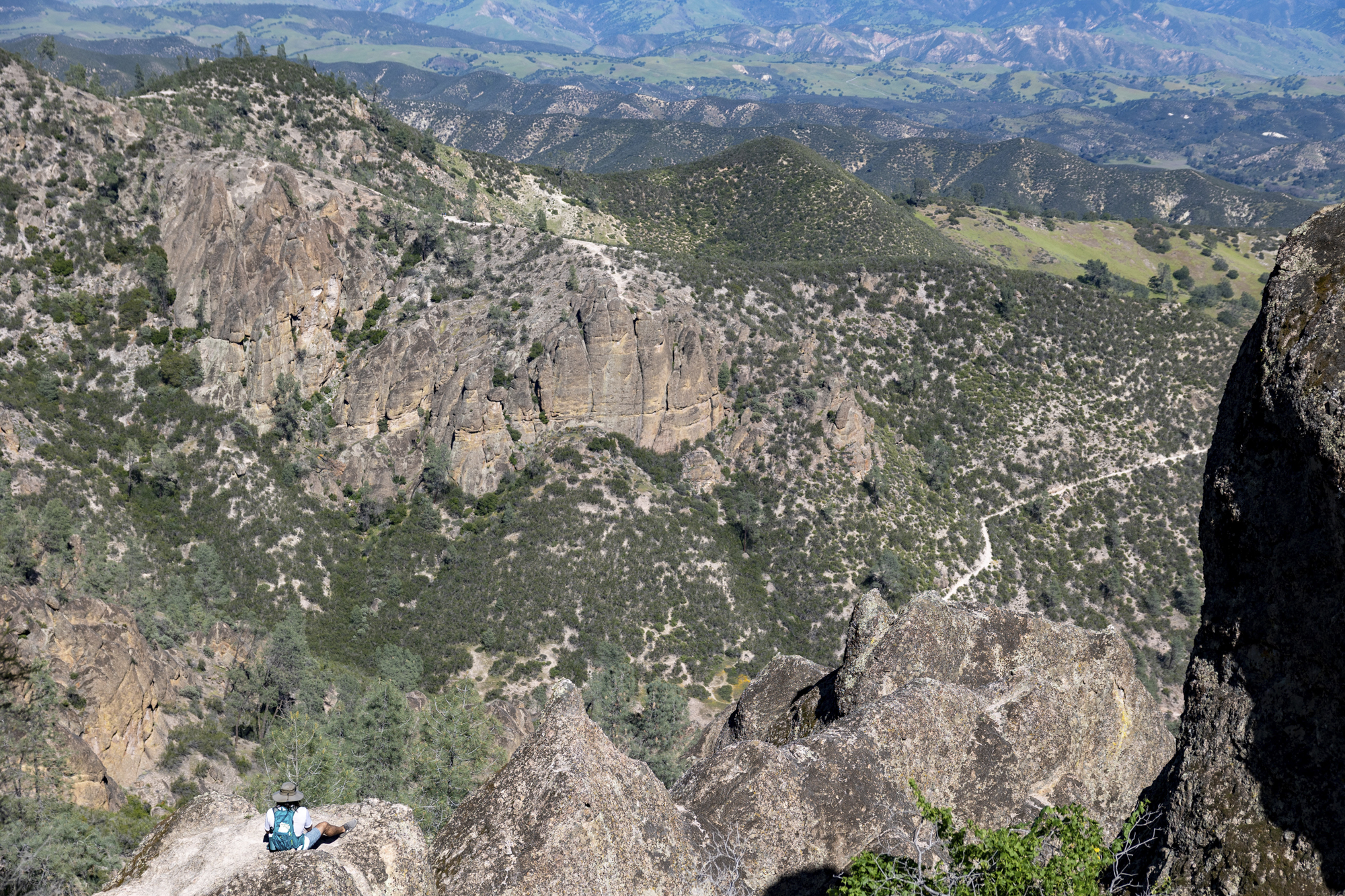
“The High Peaks Loop is rugged, but it’s just the most spectacular hike anywhere, not just in Pinnacles,” Neidhardt said.
But if you’re planning that hike, he said, you should:
- Start as early as you can in the morning
- Go counter-clockwise, starting on the Condor Gulch Trail, to get the hot, exposed section out of the way in the morning
- Keep in mind, “it can be 10 degrees hotter up in the high peaks than it is down below,” Neidhardt said.
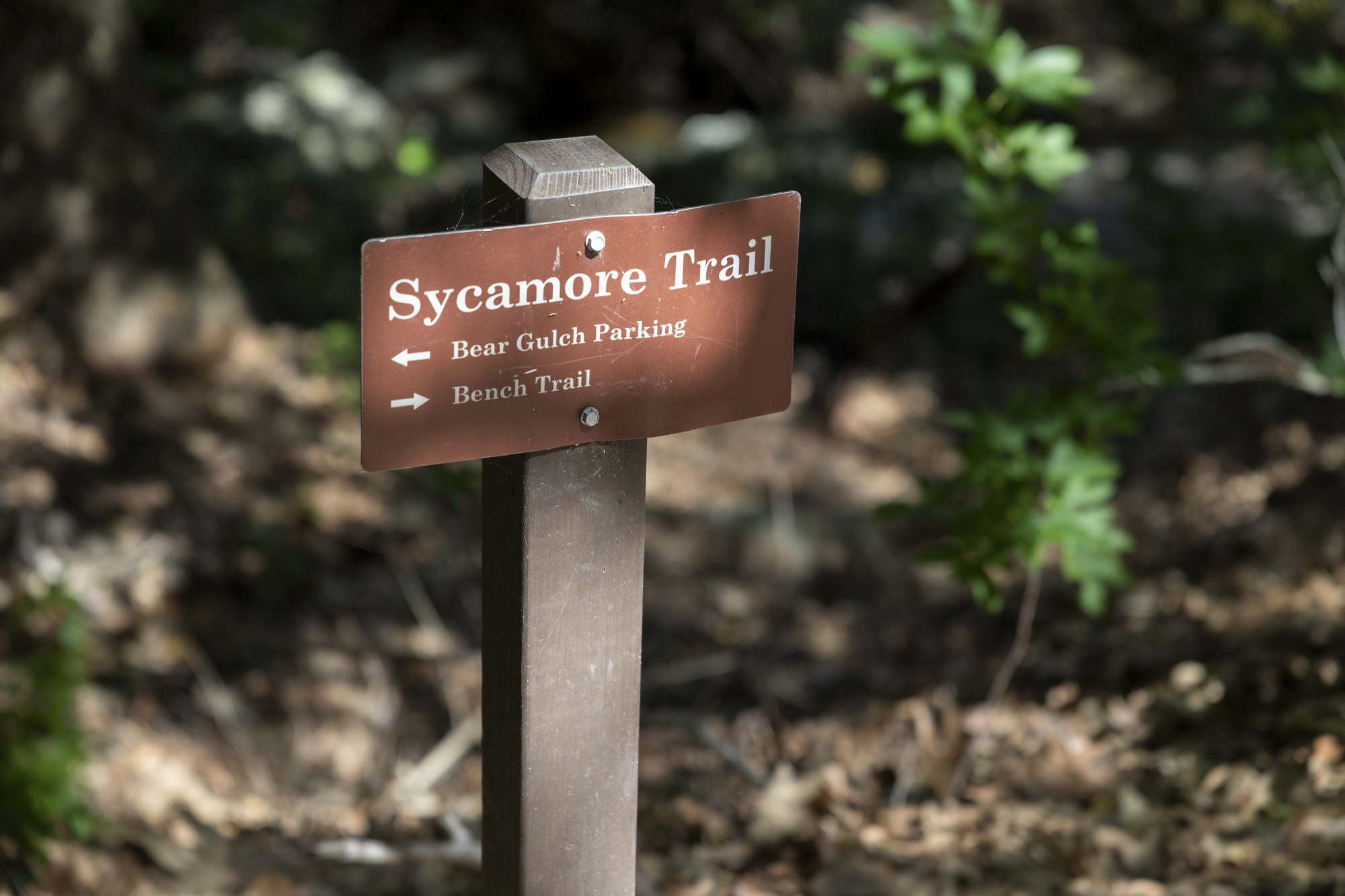
If that sounds like too much, don’t worry: There are lots of less strenuous options that are still just as scenic. From the Bear Gulch Parking Lot, try heading up the Moses Spring Trail to the Bear Gulch Reservoir, stopping to check out the caves along your way for a 2-mile round-trip hike to experience some of the park’s highlights.
Or trek up to the Condor Gulch Overlook, where you might catch a glimpse of the park’s famed birds. Even the walk from the campground to the Bear Gulch parking area is a pleasant, shady one that’s great for families.
On the west side, the High Peaks are a quick but steep hike away. You can also stroll along the park’s new ADA-accessible “lollipop” route to see them from below.
See the incredible biodiversity on display
Because of the park’s varied ecosystems, it also boasts a wide variety of species. That includes wildflowers, which are especially widespread in the spring.“The sheer variety of wildflowers here — it’s just astonishing,” Neidhardt said.
That extends to its animals, too: The park has one of the highest diversities of native bee species anywhere in the world, Neidhardt said, with over 500 species of bees found within the park.

Despite many trail and area names with the word “bear” in them, there are no bears in the park. There are some pesky raccoons, however, who will boldly grab your food, Regan said. I also encountered a very persistent squirrel by the reservoir — a reminder not to feed any of the wildlife here.
Among the less desirable creatures near the park are wild pigs, which are so prevalent that there’s now a 3-foot fence around the entire core of the park — nearly 30 miles in total — to keep them out, Neidhardt told me.
“They were a gigantic problem here in the campground,” Neidhardt said. “People get marauded by a pack of wild pigs at night.”
Catch a glimpse of the biggest birds in North America
There’s one animal that makes any effort getting to the park and up into its craggy mountains worth the effort: the California condor.
It’s one of Pinnacles’s more than 180 species of birds, but unlike any other. In fact, condors are the largest land birds in North America, with wingspans reaching nearly 10 feet.
Unlike their cousins, the turkey vulture, condors are huge: They can weigh around 20 pounds and fly up to 200 miles in a day.
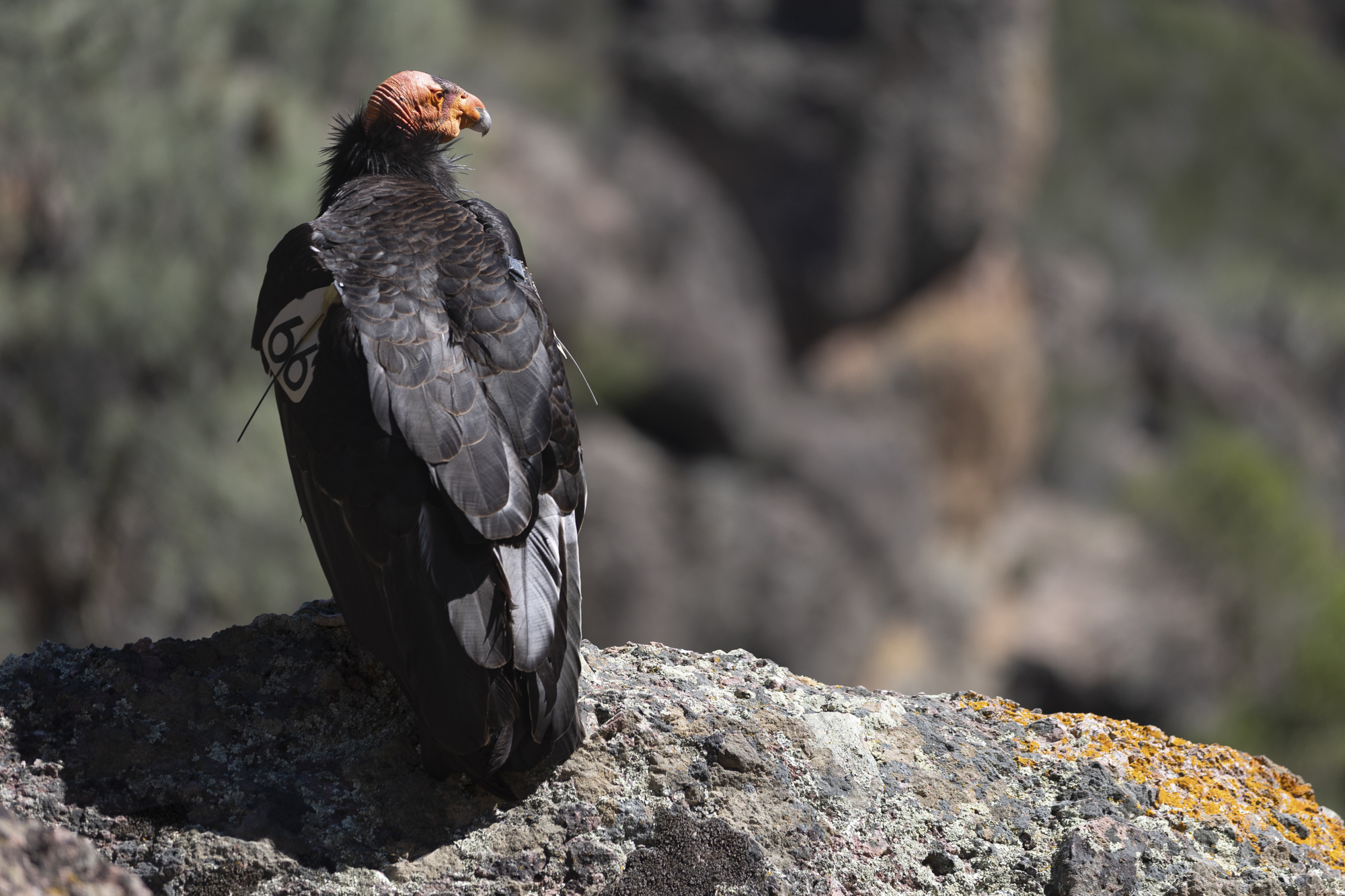
But if you’re not up close and can’t tell the difference, Neidhardt said you can look at the way they fly — condors are smoother fliers, with straight-out wings, versus the rocky, tipsy flight of a turkey vulture.
And the condors you’ll see at Pinnacles are all tagged, so if you see a colored tag with a number on it, typically on its wing, you know it’s a condor. And you can look it up later using a website called Condor Spotter, developed by a staff member at the Ventana Wildlife Society.
Condors gravitate toward this park because they love nesting in cavities in the rock formations here, Neidhardt said. Plus, rangeland surrounds the park, “so there’s a lot for them to eat,” he said — including those wild pigs, which they’re apparently quite partial to pork.
“This is just absolutely ideal condor habitat,” he said.