
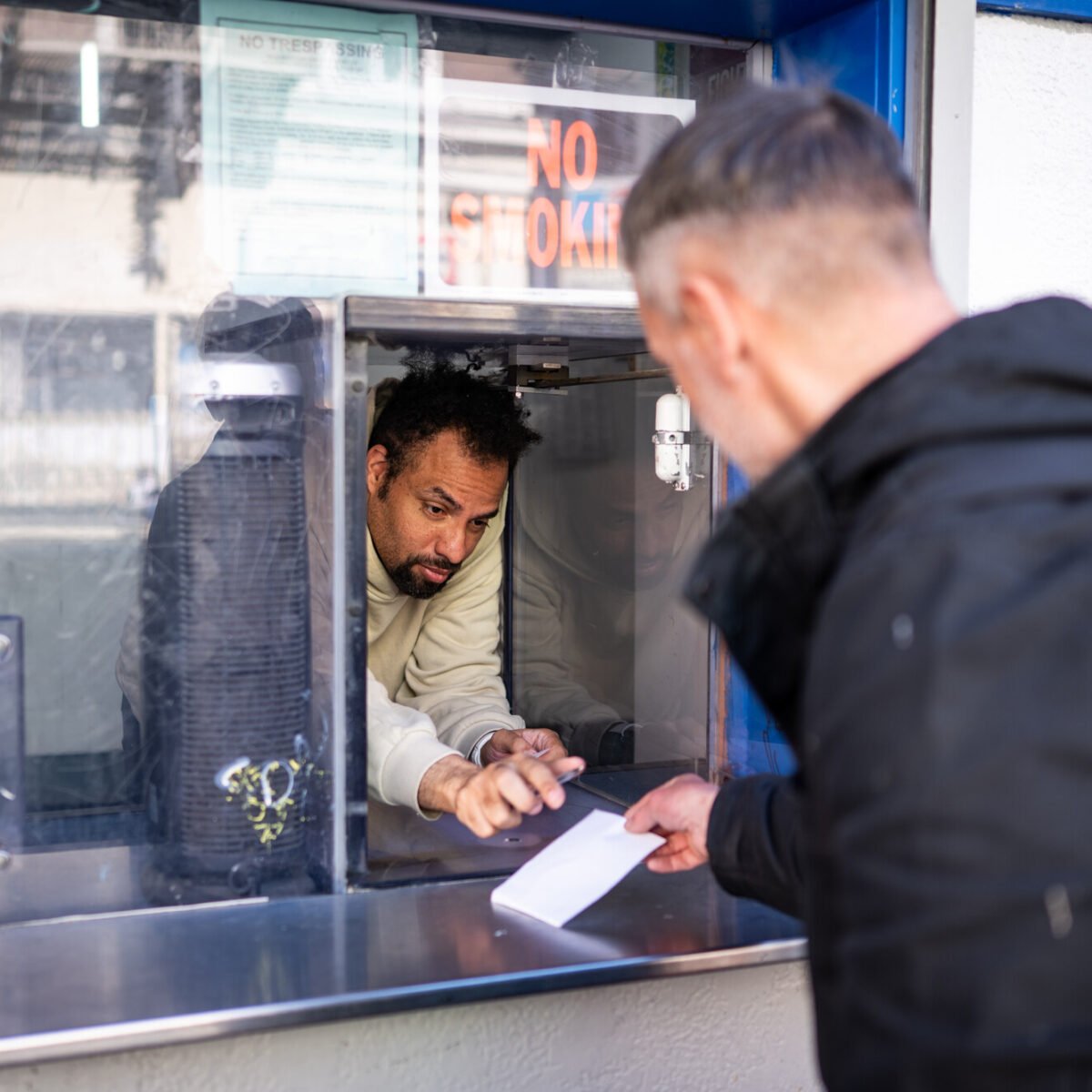
Kay waited in line ahead of Parkinson in her hiking boots, her grey hair pulled back with a clip. She didn’t want to share her last name. She’s a fan of General Delivery, too.
“It’s great,” Kay said. “It’s a way to safely get your mail. And you don’t have to pay for it.”
General Delivery is a free service. To get their mail, patrons slip their IDs through a small hole in the thick plexiglass window. A USPS clerk inside searches for their mail and delivers stacks of letters and packages through a small, transparent door on one side of the window.
“Before post offices did delivery, this was the original way,” Kay said.
Formed in 1775, the postal system predates the U.S. But free home delivery didn’t start in cities until the 1860s, and began even later in rural areas. So for decades, people went to the post office to pick up their mail. General Delivery service has evolved since.
“Usually, the General Delivery is in the main post office for a city,” Kay said. “Here, it’s kind of unique. It’s the first one I’ve ever seen like this.”
That’s because standalone General Delivery locations like this one are rare. In most parts of the United States, General Delivery is a service offered at designated post offices, not an entire dedicated branch.
In the Tenderloin, its services are in demand; the district is home to nearly 2000 unhoused residents. General Delivery is open Monday through Saturday from 10 a.m. until 2 p.m. And from the moment this post office opens, it is busy.
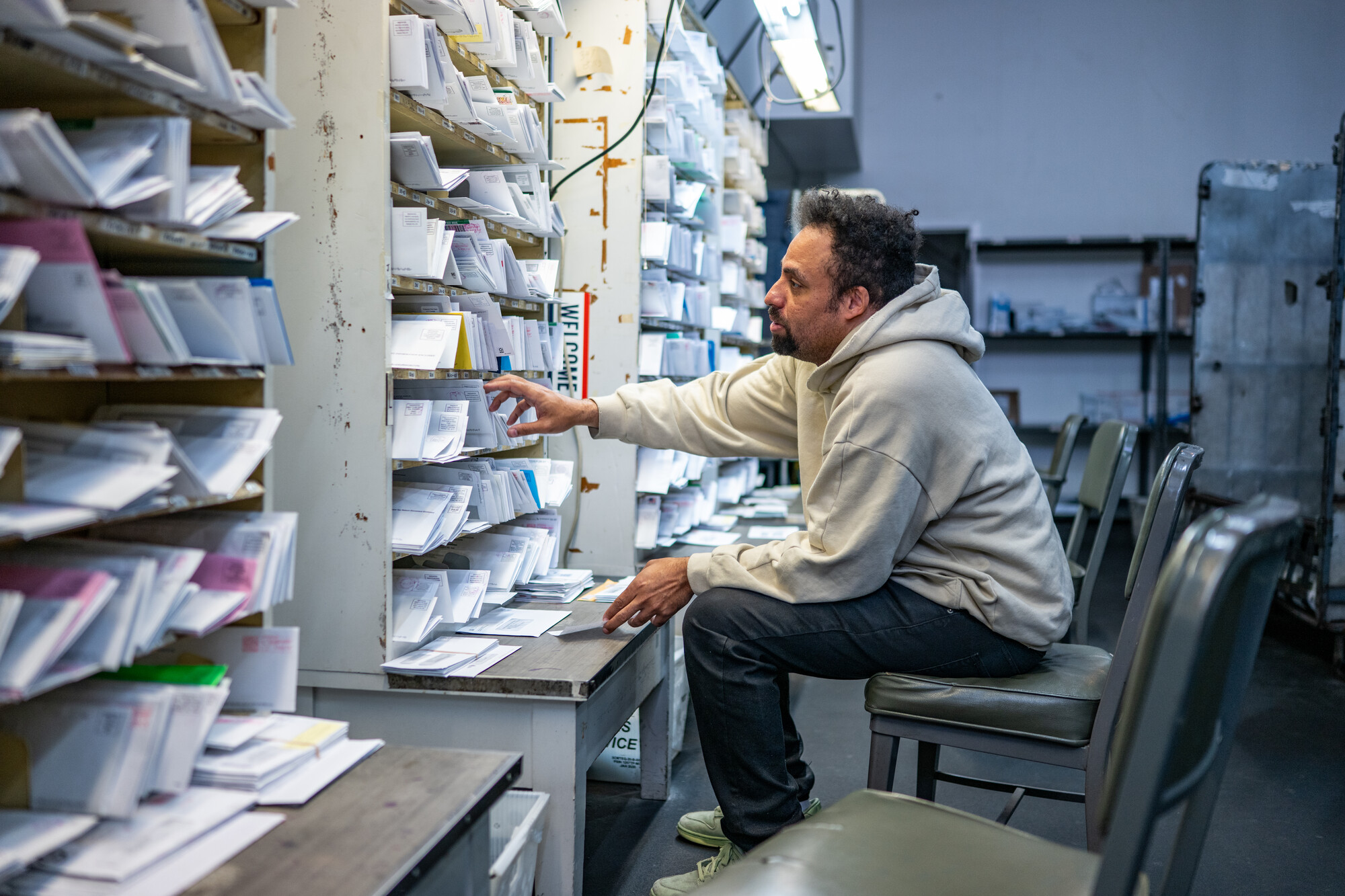
“It’s like nonstop,” USPS clerk Robert Tapia said. “Ever since I opened the door, it’s like no break, nonstop, keep going and going and going.”
Tapia is 44, and his freckled face is quick to smile. He described the types of mail that patrons commonly receive here: IDs, bills, phones and more.
“Of course, from the first of the month, it’s checks,” Tapia said. “Like social security checks. And if it’s not here, I have to be able to tell them it hasn’t arrived yet. It feels bad ‘cause I want to give them their mail. And I know they could be homeless, and they depend on the money.”