
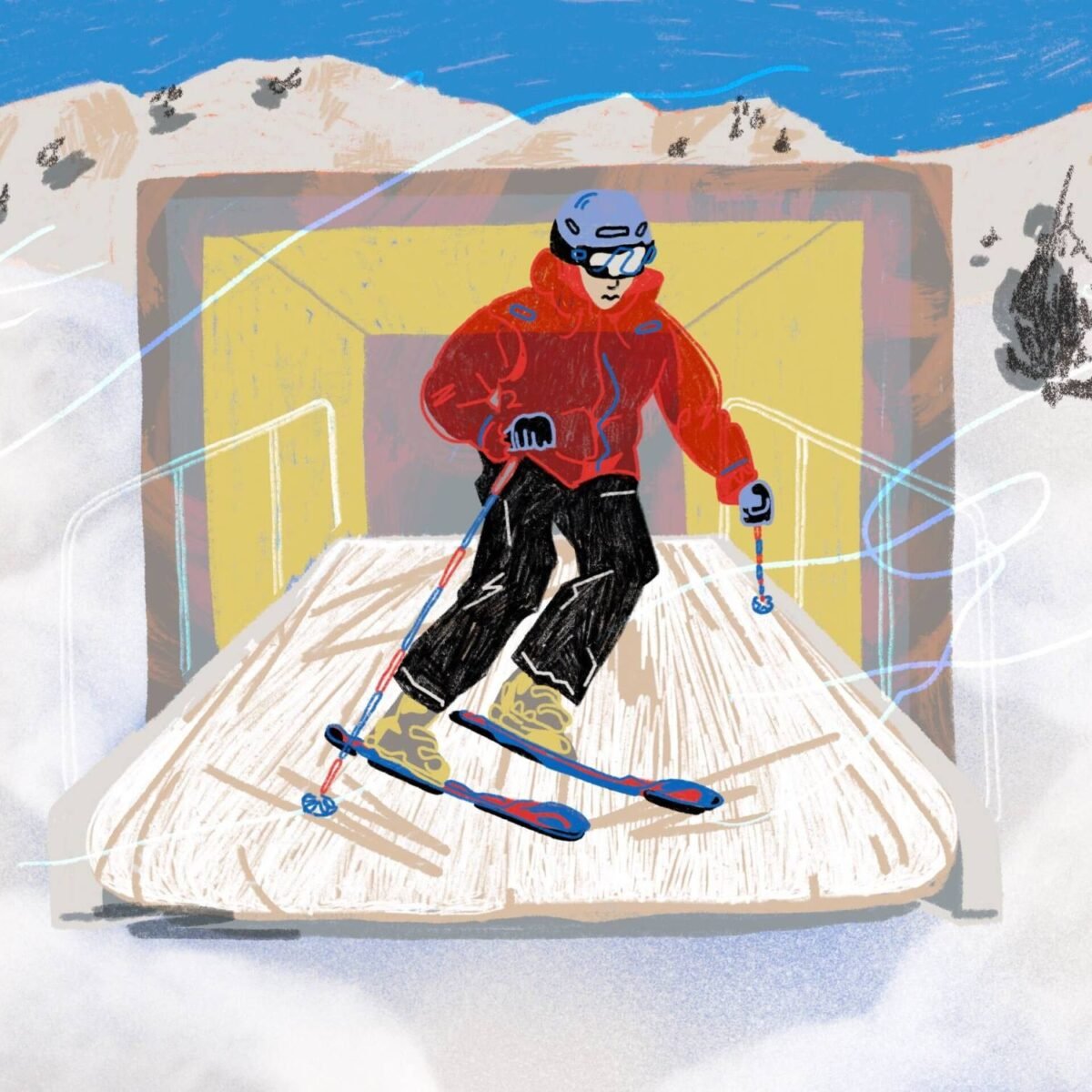
Adventurous offers lessons for new and experienced ski and snowboarders alike, with an emphasis on perfecting the technique of carving: the smooth arc of the ski or snowboard that’s accomplished by slowly rolling the ankles and knees onto one edge, then the other.
Owner Sarah Cooper said training indoors is not meant to fully replace learning and progressing on a real ski hill, but rather to accelerate muscle memory and confidence once a person hits the actual slopes.
The setup of the facility — where teachers are positioned below the incline of the treadmill, eye to eye with their students’ hips and legs — allows them to watch and critique students’ every move, said Cooper, even at high speeds.
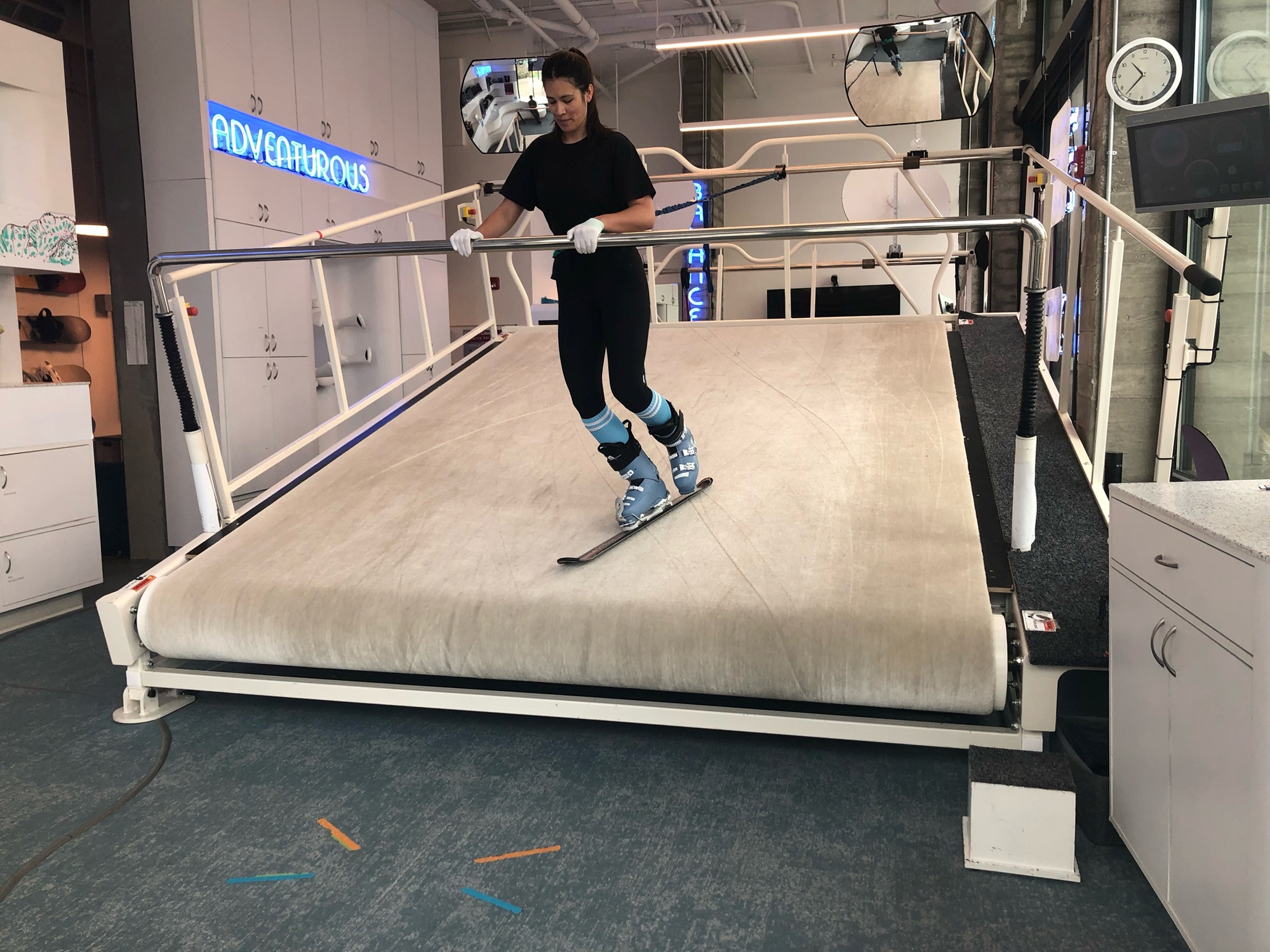
“We can see everything on every single person’s body,” she said. “Every movement, their timing, their confidence, their comfort.”
Joad Stein, an instructor at Adventurous who is also an expert outdoor skier, had just returned from a ski trip to Tahoe. Getting on the deck to demonstrate, he said he found skiing on the simulator to be the much more demanding option.
“I have to remind myself to be more patient with my movements, which makes it harder,” he said. “If I want to have nice, graceful turns, I really have to take my sweet time.”
Movement matters
But does all this indoor work on carving actually produce results on the slopes?
There has been very little scientific research on these types of ski decks. A 2013 study found the benefits of training on ski simulators to be minimal, but it only tested two types of ski simulators — neither of which was particularly similar to the type of deck used at Adventurous.
Cooper said many Adventurous clients have reported positive impacts of their indoor training, and that Olympic athletes, including Mikaela Shiffrin, have spoken about their experiences of using indoor decks as part of their training.
And on-hill ski instructors say any type of dry land training, especially the kind that works the same core and leg muscles as skiing and snowboarding, is going to help performance on the mountain.
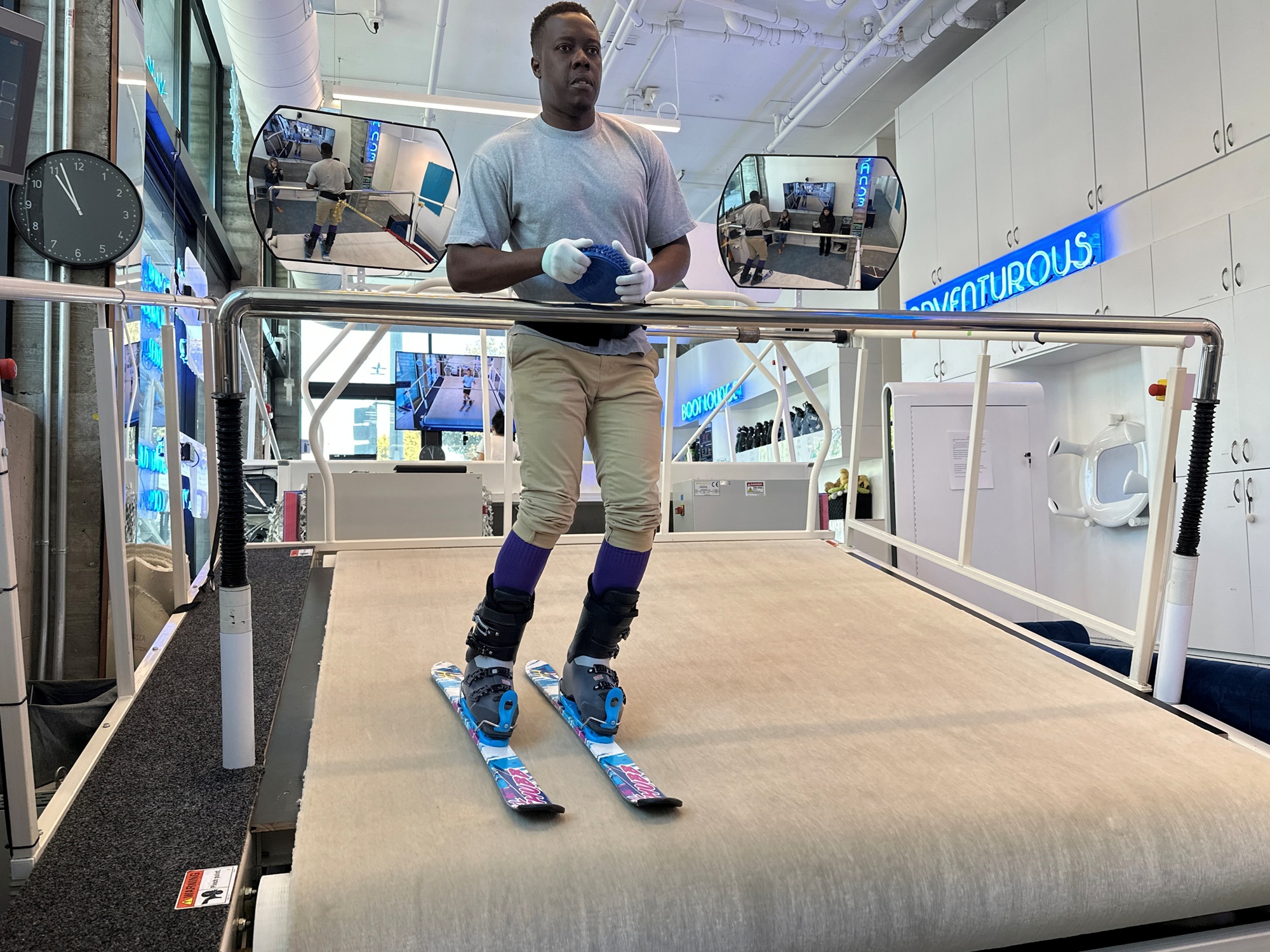
“That fitness will translate,” said Jon Tekulve, director of ski services at Diamond Peak Ski Resort in Tahoe. “The movements are still there, and learning those can be helpful.”
Around 80% of the adults taught at Diamond Peak have never been on snow before. But Tekulve warned that beginners who start indoors may be taken aback by the role that being outside plays in skiing, because the carpet and indoor environment are so consistent.
“Being out in the elements is different,” he said. “Sun and shade spots on the mountain can be the difference between going really fast and really slow.”
Plus, he said, who would want to miss out on the mountain views?
Cooper acknowledges there is one major factor about skiing for real that she cannot prepare her students for on the Adventurous simulator: “The snow is just gonna ‘feel slippery’ — that’s what everyone says,” she said.
Hirschler said she’s proud of the progress she’s made so far with her indoor lessons. She’s even able to ride on the indoor carpet without keeping her hands on the safety bar, and is working on visualizing being on a mountain instead of inside.
“But is it gonna transition well to the mountain? I don’t know,” she mused.
“I’ll be starting with the bunny hill for sure.”
Where to learn how to ski indoors in the Bay Area
Adventurous Sports, San Francisco
Located in Hayes Valley, this indoor ski school emphasizes carving and requires all first-timers to complete an hourlong intro class to get familiar with skiing on their carpeted treadmill.
Cost: The intro lesson costs $185 in the winter and $145 in the summer. You can then purchase packages of multiple lessons, and more experienced skiers and riders can also book cheaper conditioning sessions.