
Jan Bartek – AncientPages.com – The Yakuts are the largest Indigenous group in Yakutia, located in northeastern Siberia, with a population of approximately 500,000. They live in one of the world’s coldest regions, where temperatures can fluctuate by more than 100°C throughout the year and winter lows can fall below -60°C.

Credit: Stasyan117 – CC BY-SA 4.0, Svetlana Ivanova – CC BY 3.0, Somogotto – CC BY-SA 4.0, Image compilation AncientPages.com
Genetic and historical research indicates that the Yakuts descended from ancestors who migrated from the Lake Baikal area, likely during or after the expansion of the Great Mongol Empire in the thirteenth and fourteenth centuries.
The Yakuts Fight For Survival
To adapt to their harsh environment, the Yakuts developed unique cultural practices centered on horse and cattle breeding. These animals provided essential resources such as transportation, clothing materials, meat, and milk, differentiating their lifestyle from neighboring groups that relied primarily on reindeer herding.

Credit: Patrice Gérard-CNRS
Traditionally, Yakut communities practiced shamanism. Shamans played an important role as spiritual mediators, guiding and protecting their people. However, these traditional ways were significantly disrupted starting in 1632 when Russian forces began conquering Yakutia to expand fur-hunting territories.
Following the Russian conquest—and later, increased trade with China—new goods such as tobacco, vodka, and carbohydrate-rich cereals entered Yakutia. These exchanges also brought infectious diseases such as smallpox and tuberculosis to Indigenous populations who had no prior exposure or immunity.

Credit: Patrice Gérard-CNRS
The arrival of Russians also shifted local power structures among patrilocal clans; one clan gained dominance over the hunting grounds and became influential in fur trading. Christian missionaries accompanied traders into the region over time, leading to widespread conversion from animist beliefs to Christianity among Indigenous peoples.
Mummies Preserved Beneath The Ice
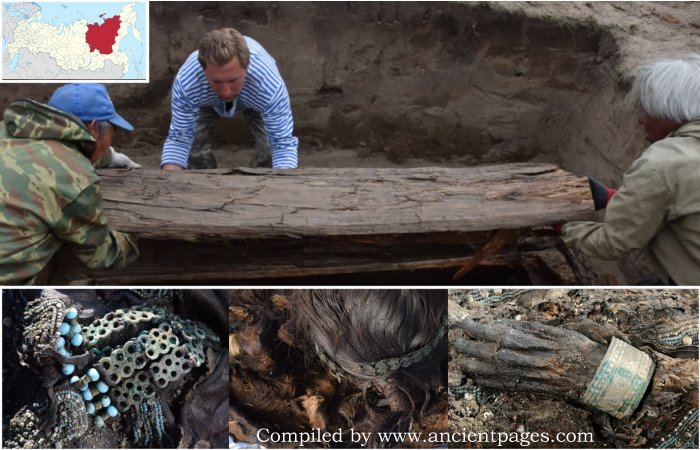
Archaeological excavations have provided valuable insights into historic Yakut life—especially due to permafrost conditions that preserve human remains exceptionally well. Over recent years, researchers have uncovered naturally mummified remains of 122 individuals dating from the 14th to the 19th centuries across the Sakha-Yakutia Republic. Among these discoveries is a female shaman who died more than 250 years ago; genetic analysis revealed her parents were second-degree relatives—a detail offering further understanding of social structure within historic Yakut communities.

Credit: Patrice Gérard-CNRS
In a study published in the journal Nature, scientists discuss how they analyzed a large collection of human skeletal remains and dental calculus from individuals who lived in Yakutia over the past 2,000 years, with a primary focus on the period from around 1500 to 1922. By employing comprehensive ancient DNA sequencing techniques, researchers reconstructed the historical origins of Yakut communities and evaluated how the Russian conquest affected their genetic makeup.

Credit: Patrice Gérard-CNRS
The study also explored whether changes in diet, lifestyle, and social structure influenced oral microbiota composition, exposure to pathogens, marital practices, and methylomes—factors considered as potential indicators of social and economic status.

Credit: Patrice Gérard-CNRS
Through their investigations, researchers determined that the female shaman who died approximately 250 years ago was a member of the most influential tribe in the region. She was interred in a coffin carved from a tree trunk and dressed in multiple layers of clothing, including a red wool dress, a traditional Yakut ushanka-style hat, and thigh-high leather leg warmers.

Credit: Patrice Gérard-CNRS
Nearby, archaeologists discovered a pit containing the skeletons of three horses; notably, one horse wore accessories with designs matching those on the shaman’s attire.
At the time of her burial, Christianity was spreading throughout the area. Some Yakut tribes may have resisted this change and continued to practice their traditional beliefs, including shamanism.
See also: More Archaeology News
Researchers also found evidence supporting Yakut oral history: genetic analysis indicates that modern Yakuts trace their origins to the 12th and 13th centuries. Unlike other colonial encounters—such as the Spanish conquest of the Americas—the study revealed no significant population collapse or genetic mixing between Russians and Yakuts.
The study was published in the journal Nature
Written by Jan Bartek – AncientPages.com Staff Writer