

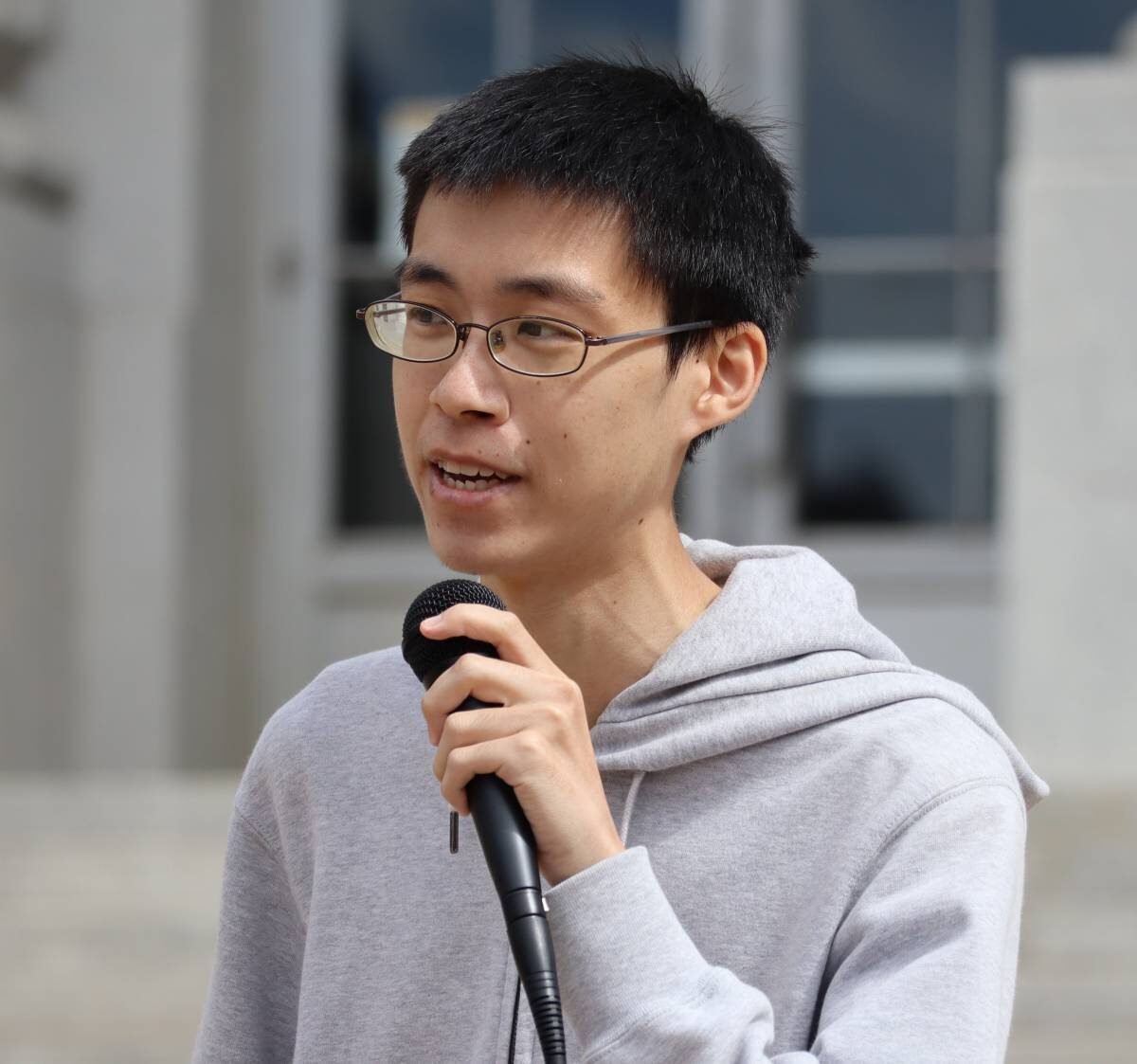
“Just a heads up that the lectures I give may be a little bit wobbly and poor quality,” Kao allegedly said during a class in the fall.
Based on these statements, the university determined that Kao “misused” his authority over students. Even without explicit acknowledgement of the advocacy during class time, the “visible toll” of the hunger strike, and Kao’s own admission that the strike may have affected his teaching, was enough for the university to determine it a violation of policy, Hermalin wrote.
The University Council–American Federation of Teachers, the union that represents lecturers, filed a grievance against the “wrongful discipline” of Kao, said field representative Jessica Conte. And STEM 4 Palestine, a campus group that Kao co-founded, announced a hunger strike beginning Wednesday, in solidarity with Kao and other “repressed academics.”
“Peyrin is known as a committed educator. He is not just committed to students at Berkeley,” the group told KQED by email. “Putting his own body on the line, he demonstrated public commitment to the students of Palestine, whose universities have been bombed into rubble using technology our university builds.”
Kao maintained that all of the discussions in question took place outside of official class time, during an optional lecture that many students elected not to attend, and that the hunger strike took place entirely outside of the classroom.
“We were very careful not to talk about it in class with any of our students or any of my students or my staff. And it was something that I think is totally protected by the First Amendment, because I’m doing it in my own capacity,” Kao said.
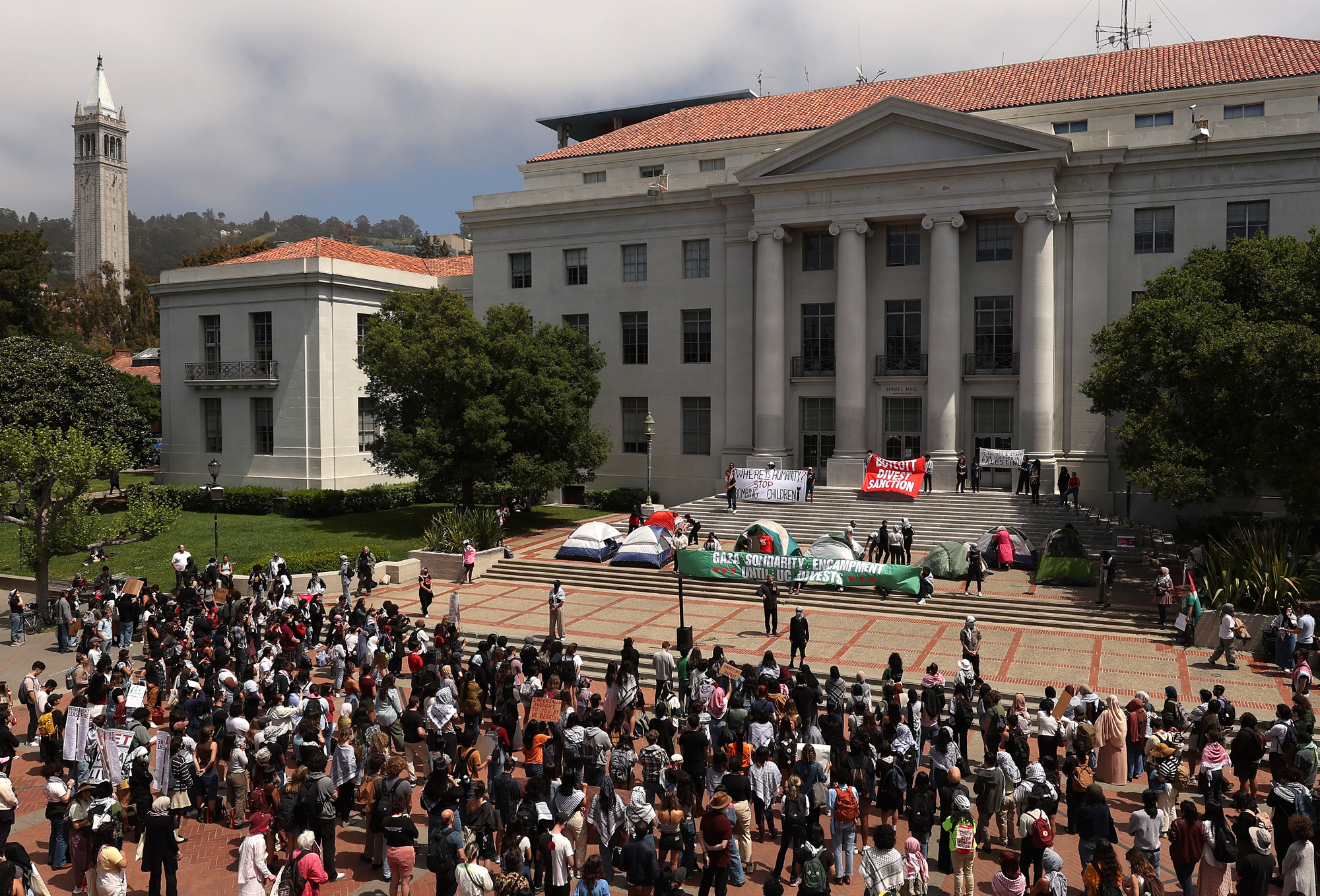
He also pushed back against the university’s claims that his ethics discussion — and his presentation on cloud-computing contracts between Google and Amazon with Israel — was not germane to the classroom.
“These are companies that our students are going to work for. We’re giving our students the tools that they’re then going to use to go and work for these companies and others that are complicit in this ongoing American-Israeli genocide in Gaza,” Kao said. “When you don’t talk about this, that is also making a political decision.”
Academic freedom enshrined in the First Amendment protects a professor’s right to discuss pedagogically relevant material during class, and allows some breathing room — as long as it’s furthering the purpose of the course, said Zach Greenberg, director of the Faculty Legal Defense Fund at advocacy group FIRE. However, the university has some leeway to limit free speech of faculty within the bounds of the institution’s own academic freedom and, ultimately, to make the judgment call.
“The question that we always ask when it comes to political speech is, what’s related to the class and what were they speaking as a professor or as a private citizen?” Greenberg said. “And if you’re going on tangents during class or expressing a political advocacy to students during class as a professor, you’re on company time.”
As a California state employee, Kao was entitled to a Skelly hearing, in which the proposed disciplinary action is reviewed by a third party. The lecturer met with Eric Meyer, the dean of UC Berkeley’s School of Information, but his appeal was denied, Kao said.
He’s currently working to fundraise the salary he will lose for the next semester, about $68,000, Kao said, which he vowed to donate to mutual-aid efforts in Gaza.
KQED’s Ted Goldberg contributed to this report.