

From Indigenous and Mexican roots to modern immigration debates, California’s past offers a broader understanding of American identity and citizenship.
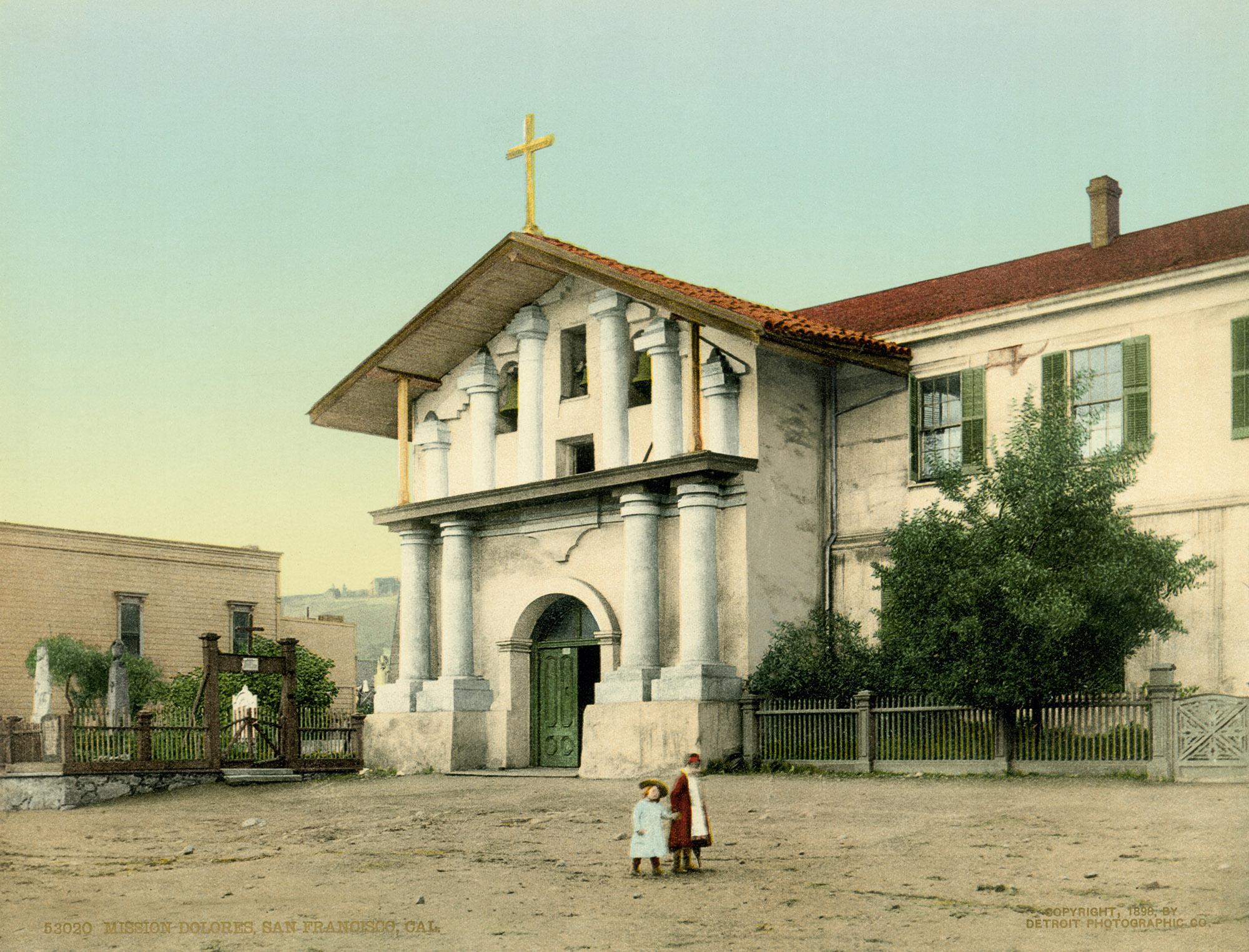
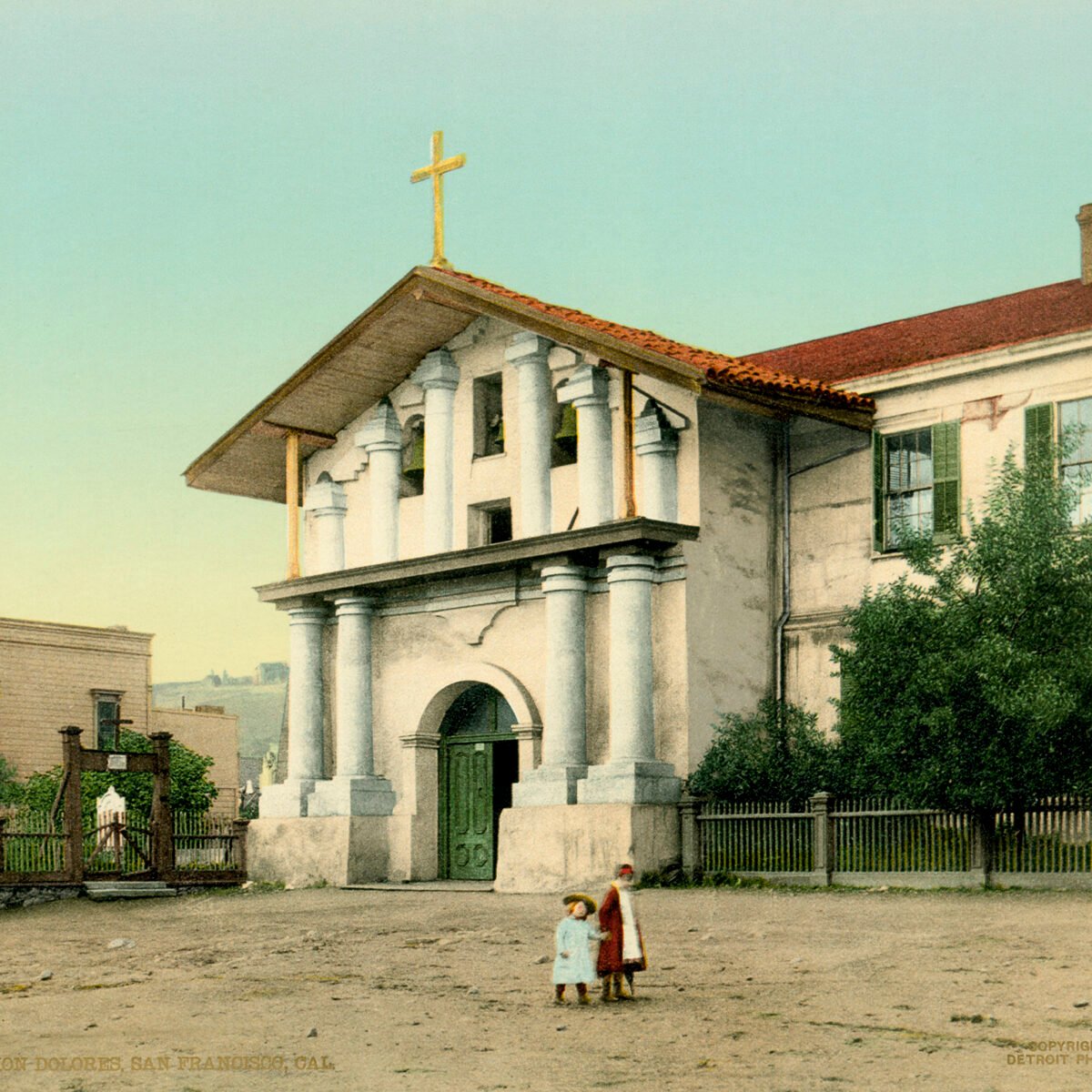
A photochrome image of Mission Dolores in San Francisco, produced by the Detroit Publishing Co., circa 1895. ((Photo by Underwood Archives/Getty Images))
Looking back 250 years is an opportunity to highlight the long legacy of Indigenous, Spanish and Mexican culture in the United States. We were here before there was a United States and, while that seems obvious, I find it worth repeating because we have been and continue to be treated as outsiders, as foreigners and as a threat.
I reached out to historian Steven W. Hackel, who teaches at UC Riverside and has written extensively about the Bay Area’s history before the Gold Rush.
“A lot of people would have asserted for many years that California’s history began with the Gold Rush and statehood,” he told me. “That’s sort of when all the lights came on at once, which really sweeps aside the early Spanish, Native American and Mexican history of California. So I spent much of my career trying to argue against that.”
One reason for the oversight, Hackel said, could be prejudice. The early history of Northern California is less interesting because most of the historical documents are in Spanish and the focus is on the original Indigenous inhabitants and Spanish settlers who brought Catholicism. Another reason is that it’s considered Mexican history.
“We had a very complex and significant colonial period in California. And the 1770s are when the Bay Area was really colonized richly. All the native groups that are in the immediate Bay Area region are either pulled into California missions or certainly engage with them at some level,” Hackel said.
“Is the settlement of California a part of the settlement of Mexico? I mean, there’s no question. Our history is colonial Latin American history. It’s not British North American history.”
When I was growing up, my mother, who had been a schoolteacher in Mexico before she emigrated, was the first person to inform me that the United States had “stolen half of Mexico.” It was a history that was frankly brushed over in my AP American history class in high school and that I had to research on my own. For years, I was angry that one nation could steal another’s territory and gloss it over by calling it “Manifest Destiny.”
I have since realized that being angry about history doesn’t accomplish much — unless that anger is applied to understand the present and future in a different way.
Last September, the Supreme Court ruled that immigration agents can legally question people based on their apparent ethnicity, accent and place of work — in other words. making racial profiling legal.
These so-called “Kavanaugh stops” are one of many ways the Trump administration’s crackdown on immigration has disproportionately punished Latine communities across the country despite the fact that the majority of Latines were born in the United States.
I produced a Forum episode in April about the psychological and behavioral toll of immigration enforcement on Latinos that was partly inspired by The Atlantic article titled, The Risk of Speaking Spanish in Public that described young people’s fears of being targeted by ICE just because they “look Hispanic” or have a Spanish name.
And by “looking Hispanic,” we know that means having dark skin even though people from Latin America come in every color and ethnicity. Still, it seems like a cruel irony that having brown skin, which connotes having more indigenous ancestry, makes you more “suspicious” to immigration agents.
One of the guests on the show, Stanford sociologist Tomás R. Jiménez, told me that the Trump administration’s policies are reshaping the idea of who qualifies as American by making it an official policy to question anyone who doesn’t fit the prototypical look of what people associate with “American.”
“Policies don’t just tell us what we can and can’t do, they tell us who we are,” Jiménez said.
I grew up not questioning if I was American enough. I didn’t have time for that. The question of belonging was not important given that I was on a mission, like many children of immigrants, to make my parents’ sacrifice worth it, to succeed, and “make it.” I didn’t question my Americanness because I was born and bred here. I was more concerned with not losing my Mexicanness in a society that looked down on people like me.
One of the byproducts of Trump’s anti-immigrant policies is to discredit and delegitimize people who don’t fit his vision of a true “American,” but of course that didn’t start with this administration. Sometimes historians choose to overlook history that doesn’t fit their worldview.
“There are competing versions of what it means to be American, and those competing versions have always been there,” Jiménez said. “American identity is not one thing, and there are people who are trying to make it one thing, but we are a country that has welcomed immigrants from all over the world and, by global comparison, have created a country that has had lots of social mobility for immigrants and their descendants.”
And, that is what I’ll be thinking about when America turns 250 next month — that I, and my history, belong here.