

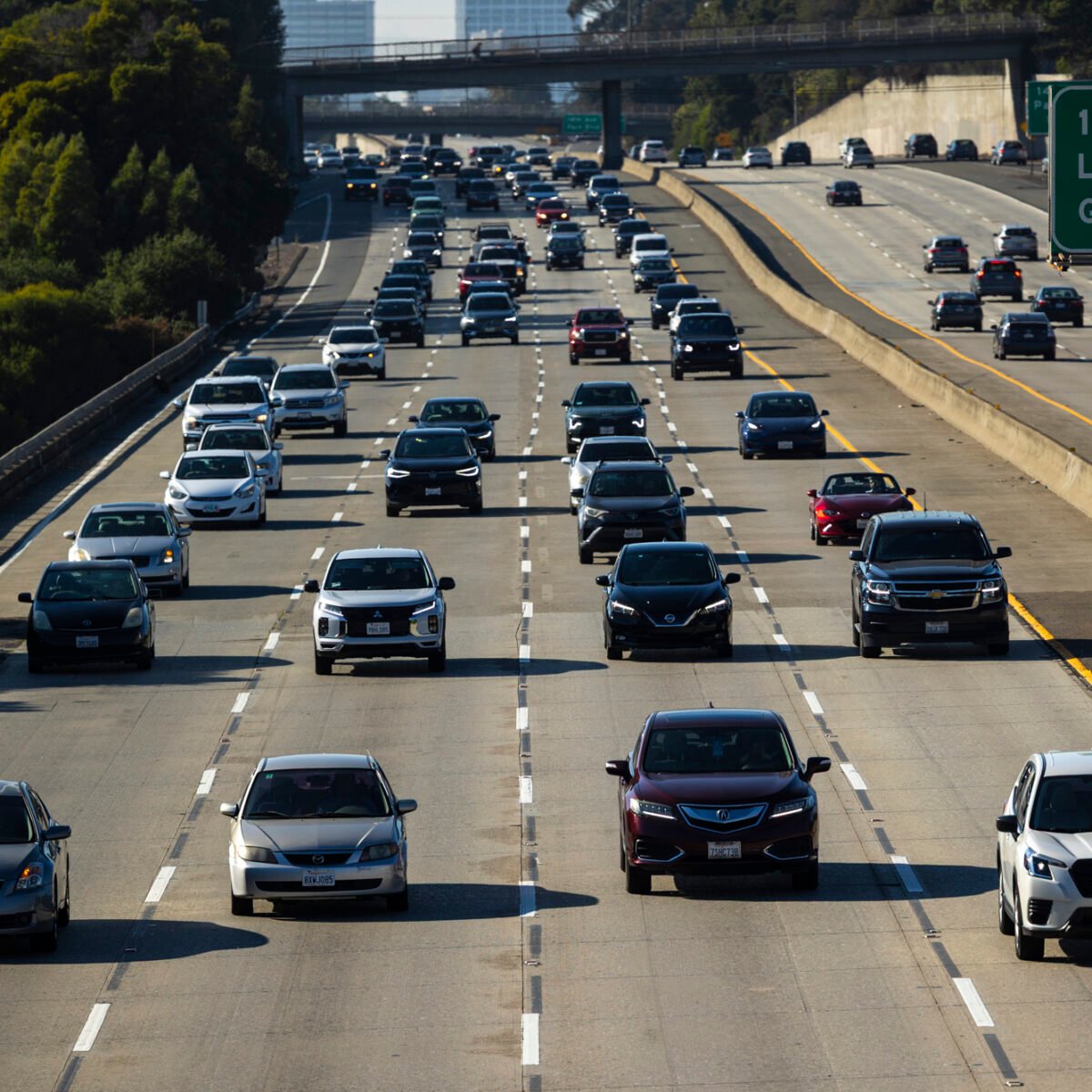
In a heated listening session on Saturday, opponents of a Caltrans study to lift the ban on trucks on Interstate 580 argued the move would spread health and environmental impacts into more communities.
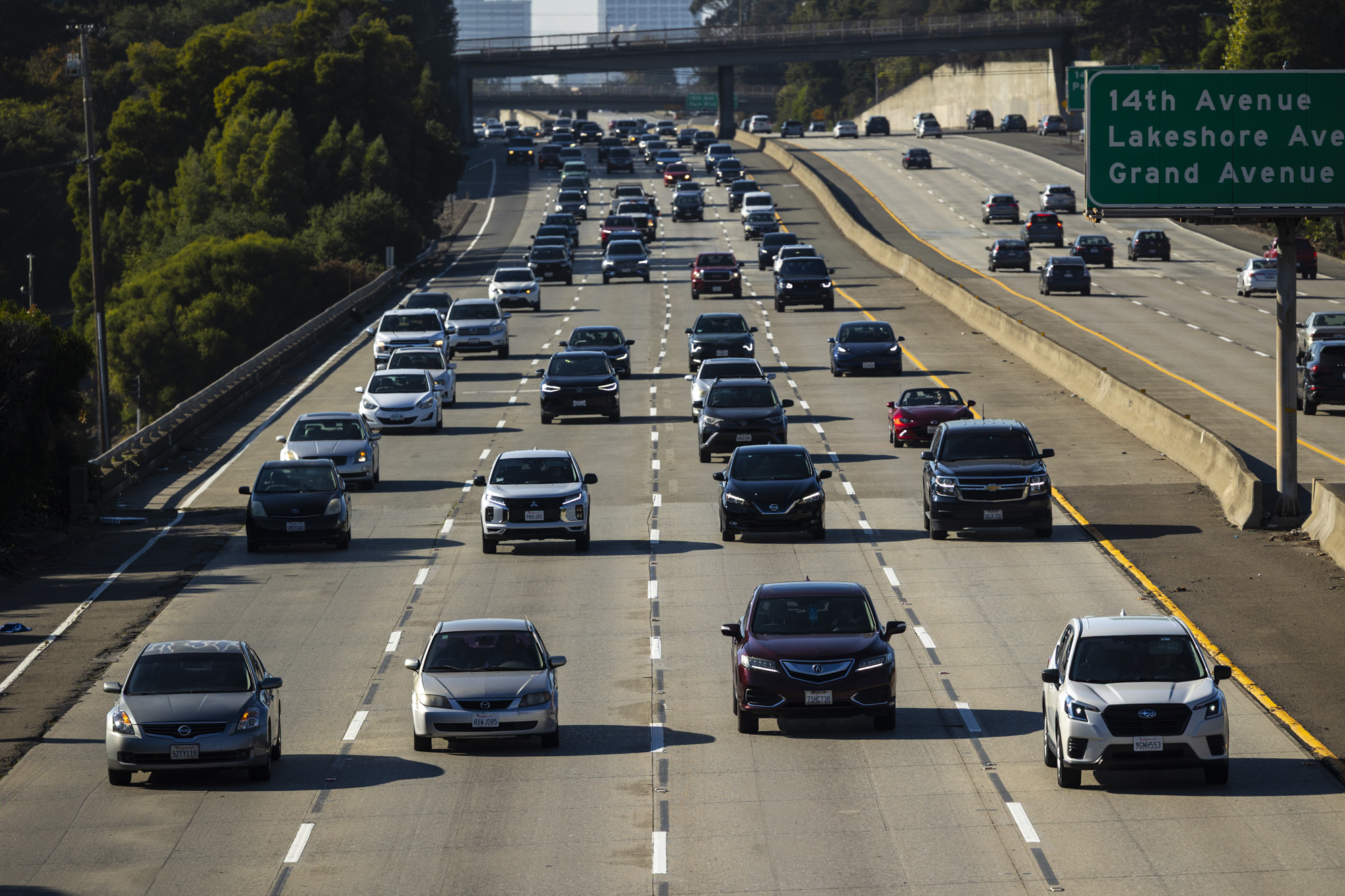
The I-580 freeway in Oakland on Oct. 21, 2025. In a heated listening session on Saturday, opponents of a Caltrans study to lift the ban on trucks on I-580 argued the move would spread health and environmental impacts into more communities. (Martin do Nascimento/KQED)
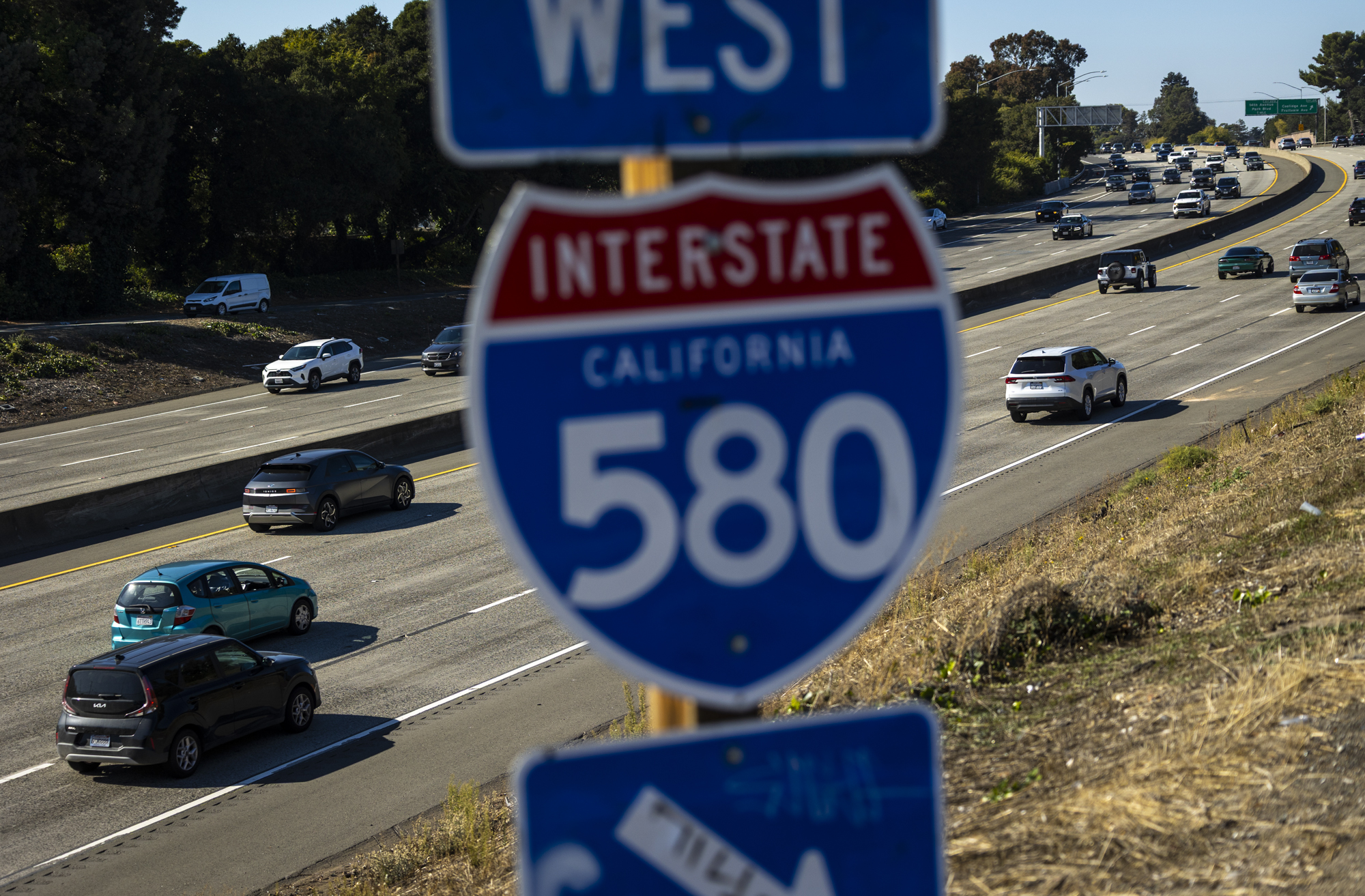
Repealing the ban would allow large trucks to use I-580, a corridor that runs through the East Bay hills. Paratransit and buses carrying passengers are already exempt from the ban.
“We’re very sympathetic to the fact that 880 has the trucks and elevated levels of asthma, but our message to Caltrans is to solve the problem where it exists. Don’t spread it to new communities. Don’t bait one community in Oakland against another community,” Terry Lee, a volunteer with No Big Rigs on I-580, said.
The findings of the study wouldn’t automatically mean that the ban would be repealed, according to Caltrans. Any change would require a state law be passed.
But attendees opposed to the study said they also took issue with what they called a lack of engagement by Caltrans. Throughout the tense meeting, several attendees interrupted officials’ presentation and demanded that questions submitted online not be heard in favor of hearing community concerns in the room.
At one point, a man interrupted officials, saying “You’re gonna listen, and we’re gonna talk.”
Some commenters said they hadn’t heard of the listening session or study through Caltrans, and instead found out about it through other residents.
Cameron Oakes, deputy district director of transportation and local assistance at Caltrans, said that the in-person listening session — which was one of four in the last month — was only part of the engagement process.
“We’re actually conducting additional outreach beyond our original scope. We’re continuing to reach out to various stakeholders in the region and will continue to do so,” Oakes said.
Oakes said that there are other listening sessions planned for this summer to present the initial study’s findings.
One of the only residents who spoke in support of the study and the lifting of the ban mentioned historic environmental racism.
“We have a long history in this country of deciding that environmental impacts should only affect people of color and poor people,” said Susanna, who lives along the I-580 corridor and did not give her last name.
Donald Duggan, who authored a recent study looking into the demographics of both corridors, said that allowing trucks on I-580 would actually impact more people of color.
“There are twice as many Black people who live along 580 than live along 880,” Duggan said.
The draft study findings are expected this summer and a final report could be ready as soon as the end of 2026, according to Oakes.